Worksheets
Ch-6_VII
Total questions: 25
Worksheet time: 13mins

Is this a physical or chemical change?
Physical
Chemical
Which of the following observations would indicate a chemical change has happened? Select ALL correct answers.
a solid precipitate forms
heat energy is released
breaks into smaller pieces
folded in half
a gas is produced

In this example, what is the evidence a chemical change has occurred?
volume is increased
no energy is released
gas is being released
a precipitate has formed
Bubbles form when water boils. Is this evidence of chemical change?
Yes, because water is changing.
Yes, because the water is reacting.
No, because the vapor is still water.
No, because water doesn't react with anything.
Every chemical change involves a transfer of ______.
mass
volume
density
energy

This is an example of _____ change.
Physical
Chemical
Wood is chopped into small pieces. Then, it is burned to cook food. This is an example of a ____ change followed by a ____ change.
chemical, physical
physical, chemical
physical, physical
chemical, chemical

True/False --- As this water freezes, the change in color means a chemical change has occurred.
True
False

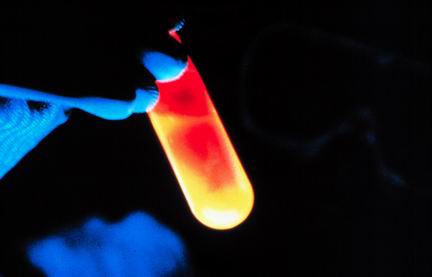
What type of change has occurred?
Chemical
Physical
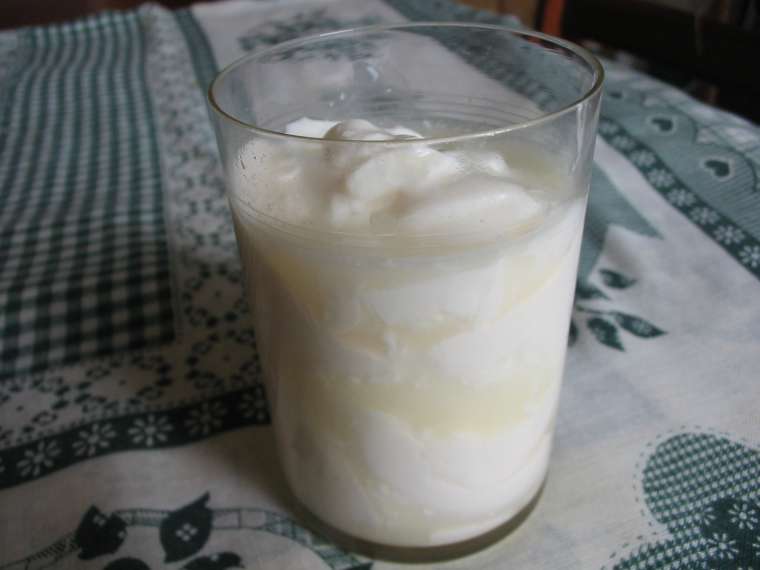
Is milk going sour a physical or chemical change?
Physical
Chemical

Which one is not the characteristics of a physical change ?
They are changes in the physical properties of substance.
They are often irreversible
Rearrangement of molecules take place
No new substances are formed
In physical change , the substance formed has different properties than the original substance.
True
False
When a candle burns, both physical and chemical changes occurs.
True
False
Insoluble impurities from solution during crystallization are removed by ____________
Drying
Filtration
Heating
Cooling
Pure Copper Sulphate Crystals can be obtained by ________.
Centrifugation
Distillation
Crystallisation
Filtration
What type of reaction is the following:
2H2+O2−>2H2O
Combination
Decomposition
Single Replacement
Double Replacement
Combustion
What type of reaction is the following:
BaCl2+2KI −> 2KCl + BaI2
Combination
Decomposition
Single Replacement
Double Replacement
Combustion
What type of reaction is the following:
2NaHCO3−> Na2CO3+CO2+H2O
Combination
Decomposition
Single Replacement
Double Replacement
Combustion
What type of reaction is the following:
Zn + 2HCl −> ZnCl2+H2
Combination
Decomposition
Single Replacement
Double Replacement
Combustion
H2 + O → H2O