
NEW
Font size
S
M
L
XL
 Worksheets
DNA History and Structure
Total questions: 25
Worksheet time: 27mins
Name
Class
Date
1.

Who is responsible for producing this image?
a)
Francis Crick
b)
James Watson
c)
Rosalind Franklin
d)
Watson and Crick
2.
How did Rosalind Franklin's photo 51 affect the work of Watson and Crick?
a)
It was used to determine the physical structure of DNA
b)
It was used to identify the four bases that make up DNA
c)
It was used to determine the theory of independent assortment
d)
It was used to show DNA was the molecule of inheritance
3.
What did Erwin Chargaff conclude from his experiments?
a)
Nitrogen bases are held together by peptide bonds
b)
A and T, C and G always occur in equal amounts
c)
Proteins are the carriers of genetic information
d)
C and G rarely occur in eukaryotic organisms
4.
Where is DNA located inside of eukaryotic cells?
a)
cell membrane
b)
vacuole
c)
chloroplast
d)
nucleus
5.

What are the 4 nitrogen bases?
a)
adenine, thymine, cytoplasm, and guanine
b)
adenine, thymine cytosine, and guanine
c)
adenine, thymine, cytosine, and gylcerol
d)
adenine, thymine, cytosine, and glucose
6.
Given the following sequence - ATGCGTGACGATA
The complimentary sequence would be...
The complimentary sequence would be...
a)
ATGCGTGACGATA
b)
UACGCACUGCUAU
c)
TACGCACTGCTAT
d)
TACGTCGATATGE
7.
Which sequence of DNA bases would pair with this partial strand
ATG TGA CAG
ATG TGA CAG
a)
ATG TGA CAG
b)
TAC ACT GTC
c)
GTA AGT GAC
d)
CAT TCA CTG
8.
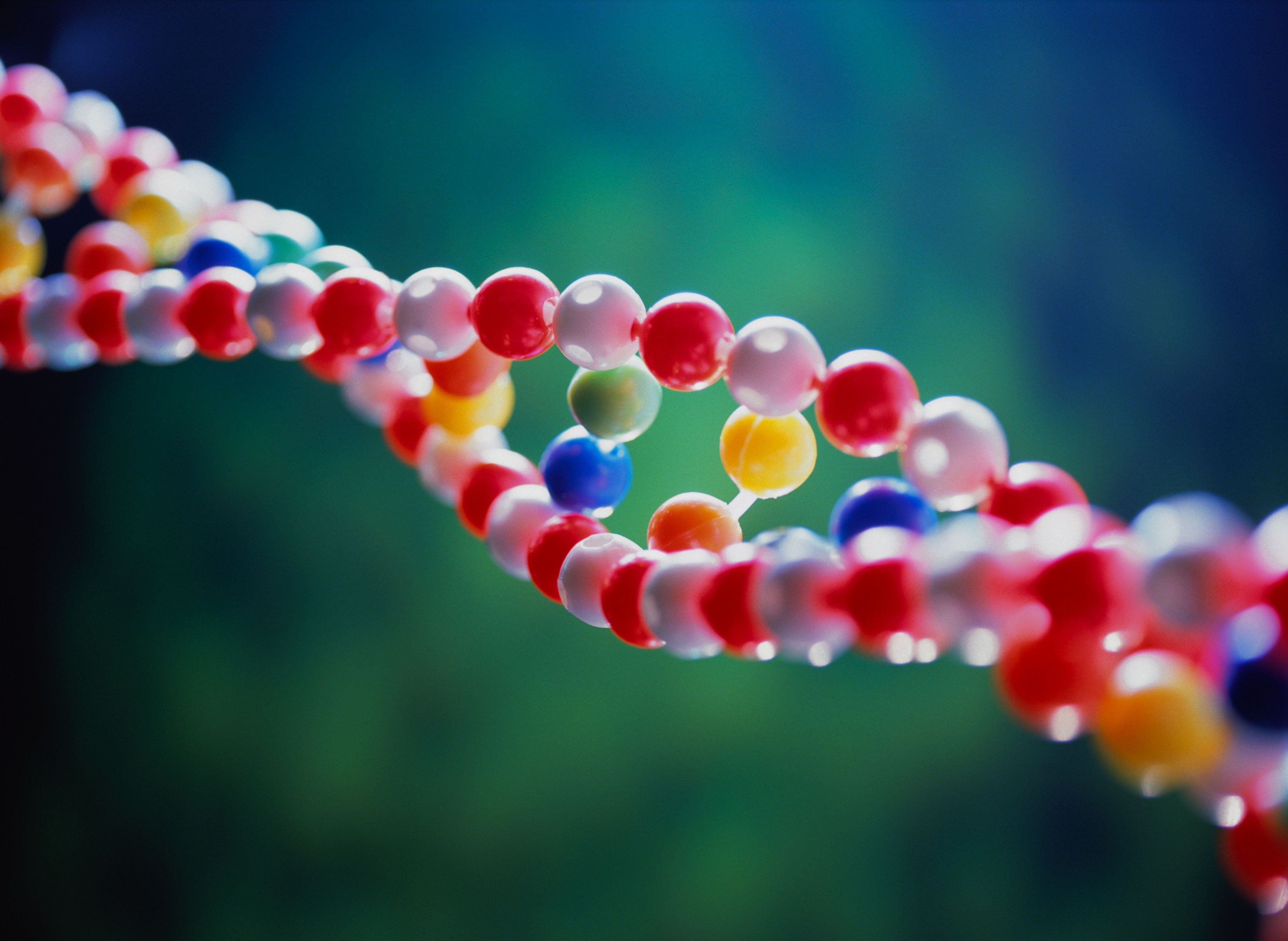
Why is DNA important?
a)
it is very small and very complicated
b)
it's in everything
c)
it serves as the blueprint for traits of all living things
d)
because we eat it every day for energy
9.
Rosanlind Franklin's x-ray diffraction image of her study of DNA was noticed by Watson and Crick and led them to model what they thought the shape and structure of DNA was. What was that shape?
a)
the double helix
b)
the single strand
c)
the sugar and phosphate
d)
the four nitrogen bases
10.
What are the three components of a nucleotide?
a)
sugar, hydrogen, nitrogen base
b)
sugar, oxygen, nitrogen base
c)
sugar, phosphate, nitrogen base
d)
sugar, phosphate, protein
11.
Guanine bonds with ______________.
a)
Adenine
b)
Guanine
c)
Cytosine
d)
Thymine
12.
Adenine bonds with ______________.
a)
Guanine
b)
Thymine
c)
Cytosine
d)
Adenine
13.

What determines the code, or information, of a DNA molecule?
a)
the shape (structure) of the nitrogen bases
b)
the order (sequence) of the nitrogen bases
c)
the color of the nitrogen bases
d)
the frequency (number) of nitrogen bases
14.

What is a Gene?
a)
A segment of RNA that encodes for a protein
b)
A chromosome
c)
A segment of DNA that encodes for a protein
d)
Your genome
15.
What was Watson and Crick's main scientific accomplishment?
a)
Building the first accurate model of DNA
b)
Isolating strains of pneumonia causing bacteria
c)
Determining base pairing rules
d)
Discovering the process of genetic transformation
16.
Which is NOT a component of a DNA nucleotide?
a)
phosphate group
b)
deoxyribose
c)
nitrogenous base
d)
amino acid
17.
The work of which scientist(s) determined base pairing rules?
a)
Chargaff
b)
Griffith
c)
Hershey and Chase
d)
Avery
18.
If a sample of DNA from a wheat plant has 23% cytosine, how much adenine should it also contain?
a)
23%
b)
27%
c)
54%
d)
77%
19.
Which 2 molecules form the sides (backbone) of the DNA ladder?
a)
deoxyribose sugar and adenine
b)
deoxyribose sugar and a hydrogen bond
c)
deoxyribose sugar and the nucleus
d)
deoxyribose sugar and phosphate
20.
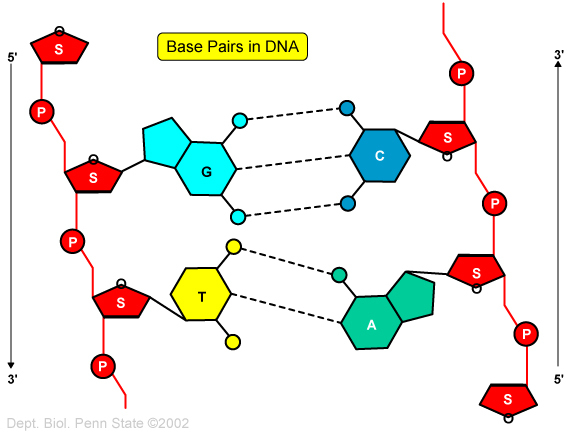
Nitrogenous bases are joined by which type of bond?
a)
polar bonds
b)
ionic bonds
c)
covalent bonds
d)
hydrogen bonds
21.
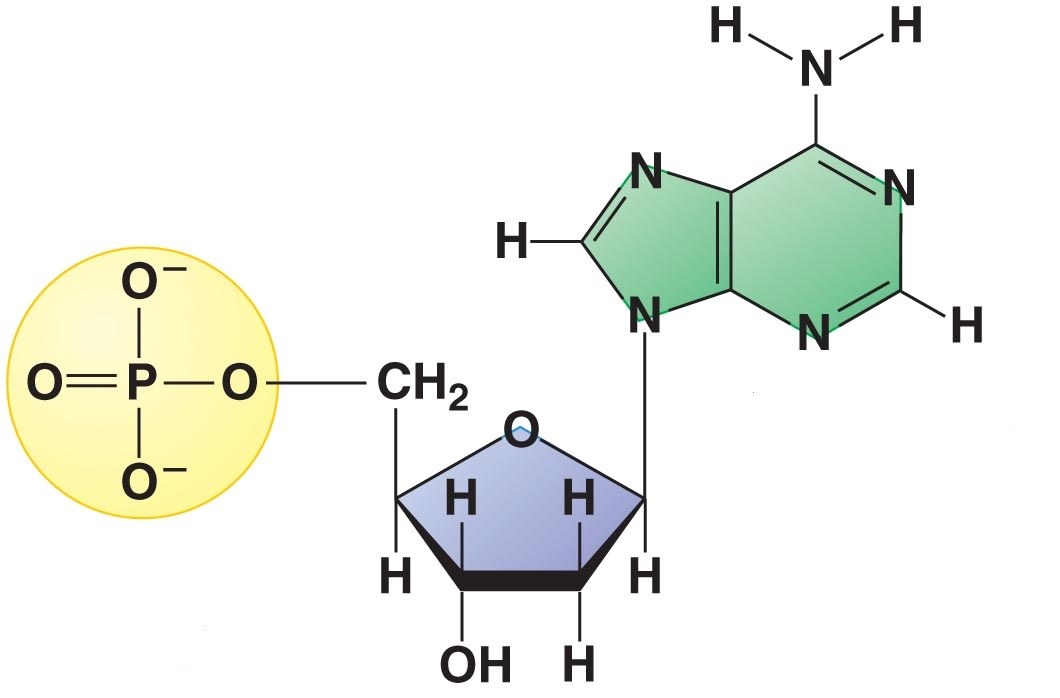
Name this structure
a)
double helix
b)
nucelotide
c)
twisted ladder
d)
hydrogen bond
22.
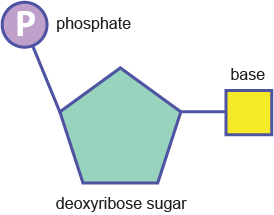
Nucleotides are made up of a sugar, phosphate, and..?
a)
nitrogenous base
b)
nucleic acid
c)
cholesterol
d)
fatty acid
23.
Which of the following units are repeatedly joined together to form a strand of DNA? (This is the MONOMER of DNA.)
a)
amino acids
b)
nucleotides
c)
fatty acids
d)
polysaccharides
24.
The sugar in DNA is ?
a)
sucrose
b)
glucose
c)
deoxyribose
d)
fructose
25.
Which sequence of DNA bases would pair with this partial strand
CAT TCA CTG
CAT TCA CTG
a)
ATG TGA CAG
b)
TAC ACT GTC
c)
GTA AGT GAC
d)
CAT TCA CTG
Reset

