
 Worksheets
Astronomy Unit Test Review
Total questions: 20
Worksheet time: 26mins
*Which type of tide occurs during a full or new moon?
spring
neap
new
fall
*When a star is in the "Main sequence" stage what is chemical reaction happening?
Fusing hydrogen into helium
fusing helium into carbon
forming into a star
cooling after fusion has stopped
*What fuel do stars use that will decrease as they age?
Oxygen
Hydrogen
Carbon
Iron

*The life cycles of stars are determined by their:
mass (size)
color
distance from Earth
how bright they are
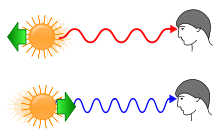
*What does the Red-shift tell us about the universe
the universe is expanding
the universe is contracting
the big bang is false
nothing
*What instrument has allowed us to look deep into space to observe things far away that give us hints to the past?
The Hubble telescope
The Eiffel Tower
Binkley's barometer
The Smith Space Balloon
*Which statement BEST summarizes The Big Bang Theory?
whole universe began as a black hole and rapidly expanded, but is now collapsing
whole universe began as a cool dense point and rapidly collasped, but is now expanding
whole universe began as a single mass, rapidly expanded, and continues to expand
the whole universe began as a hot dense point and rapidly expanded, but is now collapsing

*A solar eclipse might be observed from Earth when the Moon is at which position?
1
2
3
4

*Where are the largest stars found on this diagram?
1
3
4
2

*Which location on this HR Diagram most likely represents yellow stars most similar to the sun on the main sequence?
1
2
3
4

*A lunar eclipse is most likely to occur when the Moon is at position
A
B
C
D

*Which positions of the Moon could result in a neap tide on Earth?
Positions 2 and 6
Positions 4 and 8
Positions 1 and 5
Positions 7 and 3
*What were the original two elements in our universe?
Lithium and Hydrogen
Hydrogen and Neon
Helium and Carbon
Hydrogen and Helium
*Comets from the Kuiper belt contain DETERIUM. That same element is found in the oceans on Earth. This is evidence for the theory that...
Earth gravity attracts Deterium
Earth was once a comet.
Most of the water in the oceans may have arrived from impacts of comets from the Kuiper Belt
The Kuiper Belt is big
*Why is life not found on the outer (Jovian) planets?
They have no mass
They have too much mass
They have hot surfaces
Their surfaces are extremely cold.
*A moon is a:
Star
Natural satellite of a planet
Galaxy
Frozen body of ice, dust, and rocks that orbits the Sun
*A Comet is a:
Frozen ball of ice and dust that orbits the sun.
A Satellite
A rock floating in space
Bigger than Earth
*A Meteoroid is a:
Space Snowball
A body of dust and rock floating through the solar system
A Ring of Saturn
A natural Satellite of a planet
*Asteroids are:
Rocky Snowballs
Planetary orbiters
Satellites around planets
Rocky objects orbiting between Mars and Jupiter
The characteristic of Earth allows liquid water to exist on Earth is that-
It orbits around the Sun within the Habitable Zone
False
is a Terrestrial Planet
is aJovian Planet

