
 Worksheets
Unit Two Test
Total questions: 30
Worksheet time: 2hrs 30mins
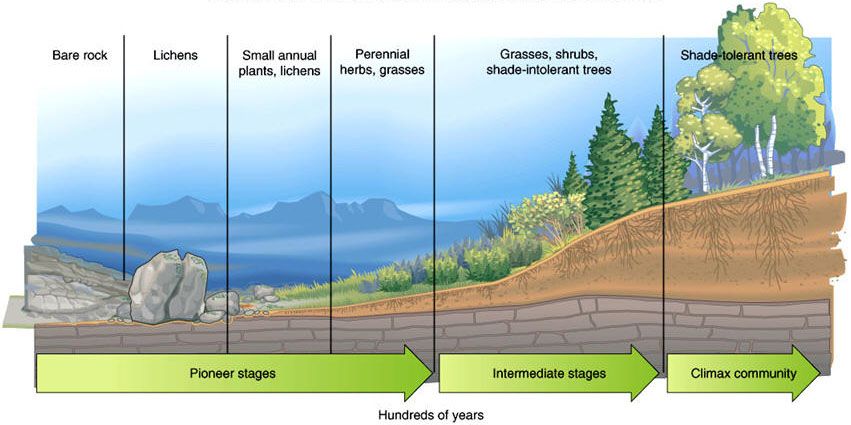
___ are the first organisms to colonize an area and begin the process of ecological succession.
foundational organisms
introductory organisms
primary organisms
pioneer species
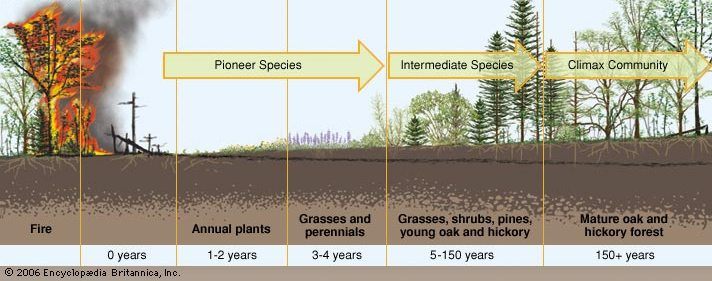
What is the main difference between primary and secondary ecological succession?
Primary begins WITHOUT soil; Secondary begins WITH soil
Primary is the first state and secondary is the second stage
Primary builds plant community; secondary builds animal community.
Primary begins WITH soil; Secondary begins WITHOUT soil
What is an example of an area that is likely to undergo primary succession?
Glaciers melt and leave exposed rock
Plants die from drought and decompose
Land is bulldozed and soil remains
Which of the following is the correct order of ecological succession?
grass - shrubs - lichens - trees
lichens - shrubs - grasses - trees
lichens - grasses - shrubs - trees
grasses - lichens - shrubs - trees
What is an increase of biodiversity over time, after a natural or man made disturbance?
ecological recession
climax recession
ecological succession
climax succession
What is the term that describes a steady and stable community?
peak community
turf community
climax community
disturbed community
Which is faster: Primary or Secondary Succession?
Primary Succession
Secondary Succession
Both Take The Same Amount of Time
Which of the following is NOT a pioneer species?
Shrubs
Lichen
Mosses
Fungi



Which do you think has a higher species diversity biodiversity, a food chain or a food web?
Food Chain
Food Web

What has a higher biodiversity: a rain forest or a desert?
Rain forest
Desert
They have a similar biodiversity

Why is biodiversity in an ecosystem so important?
Because it can help humans where to determine good places to develop farm land.
Because places that have a healthy biodiversity are unaffected by major disturbances.
Because having a high biodiversity allows ecosystems to withstand major changes.
Because having a high biodiversity allows for fewer opportunities of competition for similar resources.
Which of the following terms describes any major changes that may occur to an ecosystem?
Distubance
Resiliency
Adaptations
Biodiversity
The prefix Bio means
life
birds
science
ecosystems
The suffix diversity means
different
variety
colors
animals
Greater species diversity ensures natural ________________ for all life forms.
selection
sustainability
help
health

Abiotic is non-living

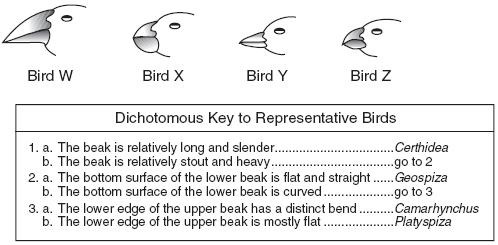
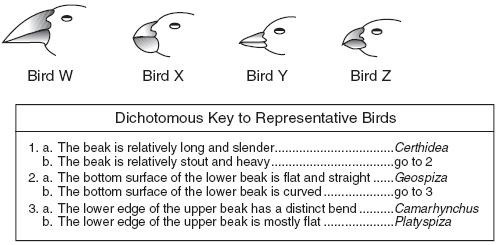
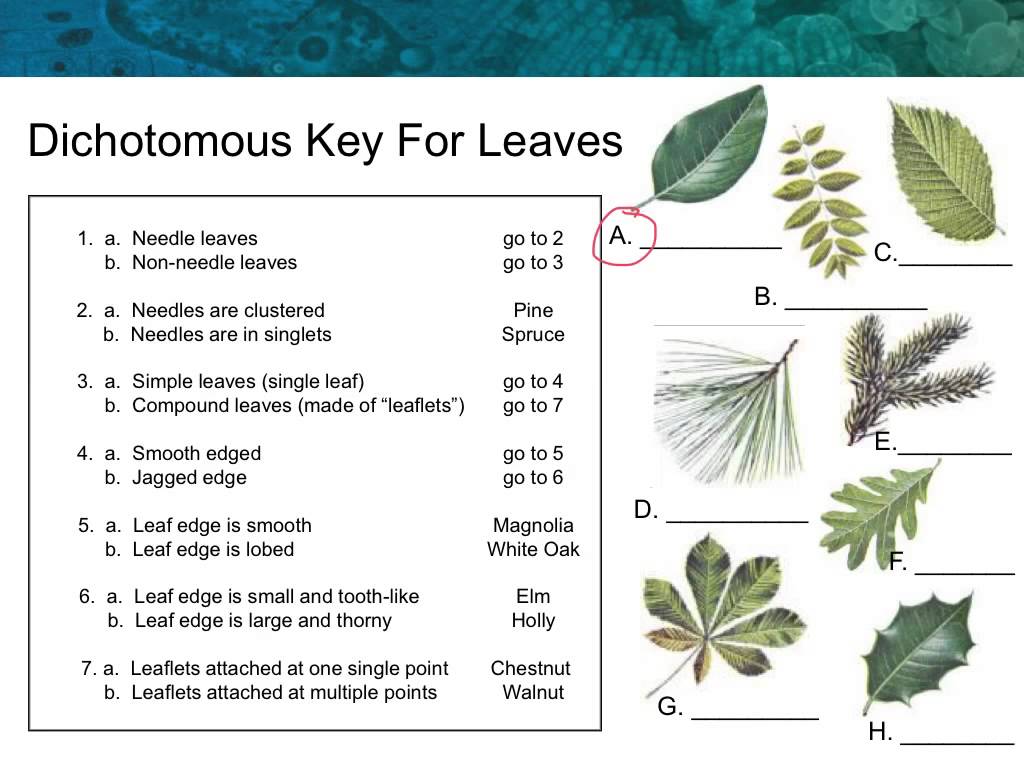
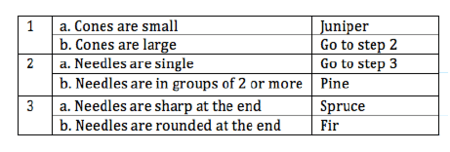

What is the answer for question 2?
go to 3
snake

Take your time and read carefully!
A student discovers an arachnid with a segmented abdomen, long legs, and a tail with no stinger. The student uses the dichotomous key below to identify it. Which arachnid has the student found?
Whip Scorpion
Wind Scorpion
Tick
Scorpion

