Wayground logo

Free Printable Worksheets

Font size

S
M
L
XL
Worksheets

Spinal anatomy

Total questions: 24

Worksheet time: 8mins

Name
Class
Date
1.
How many cervical vertebrae are there?
a)
5
b)
7
c)
12
2.
How many thoracic vertebrae are there?
a)
5
b)
7
c)
12
3.
How many lumbar vertebrae are there?
a)
5
b)
7
c)
12
4.
What bone is this?
a)
axis
b)
atlas
5.
What bone is this?
a)
axis
b)
atlas
6.
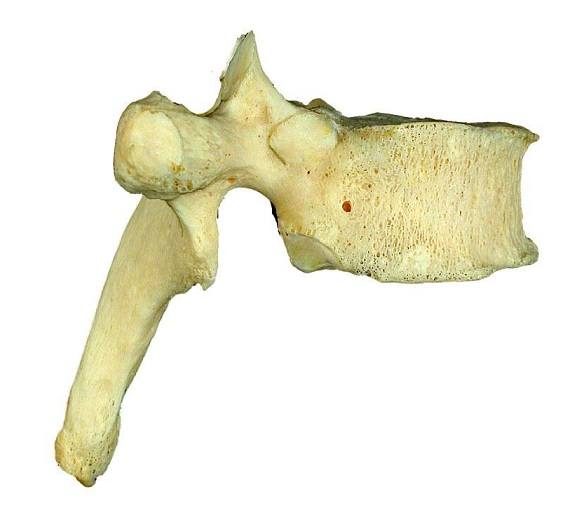
This vertebrae is __________.
a)
thoracic
b)
lumbar
7.
This vertebrae is the ____________.
a)
thoracic
b)
lumbar
8.
How many true ribs are there?
a)
2
b)
3
c)
7
9.
What bone is the name of the bone that is colored?
a)
manubrium
b)
sternum
c)
xiphoid process
10.
What bone are the arrows pointing to?
a)
coccyx
b)
sacrum
11.

Identify the structure indicated in the image.

a)

manubrium

b)

body of sternum

c)

xiphoid process

d)

rib cage

12.

Ribs that are not connected to the sternum are called

a)

true ribs

b)

false ribs

c)

floating ribs

d)

suprasternal ribs

13.
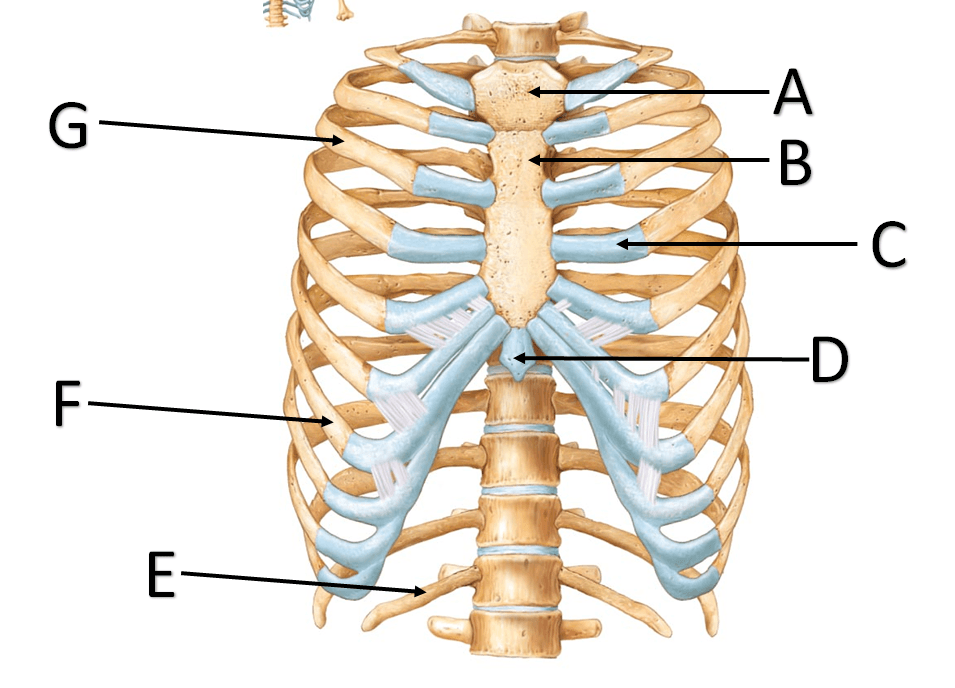
Letter C is pointing to: 
a)
Vertebral Rib
b)
Manubrium
c)
Costal Cartilage
d)
Vertebralchondral Rib
14.
Bones of the thoracic cavity that articulate directly to the sternum and vertebrae
a)
true ribs
b)
false ribs
c)
floating ribs
d)
strong ribs
15.

This is the second cervical vertebrae (C2); it allows the head to rotate.

a)

Atlas

b)

Axis

16.

Why would the lumbar vertebrae have the biggest body?

a)

It supports the weight of the torso, head, and arms

b)

The spinal cord is thicker here

c)

This section requires more blood flow

d)

There are more muscles and ligaments that attach here

17.
What is protected by the vertebral column?
a)
Ligaments
b)
Spinal cord
c)
Muscles
d)
The brain stem
18.

What is the disc between vertebrae made out of?

a)

Neurons

b)

Bone

c)

Spinal Fluid

d)

Cartilage (soft bone)

19.
Vertebrae increase in size from the ___________ region to the ___________ region. 
a)
lumbar to cervical
b)
cervical to lumbar
c)
sacrum to coccyx
20.
Scoliosis refers to ____________ curvatures of the spine.
a)
lateral/sideward
b)
anterior
c)
posterior
d)
inferior 
21.

The man in the picture has an increased curvature in his spine known as _______________.

a)

lordosis

b)

kyphosis

c)

scoliosis

d)

spinal stenosis

22.

Image #1 indicates a normal spine, what does image #2 indicate?

a)

lordosis

b)

kyphosis

c)

scoliosis

d)

spinal stenosis

23.
Thin columns of bones that point out to the left and right sides (lateral) of the body used for muscle attachment 
a)
spinous process
b)
intervertebral disc
c)
transverse process
d)
vertebral foramen 
24.
What function does the intervertebral disks have?
(what do they do?)
a)
Send sensory information the brain and the spinal nerve
b)
Attaches muscles to the spine to the spine that help hold shape.
c)
Provide mobility to the legs and back
d)
Works as a cushion or shock absorber between vertebrae