
 Worksheets
Newton's laws of motion
Total questions: 25
Worksheet time: 26mins
Gravity and Tension are both examples of contact forces.
True
False
All objects have inertia, whether they are moving or not.
True
False
How are we suppose to know?
Don't ask me
To change the motion of an object, inertia must be overcome by a __________ acting on the object.
Temperature
Force
Net force
Velocity
The tendency of an object to resist a change in its state of motion is called the object's ______.
Mass
Momentum
Friction
Inertia
Without a force to stop or slow a moving object, the object will move forever in a ______ .
line
curve
straight line
zig-zag line
Objects at rest remain at rest and objects traveling at a steady rate in a straight line continue that way until _________acts on them.
a force
balanced force
momentum
resultant force

Describe what will happen to the truck in this picture
Accelerate
Decelerate
Constant speed
Stationary
What is the SI unit of impulse __________.
N
kg m/s^2
Ns
kg/s
A 20 000g bike accelerates at 10 m/s2. what is the force acting upon it?
2 000 N
200 000 N
200 N
20 000 N
Newton's Second Law can be expressed as
a = Fm
m = Fa
Ft = mv-mu
m1v1 = m2v2
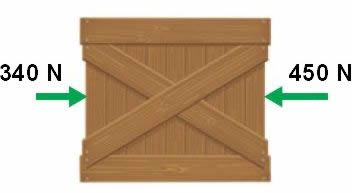
What happens when unbalanced forces act on an object at rest?
the object remains at rest
the object accelerates in an unpredictable direction
the object begins accelerates in the direction of the net force
the object begins moving opposite to the direction of net force
The initial momentum and final momentum of a closed system remains constant is the law of:
Dissipation of momentum
Conservation of momentum
Destruction of momentum
Rate of change of momentum
The main difference between elastic and inelastic collision is that in inelastic collision,
Objects stick together just before collision
Objects collide inelastically
Objects move apart after collision
Objects stick together after collision

What is Newtons 2nd law of motion?
Force = Mass multiplied by velocity
Weight of cocoyam = Mass of cocoyam multiplied by gravity
For every action there is a equal and opposite re-action.
The law of inertia
Newton’s 3rd law states that for every action, there is an ________ reaction.
unequal and opposite
equal and similar
stronger and opposite
equal and opposite

When a cannon fires a cannon ball we observe Newton's third law. Which is the reaction force?
The cannon moving forward
The cannon moving backwards
The cannon ball moving backwards
The cannonball moving forward
Action reaction forces never cancel each other out because
They act on different objects.
They act on the same objects
They do not act on objects.
They are a couple, so they are nice to each other

Forces always occur in________
waves
triplets
pairs
numbers
The two paired forces in Newton's third law:
act on different objects
are equal in size
are opposite in direction
all of the above
None of the above
The direction of force of friction is always _____ to the direction of motion
same
opposite
unchanged
none of these
I'm done with this quiz
Frictional force depends on ____
Force acting between the surfaces
Nature of the surface area
both a and b
none of the above
What does friction produce?
light
sound
heat
all of the above
non of the above

