
 Worksheets
Industrial Revolution
Total questions: 33
Worksheet time: 30mins
Name
Class
Date
1.
A place where people and machines join together to mass produce goods.
a)
Cartel
b)
Corporation
c)
Factory
d)
Urbanization
2.

Another word for farming
a)
Agriculture
b)
Manufacturing
c)
Technology
d)
Invention
3.
The first business to industrialize.
a)
automobile
b)
aviation
c)
textile
4.
rapid development of cities
a)
Utilitarianism
b)
Urbanization
c)
Means of production
d)
Ruralization
5.
The advantage of mechanization of farming was
a)
more food was produced
b)
food prices went down
c)
fewer farmers were needed
d)
all of the above
6.

Which of the following is the reason people moved to cities?
a)
for the job opportunities
b)
to catch a smelly pole cat
c)
that is where the transcontinental railroad stopped
d)
to get away from the free farmland out west
7.
How did railroads impact the prices of goods & services?
a)
Made goods and services more expensive & harder to ship
b)
Made goods and services cheaper & easier to ship
c)
Gave people safer transportation
d)
Opened new land for exploring and settlements
8.
What provided faster water/river travel?
a)
Steam boat
b)
Steam Locomotive
c)
ships
d)
cars
9.
the process of moving from an agricultural society, in which most goods are handmade, to a society that thrives on machine-manufactured goods
a)
textile
b)
economy
c)
industrialization
d)
technology
10.
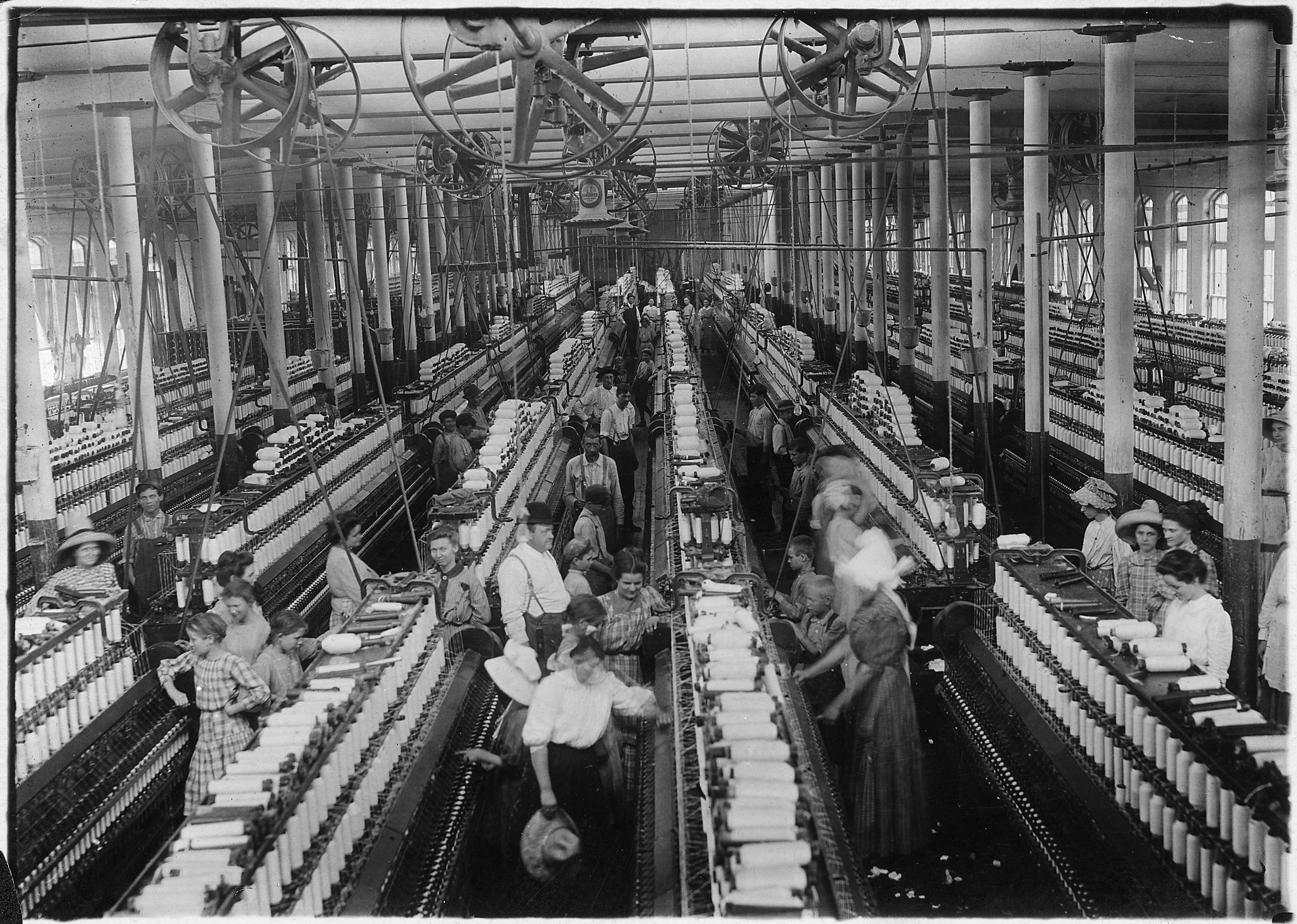
Where were most factories built?
a)
in the mountains
b)
in the desert
c)
along rivers
11.
What had to occur before the Industrial Revolution could take place?
a)
The Economic Revolution
b)
The Glorious Revolution
c)
The Agricultural Revolution
d)
The French Revolution
12.
What impact did the Agricultural Revolution have on the population of England?
a)
The population increased a little.
b)
The population declined steeply.
c)
The population increased dramatically.
d)
The population stayed the same.
13.
The Industrial Revolution grows in Britain because
a)
they had access to coal reserves
b)
they were a strong naval power
c)
they had a stable government
d)
all of the above
14.
Which of the following was NOT associated with early factory working conditions?
a)
Low wages
b)
Safe working conditions
c)
Dangerous working conditions
d)
Widespread pollution
15.
The _______________ is the name for the change from goods being made by hand at home to making them by machine in factories.
a)
French Revolution
b)
Machine Revolution
c)
Industrial Revolution
d)
Technological Revolution
16.
Which innovation allowed factories to be built anywhere?
a)
flying shuttle
b)
spinning jenny
c)
cotton gin
d)
steam engine
17.
How did railroads impact the prices of goods & services?
a)
Made them more expensive & harder to ship
b)
made them cheaper & easier to ship
c)
Gave people a way of transportation
18.

The invention of the cotton gin increased the efficiency of cotton production and actually increased the demand for this
a)
Water Power
b)
Coal
c)
FIre
d)
Slaves
19.

His steamboat, the Clermont, allowed passengers to travel upstream ushering in a new age of river travel.
a)
Eli Whitney
b)
Robert Fulton
c)
F. Lowell
d)
Slater
20.

Which of the following best helped Martin Luther's ideas reach other parts of Europe?
a)
The Bible
b)
The printing press
c)
Church Hierarchy
d)
The Diet of Worms
21.

In his attempt to reform the Catholic Church, what did Martin Luther do?
a)
Bought a certificate of indulgence to be pardoned.
b)
Helped Pope Leo X rebuild St. Peter's Basilica in Rome.
c)
Prepared a list of 95 arguments against indulgences.
d)
Decided to become a lawyer.
22.
Martin Luther's main complaint was against what?
a)
Inquisitions
b)
Indulgences
c)
The Bible
d)
Ice Cream
23.
Authors living during the Renaissance started writing in the everyday language of the people known as the
a)
perspective
b)
chiaroscuro
c)
contrapposto
d)
vernacular
24.
According to Copernicus, the sun
a)
Revolved around the earth
b)
Was the center of the Universe
c)
Was the biggest star
d)
Had many moons
25.
What was Isaac Newton’s biggest contribution to the scientific revolution?
a)
Laws of Gravity
b)
Heliocentric theory
c)
Geocentric theory
d)
Scientific Method
26.
A time period, mostly in the 1700's, where philosophers and thinkers thought science and reason could improve all humanity.
a)
Enlightenment
b)
Great Awakening
c)
American Revolution
d)
French Revolution
27.
People in a society give up some of their rights in exchange for protection.
a)
Social Contract
b)
Enlightenment
c)
State of Nature
d)
Revolution
28.
French writer who believed in freedom of speech, religious tolerance, and the separation of church and state.
a)
Voltaire
b)
Locke
c)
Rousseau
d)
Montesquieu
29.
Life, liberty, property
a)
natural rights
b)
social contract
c)
state of nature
d)
enlightenment
30.
This thinker believed in the separation of powers within a government. Each part should have check and balances over the other parts.
a)
Montesquieu
b)
Wollstancraft
c)
Locke
d)
Voltaire
31.
This thinker believed that humanity was inherently evil. Laws and governments are needed to protect people from each other.
a)
Hobbes
b)
Montesquieu
c)
Roussoue
d)
Voltaire
32.
This enlightenment thinker, from England, was a strong advocate for women's rights.
a)
Locke
b)
Voltaire
c)
Hobbes
d)
Wollstonecraft
33.
The Enlightenment thinkers observed technological advancements due to the adoption of modern methods that relied on logical though, experimentation, and careful observation. These advancements occurred during the
a)
Scientific Revolution
b)
Age of Reason
c)
American Revolution
d)
French Revolution
100 %

