
 Worksheets
Organic Chem 1 @Patri
Total questions: 29
Worksheet time: 2hrs 25mins

Total number of substituent present in the above compound is ?
1
2
3
4

IUPAC name will be :
Hex-5-en-1-yne
Hex-1-en-5-yne
Hex-6-en-1-yne
Hex-1-en-6-yne

How many secondary carbon and hydrogen atoms are present in the molecule given below respectively?
2,3
2,2
3,3
2,0

Which IUPAC Name is correct for the given compound?
3,7-dimethylocta-2,6-dienal
2,6-dimethyloct-2,6-dienal-8
7-formyl-2,6-dimethylhept-2,6-diene
7-aldo-2,6-dimethylhept-2,6-diene

The IUPAC name of the compound is?
trans-2-chloro-3-iodo-2-pentene
cis-2-chloro-3-iodo-2-pentene
trans-3-iodo-4-chloro-3-pentene
cis-3-iodo-4-chloro-3-pentene

What is the by product of this reaction?
HBr
H2
H2O
Light or heat is required for which step in the halogenation of alkane?
initiation
propagation
termination

What are the reagents required for the following reaction?
H2O, NaOH
H2O, H2SO4

Which one is the Markovnikov's Product of the HBr addition to the following compound?


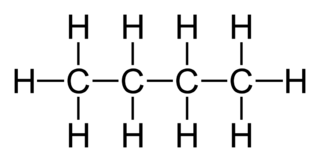
Which of the following has the highest boiling point?
heptane
pentane
nonane
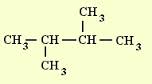
How to determine that a molecule exhibit cis-trans isomerism?
Restricted rotation in a carbon-carbon single bond of alkenes
Each carbon of a site of restricted rotation has 2 different atoms or groups attached to it
Exist in cyclic compouds only
Similar chemical properties
Two optical isomers have the same
Empirical formula
Structural formula
Molecular formula
Isomerism exhibited by acetic acid and methyl formate is
position
chain
functional
metamerism
Which of the following compound(s) exhibit(s) cis-trans isomerism?
(1) 1,2-dibromo-1,2-dichloroethene
(2) 3,3-dibromo-2-chloropropene
(3) 1,2-dichloropropene
(1) only
(2) only
(1) and (3) only
(2) and (3) only
Which of the following compounds exhibits stereoisomerism?
Butanal
Propenoic acid
1-bromohexane
3,4-dichloropent-1-ene
Chlorination of alkanes is an example of
Elimination reaction
Free radical substitution reaction
Nucleophilic substitution reaction
Electrophilic addition reaction
Which of these has only one transition state?
SN1
SN2
Which of these has an intermediate state?
SN1
SN2
Which of these is a one step reaction?
SN1
SN2
Which of these is a two step reaction?
SN1
SN2
The rate of SN2 reaction is controlled by
The substrate only
The nucleophile only
Both substrate and nucleophile
Which of these is bimolecular?
SN1
SN2
Primary carbocations have more positive inductive effect than secondary?
Yes, always
Yes, sometimes
No, never

