wayground logo

Free Printable Worksheets

Font size

S
M
L
XL
Worksheets

7th Renaissance

Total questions: 100

Worksheet time: 54mins

Name
Class
Date
1.
This Renaissance figure was known for the beautiful "Sistine Chapel" & "The David".
a)
Petrarch
b)
Machiavelli
c)
Da Vinci
d)
Michelangelo
2.
This gentleman was THE true Renaissance Man.
a)
Petrarch
b)
Machiavelli
c)
Da Vinci
d)
Michelangelo
3.

Who was 1 of the most important Renaissance scientists & artists?

a)

Francesco Petrarch

b)

Dante Alighieri

c)

Johannes Gutenberg

d)

Leonardo da Vinci

4.

Select the two Renaissance artists in this group.

a)

Michelangelo

b)

Salvador Dali

c)

Georgia O'Keefe

d)

Leonardo da Vinci

5.

Who painted the Sistine Chapel ceiling?

a)

Vincent van Gogh

b)

Claude Monet

c)

Michelangelo

d)

Artemisia Gentileschi

6.

Who painted the Mona Lisa?

a)

Michelangelo

b)

Leonardo da Vinci

c)

Claude Monet

d)

Henri Matisse

7.
Italian artist who also excelled in astronomy, engineering, and anatomy 
a)
Michelangelo
b)
Raphael
c)
Johann Guttenberg
d)
Leonardo da Vinci
8.
First woman to achieve an international reputation ; known for her portraits.
a)
Leonardo da Vinci
b)
Sofonisba Anguissola
c)
Michelangelo Buonarroti
d)
Raphael Sanzio
9.

In painting, the technique of perspective shows people and things

a)

as flat and one-dimensional

b)

as they look at different times

c)

as finely detailed and complex

d)

as three-dimensional on a flat surface

10.

He was considered the greatest of all Renaissance figures

a)

Leonardo Da Vinci

b)

Michelangelo Buonarroti

c)

William Shakespeare

d)

Dante Alighieri

11.
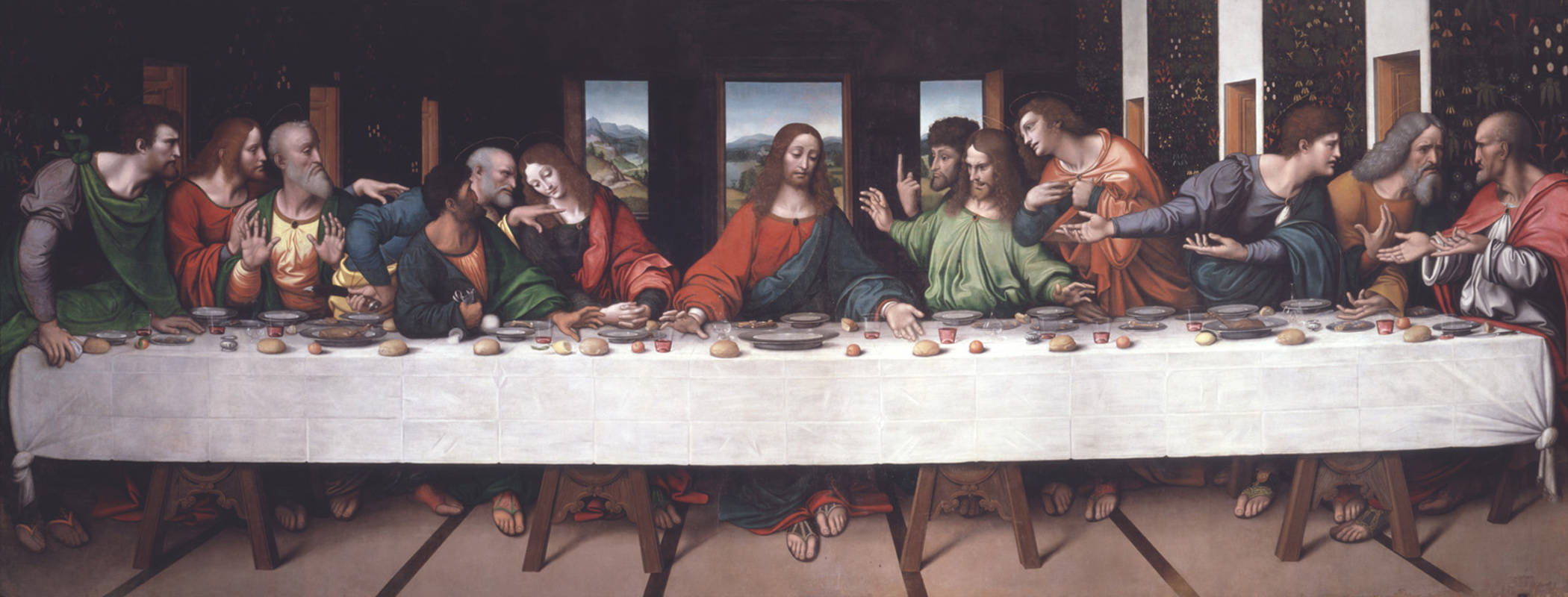
Who painted "The Last Supper"?
a)
Machiavelli
b)
Botticelli
c)
Kepler
d)
Leonardo da Vinci
12.

Donatello created a bronze Statue of...

a)

Harry Potter

b)

David

c)

Jesus

d)

Gandhi

13.

Who painted the School of Athens?

a)

Leonardo da Vinci

b)

Artemisia Gentilleschi

c)

Raphael

d)

Michelangelo

14.

Who sculpted the 1440 David?

a)

Michelangelo

b)

Georgia O'Keefe

c)

Donatello

d)

Sandro Botticelli

15.

What was the title of Machiavelli's handbook for politicians?

a)

The Kingmaker

b)

The Dictator

c)

The Prince

d)

The Villain

16.
Which Italian Renaissance artist was known for his use of perspective; often used the Madonna and child as a subject?
a)
Sofonisba Anguissola
b)
Michelangelo Buonarroti
c)
Leonardo da Vinci
d)
Raphael Sanzio
17.
Which Italian humanist writer wrote sonnets in Italian and Latin?
a)
Giovanni Boccaccio
b)
Vittoria Colonna
c)
Niccolo Machiavelli
d)
Francesco Petrarch
18.
Which Italian Renaissance writer wrote "The Prince" which offered realistic but not moral, advice to rulers?
a)
Giovanni Boccaccio
b)
Vittoria Colonna
c)
Niccolo Machiavelli
d)
Francesco Petrarch
19.
Which Italian Renaissance writer wrote Decameron which described realistic characters through tragic and comedic stories?
a)
Giovanni Boccaccio
b)
Vittoria Colonna
c)
Niccolo Machiavelli
d)
Francesco Petrarch
20.
Which Italian Renaissance writer  was a poet and exchanged sonnets with Michelangelo and helped Castiglione publish the Courtier?
a)
Giovanni Boccaccio
b)
Vittoria Colonna
c)
Niccolo Machiavelli
d)
Francesco Petrarch
21.

What does the word Renaissance mean?

a)

Resurrection

b)

Rebirth

c)

Rejuvenation

d)

Reformation

22.
a person who provides financial support for the arts
a)
Vernacular
b)
Banker
c)
Petrarch
d)
Patron
23.
a movement of great of creativity in art writing, and thought
a)
Middle Ages
b)
Renaissance
c)
perspective
24.
a supporter of the arts
a)
perspective
b)
Humanism
c)
patron
25.
a way of thought that focuses on the human potential for success
a)
Humanism
b)
perspective
c)
patron
26.
an artistic technique that produces a three-dimensional appearance
a)
patron
b)
perspective
c)
Humanism
27.

Sponsors, or __________________, used their wealth to help artists produce great works of art.

a)

humanists

b)

patrons

c)

protestants

d)

scientists

28.

_____________________ emphasized, or stressed, individual potential and was a movement to celebrate human abilities and actions.

a)

Catholicism

b)

humanism

c)

patriotism

d)

Protestantism

29.

Secular

a)

Concerned with worldly rather than spiritual matters

b)

focus on human potential and achievement

c)

Art technique that recreates three dimensions

d)

Use of Native Language instead of classical Latin

30.

Perspective

a)

Concerned with worldly rather than spiritual matters

b)

focus on human potential and achievement

c)

Art technique that recreates three dimensions

d)

Use of Native Language instead of classical Latin

31.

someone who paid for artists to work and create is called

a)

a Patron

b)

a Vassal

c)

a Humanist

d)

a Secularist

32.

Which factor contributed to the beginning of the Renaissance in Italian cities?

a)

occupation by foreign powers

b)

surplus of porcelain from Japan

c)

location near important trade routes

d)

interaction with Latin America

33.

What was the name of the rich merchant family in Florence, Italy that commissioned many great artist?

a)

The Trovato Family

b)

The Humanism Family

c)

The Maciavelli Family

d)

The Medici Family

34.

What do we call a man (or woman) who excels in many aspects of life (academic, cultural, artistic, religious)?

a)

Renaissance Man

b)

Classical Man

c)

Jack of all Trades

d)

The Enlightened Man

35.

Merchants during the Renaissance were typically part of which social class?

a)

the lower class

b)

the middle class

c)

the upper class

36.

Which family, known primarily for banking, ruled Florence during the Renaissance?

a)

the Medici

b)

the Capulet

c)

the Scala

d)

the Montague

37.

When her husband died, Isabella ruled this place on her own for almost 10 years:

a)

Milan

b)

Venice

c)

Mantua

d)

Papal States

38.

What did Isabella collect?

a)

Coins

b)

artwork

c)

instruments

d)

pearls

39.

Which of these statements reflects an influence of the Renaissance?

a)

dominance of the church

b)

constant feudal warfare

c)

lack of any governance

d)

increased interest in the arts

40.

Which of the following statements describes the type of government which existed in Florence during the Renaissance?

a)

It was a small Italian town ruled by the king of Italy in Rome.

b)

It was completely under the control of the Catholic Church.

c)

It was a city-state ruled by the wealthy Medici family.

d)

It was the capital of Italy and had a large bureaucracy.

41.
What provided the major economic support for the Renaissance?
a)
wealthy patrons
b)
church officials
c)
government grants
d)
kings competing for prestige
42.
Where did the Renaissance begin?
a)
Italy
b)
France
c)
England
d)
Germany
43.
The Medici Family...
a)
Were the first mafia family to live in Italy
b)
Were the most famous painters in Florence
c)
Were the family of Mona Lisa
d)
Were patrons of the arts in Florence
44.

Italian writer who wrote The Book of the Courtier

a)

Niccolò Machiavelli

b)

Petrach

c)

Leonardo

d)

Baldassare Castiglione

45.
Wrote a famous handbook for success, "The book of the Courtier"
a)
Francesco Petrarch
b)
Albrecht Durer
c)
Baldassare Castiglione
d)
All Are Correct
46.

Dutch religious scholar who called for the translation of the Bible into the vernacular

a)

Gutenberg

b)

Shakespeare

c)

Albrecht Durer

d)

Thomas More

e)

Erasmus

47.

English humanist who described an ideal society in Utopia

a)

Gutenberg

b)

Shakespeare

c)

Albrecht Durer

d)

Thomas More

e)

Erasmus

48.

the everyday spoken language of the common people

a)

printing press

b)

vernacular

c)

prosperous

d)

engraving

49.

the leading English language poet and playwright of the Renaissance

a)

Gutenberg

b)

Shakespeare

c)

Albrecht Durer

d)

Thomas More

e)

Erasmus

50.

printer who invented a printing press with movable type

a)

Gutenberg

b)

Shakespeare

c)

Albrecht Durer

d)

Thomas More

e)

Erasmus

51.

Machine for printing text or pictures from plates

a)

printing press

b)

vernacular

c)

prosperous

d)

engraving

52.
Born in Stratford England, __________ was one of its most popular playwrights and helped shape the Northern Renaissance.
a)
Dante Alighieri
b)
Cervantes
c)
Pieter Bruegel
d)
William Shakespeare
53.
What country invaded Italy and brought many Renaissance ideas to northern Europe?
a)
France
b)
Holland
c)
England
d)
Germany
54.
Who was Christine de Pizan?
a)
The author of The Book of The City of The Ladies, and was one of the first women to create a living as a writer.
b)
A queen that fought for women's rights.
c)
Was a queen from England, Ireland, and Wales and was the last monarch
d)
The last queen of France before the revolution, and was convicted of treason.
55.
What did Thomas More write and why did he write it?
a)
He wrote the play Romeo and Juliet to show how strong love can be.
b)
He wrote the novel Utopia to show what a better model of society looked like. 
c)
He wrote the novel The Book of the City of the Ladies to show the objections that men had against women getting an education.
d)
He wrote The Praise of the Folly that expresses the sentiment and philosophy of the author. 
56.
What does utopia mean during this time?
a)
"no place"
b)
A perfect society
c)
An imaginary world
d)
Something that won't ever exist
57.
What did Johann Gutenberg create?
a)
He created the two types of plays (comedy and tragedy)
b)
He created an idea for a better model of society
c)
He created many realistic sculptures
d)
He created the first printing press
58.
Who was William Shakespeare
a)
He was the one of the most well known Christian humanists
b)
He was a craftsman from Mainz, Germany
c)
He was the most famous writer during the Elizabethan Age
d)
He was the man that showed everyone what a better society would look like from his point of view
59.
What was Desiderius Erasmus known for?
a)
He was known for writing many plays like Romeo and Juliet, and Macbeth
b)
He was known for creating realistic sculptures like the sculpture Pieta
c)
He was known for his novel called Utopia that expressed how he viewed society
d)
He was known for being a Christian humanist in Holland
60.
What impact did the Christian Humanism have on society?
a)
There was no impact at all
b)
The impact was only on language and religion
c)
Created sculptures that were more realistic than they were before
d)
It impacted the art, reigious scholarship, and helped shape personal spirtiuality
61.
Who was known for their realistic paintings?
a)
Da vinci
b)
Erasmus
c)
Sir Thomas Moore
d)
Van Eyck
62.

Christine De Pizan was highly educated for the time & was one of the first women that is considered as, or calling for:

a)

Medieval writers

b)

girl's equal rights

c)

education for all genders

63.

Who were the German painters?

a)

Jan Van Eyck

b)

Hans Holbein

c)

Albrecht Durer

d)

Pieter Bruegel

64.

True or False:

Durer made woodcuts/engravings, religious subjects, painted realistic landscapes, showed himself as a Renaissance man.

a)

True

b)

False

65.

Who were the Flemish painters?

a)

Jan Van Eyck

b)

Hans Holbein

c)

Pieter Bruegel

d)

Albrecht Durer

66.

True or False:

Jan Van Eyck did NOT use oil paint but displayed unusually realistic details and reveal personality of their subjects.

a)

False

b)

True

67.

Pieter Bruegel painted what?

a)

Humanism

b)

Everyday peasant life

c)

Paintings that illustrated proverbs or taught a moral

d)

Merchants/Nobles

68.

Define Utopia

a)

The ideal place

b)

No place

c)

Nothing

d)

The universe

e)

Life

69.

Which Renaissance artist did Francis I of France invite to live in France?

a)

Michelangelo

b)

da Vinci

c)

Bruegel

d)

Raphael

70.
A social reformer who described an ideal society
a)
More
b)
Gutenberg
c)
Erasmus
d)
Durer
71.
Everyday language of ordinary people
a)
engraving
b)
vernacular
c)
realism
d)
utopian
72.
Who invented the printing press?
a)
Erasmus
b)
More
c)
Gutenberg
d)
Durer
73.
Which of the following accomplishments did NOT take place during the Renaissance? 
a)
Galileo built a telescope to prove the earth revolved around the sun.
b)
Leonardo da Vinci created detailed studies of human anatomy.
c)
Johannes Gutenburg made books available through the invention of the printing press.
d)
Thomas Edison changed the world with his invention of electricity.
74.
The Elizabethan Age is associate with which country’s contribution to the Northern Renaissance.
a)
England
b)
Holland
c)
Ireland
d)
Italy
75.
The Printing press allowed for 
a)
more books to be delivered to people 
b)
more books to be printed quicker 
c)
books to have more pages 
d)
authors to make more money 
76.
What does writing in the vernacular mean?
a)
writing in a foreign language
b)
writing in first person voice 
c)
writing in Latin 
d)
writing in people's native language 
77.
Who wrote Utopia?
a)
Sir Thomas Moore
b)
Erasmus
c)
Guttenberg
d)
Martin Luther
78.

This man created "Christian Humanism", and wrote about a pure Christian life without politics & rituals of the church

a)

Pieter Brughel

b)

Erasmus

c)

Albrecht Durer

d)

William Shakespeare

79.

William Shakespeare was an English _______________.

a)

actor

b)

painter

c)

craftsman

d)

playwright

80.

What did the Renaissance of Italy refer to?

a)

rebirth of dancing and music

b)

rebirth of art and learning

81.
Whose woodcut is this
a)
Michelangelo
b)
Raphael
c)
Da Vinci
d)
Durer
82.

Flemish painter who perfected the art of painting with oil.

a)

Petrarch

b)

van Eyck

c)

Da Vinci

d)

Michelangelo

83.

Where did Italian artists and writers flee for safety during the Italian wars?

a)

northern Europe

b)

southern Europe

c)

North America

d)

South America

84.

Which one is one Erasmus famous works?

a)

In Praise of Folly.

b)

He was the first editor of the New Testament

c)

The Statue of David

d)

The Printing Press

85.
Which of these titles are not a Shakespeare play?
a)
Macbeth
b)
Romeo and Juliet
c)
Twelfth Night
d)
Charlotte's Web
86.

What is the name of the theatre associated with William Shakespeare?

a)

The Royal Theatre

b)

The London Theatre

c)

The Globe Theatre

d)

Shakespeare's Theatre

87.

Where was Shakespeare born?

a)

Stratford-Upon-Avon

b)

London

c)

Oxford

d)

Liverpool

88.

Which of these plays was written by Shakespeare?

a)

Hamlet

b)

Macbeth

c)

A Midsummer Night's Dream

d)

All of them

89.
Who invented the printing press?
a)
Alexander Graham Bell
b)
Johann Gutenberg
c)
Thomas Farnsworth
d)
Guglielmo Marconi
90.
Which of the following was the first printed/published book?
a)
Encyclopedia Britannica
b)
The Bible
c)
Webster's Dictionary
d)
The Epic of Gildamesh
91.

Where did Johannes Gutenberg live most of his childhood?

a)

Mainz, Germany

b)

Strasbourg, Georgia

c)

Strasbourg, France

d)

Columbia

92.

What did Johannes Gutenberg make?

a)

Pencils

b)

Paper

c)

The Printing Press

d)

Books

93.

which of these statement are true ?

a)

The printing press helped the children to pass on their exams

b)

With a printing press publishers can make a thousands of copies of a book in a short time

c)

we can also add some virtual effect in printing press

d)

All of these

94.

What timeframe is known as the rebirth of culture and art in Europe after the Middle Ages. Centered in Italy.

a)

Classical

b)

Renaissance

c)

Feudalism

d)

Dark Ages

95.

_________________refers to the cultures of Ancient Greece and Rome. Renaissance artists were inspired by ___________ ideas.

a)

Renaissance

b)

Humanism

c)

Italy

d)

Classical

96.

Humanists formed a belief in the importance of the individual during the study of classical culture. It was called:

a)

Classical

b)

Medieval

c)

Humanism

d)

Vernacular

97.

Inventor of movable type printing press.

a)

The Chinese

b)

Printing Press

c)

The Pope

d)

Johannes Gutenberg

98.

What did the printing press do? Select all that apply.

a)

Allowed for the faster spread of knowledge.

b)

More people learned to read.

c)

People were able to buy the printing press.

d)

It was able to make paper.

99.

It means common language of each country. The Bible was translated into English, German, and other common _________________.

a)

Vernacular

b)

Disseminate

c)

Pamphlet

d)

Printing Press

100.

Which cultures did Renaissance humanists study?

a)

Egypt and India

b)

Greece and Rome

c)

India and Rome

d)

Greece and China