
 Worksheets
P4 Year End Music Assessment
Total questions: 50
Worksheet time: 25mins
the high and low sounds in music
Melody
Pitch
Rhythm
Harmony
A series of pitches that form a tune.
Melody
Pitch
Rhythm
Consonance
Duration of the note (long or short)
Harmony
Pitch
Rhythm
Two or more pitches occurring at the same time
Melody
Triad
Harmony
Rhythm
A chord consisting of three tones
Double-stop
Triad
Melody
Interval
What is the part of the music that you hear that sticks out from the rest of the music?
Melody
Harmony
Rhythm
Tempo
What part of the music is 2 or more different notes played at the same time?
Melody
Harmony
Rhythm
Tempo
What instrument can't play melody or harmony?
Piano
Flute
Violin
Drum
Five lines AND four spaces where pitches go is called....
melody
music staff
harmony
dissonance
What do we call the "main" part of a song that is the most recognizable and singable?
Chord
Harmony
Melody
Flat
Is this sound clip a harmony or a melody?
Harmony
Melody
Is this sound clip a harmony or a melody?
Harmony
Melody
Pitch is the part of music that defines
Fast vs. slow sounds
High vs. low sounds
Loud vs. quiet sounds
Melodic vs. harmonic sounds
Pitch + Rhythm = ?
Dynamics
Form
Melody
Timbre
An interval is...
the distance between two pitches.
the shape of a melody.
how loud or quiet a note is.
the highest and lowest pitches in a melody.

What is this interval?
2nd
3rd
4th
5th
6th

What is this interval?
2nd
3rd
4th
5th
6th

What is this interval?
3rd
4th
5th
6th
7th

What is this interval?
2nd
3rd
4th
5th
6th

What is this interval?
2nd
3rd
4th
5th
6th

What is this interval?
3rd
4th
5th
6th
7th

What is this interval?
2nd
3rd
4th
5th
6th
What is an interval?
The space between two notes
The entrance to the risers
The entrance to the song
An instrumental interlude
The distance between B to D is an interval of a
unison
second
third
fourth
Which interval is harmonic?


Which interval is melodic?


Which is a repeat? (unison)


How do you call an interval between C and D?
2nd
4th
unison
3rd
What is the name of the interval made of ABC 3 letters?
3rd
6th
2nd
A 7th is made of 7 different notes
ABCDEFG
AABBCDF
DEFGAAB
ACFGECR
In melodic intervals, notes are played together.
False
True

What is this interval?
Unison
3rd
4th
5th

What is th distance of this interval?
2nd
3rd
4th
5th

Step
Skip
Leap
Repeat

Step
Skip
Leap
Repeat

Step
Skip
Leap
Repeat

Step
Skip
Leap
Repeat

Step
Skip
Leap
Repeat
SKIP


LEAP


STEP


REPEAT


What is a C major ARPEGGIO?
C-E-G-C
C-F-D-G
C-D-E-F
How many notes in a triad?
2
3
4
5
Click on the THREE notes that are needed for the chord of C.
C
G
A
E
D

What is the correct name of this chord?
G major
C major
B major
Sharps, Flats, and Naturals encountered in a piece of music are called _____
Dots
Rests
Accidentals
Time Signature
Which is written correctly?
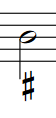
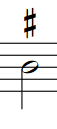


What is an accidental in music?
When you play a wrong note by accident.
A sharp, flat, or natural that changes the pitch of the note.
When you see multiple eighth notes together.
When the composer puts in wrong notes on purpose.
Where are accidentals located?
To the right of the note
Above the note
To the left of the note
Below the note
On the back of the music staff

