
 Worksheets
Integumentary System Review
Total questions: 17
Worksheet time: 17mins
Shearing is a common cause of skin breakdown.
True
False
Aarav noticed that his grandmother's skin is not as firm and elastic as it used to be. Is this a common occurrence with age?
True
False
Secretions from the sebaceous (oil) glands increase with age.
True
False
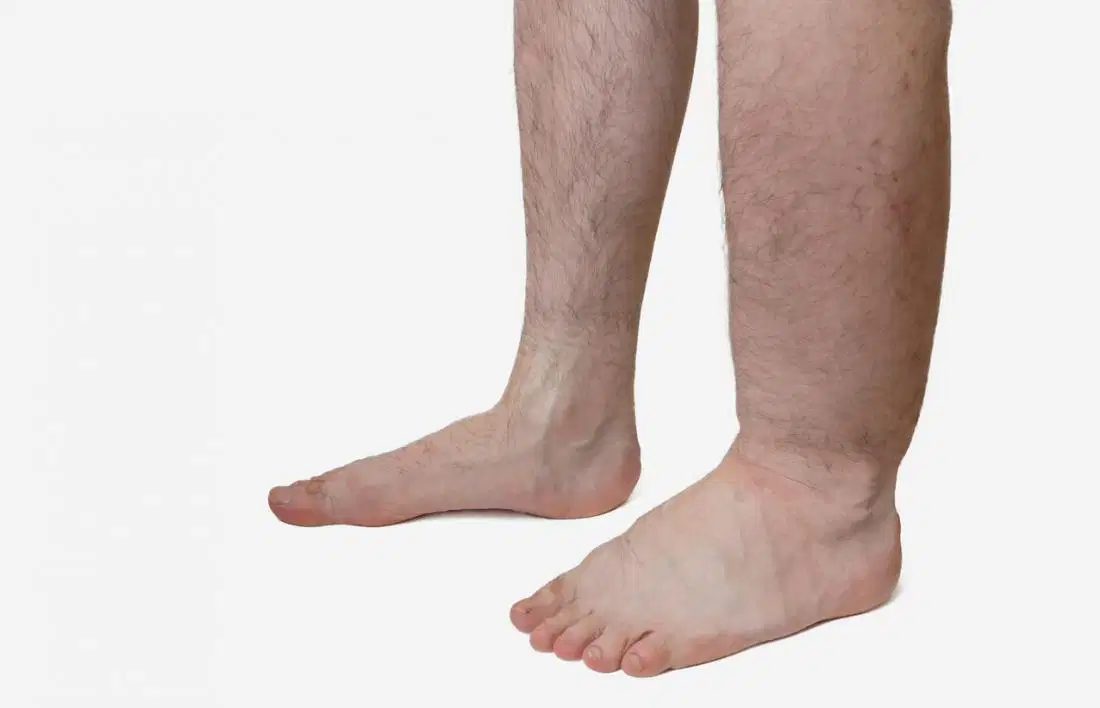
This image depicts what condition of the left leg and foot?
atrophy
dermatitis
shearing
edema
Poor nutrition increases the risk of skin breakdown.
True
False
The sacrum and coccyx (tailbone) is a pressure point in the lateral position.
True
False
Clients should be re-positioned at least every 2 hours to prevent pressure injuries.
True
False
Purulent drainage of a wound is normal.
True
False

A bed cradle (see image) in LTC is used to:
put a baby to sleep
increase circulation
keep bed linens off to prevent pressure injuries to the lower limbs, feet or toes
raise a bed to working height

A stage four pressure ulcer shown here, is indicative of:
muscle and bone are exposed and damaged
skin is intact but is redder than surrounding skin
skin is gone and underlying dermis layer is exposed
skin is cracked, blistered or peeled
One way an HCA can assist clients in keeping their clients skin healthy and intact is to apply moisturizer on a daily basis. Except in what locations?
legs
arms
between toes and skin folds
backs
Cracked, dry lips may be an indication of:
pressure sores
decreased circulation
a stroke
dehydration

The outermost layer of the skin indicated in the image is:
dermis
adipose layer
hypodermis
epidermis
The purpose of sebaceous glands are to:
secrete oils to keep hair and skin soft and shiny
keep skin dry
secrete sweat
protect fingertips
Skin plays a role in homeostasis by helping regulate body temperature and fluid balance.
True
False

The black part of the attached image is of _______ tissue. This tissue is dead.
healing
healthy
necrotic
diabetic
A bluish discoloration of the skin is called:
(a)

