
Font size
 Worksheets
F2 SC CHAPTER 9
Total questions: 70
Worksheet time: 44mins
Which of the following is true about heat?
Heat is a form of energy.
Heat can only be transmitted through a medium.
S.I. unit of heat is degree Celsius.
The heat content in an object is influenced by the surface area.
Which of the following pair is correct?
Temperature: K ; Heat: J
Temperature: kJ ; Heat: °F
Temperature: °C ; Heat: kg
Temperature: Nm ; Heat: K
Temperature depends on
the degree of movement of the particles in a matter
type of material
quantity of material
We measure temperature by using _________________
burette
thermometer
pipette
ruler
When water is heated, its temperature increases.
True
False
Heat transfers from ______ objects to _____ objects.
cold to hot
hot to cold
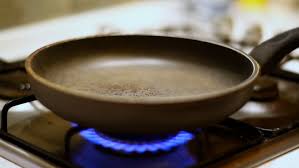
What type of heat transfer is occurring in the picture below? (the pan is touching the burner)
conduction
convection
radiation
insulation

picture shows heat flows through
conduction
convection
radiation
Which situation involves radiation of heat?
Boiling water in a kettle
Melting metal in a furnace
Warming up in front of a fireplace
Forming dew drops on a leaf

Diagram shows an activity conducted by a student. It is found that the spiral - shaped cardboard rotates. What inference can be made from the activity?
Hot air above the candle rises through radiation
Hot air above the candle rises through convection
Hot air above the candle rises through conduction
Hot air above the candle propagate through vacuum and rises
Energy from the Sun travels to Earth as
Conduction
Convection
Insulation
Radiation
Which of the following is NOT a heat insulator?


Heat insulators are ______________________
materials that prevent heat flow
materials that allow heat flow
Cherry needs a ladle to take some boiling soup from the pot. Help Cherry to choose the best ladle.


The following are heat conductors EXCEPT


Malik added 100 ml of hot water of temperature 80°C into container W, X, Y and Z respectively. Then, he measures the temperature of water in each container after 15 minutes. The table shows the result of his finding. Which container is the best heat insulator?
W
X
Y
Z
Which of the following describes sea breeze?
(Select more than one answer.)
Happen during the day
Sea heat up faster compared to land
Hot air above sea become less dense and rises
Cold air from sea replace the air above the land

A girl is standing facing the seaside. What causes her hair to be blown back as in the illustration?
Sea breeze
Land breeze

What is this natural phenomenon?
Sea breeze
Land breeze
Global warming
Rain formation
Which of the following is NOT true about land breeze?
It occurs at night.
It blows from the land to the sea.
It occurs because the sea is warmer than the land.
It occurs because the land heats up faster than the sea.


Which object would best complete this circuit?
A dry cell
A wool string
A copper wire
A rubber band


What should be use to repair the damaged wire?
cloth
aluminium foil
rubber tape
Which of the following is NOT an example of heat flow through convection in our daily life?


If you burn your hand on the handle of a hot pot, heat was transferred to your skin by
conduction
convection
radiation
equilibrium
What type of heat transfer is occurring in the picture below? (the pan is touching the burner)
conduction
convection
radiation
insulation
Energy from the Sun travels to Earth as
Conduction
Convection
Insulation
Radiation
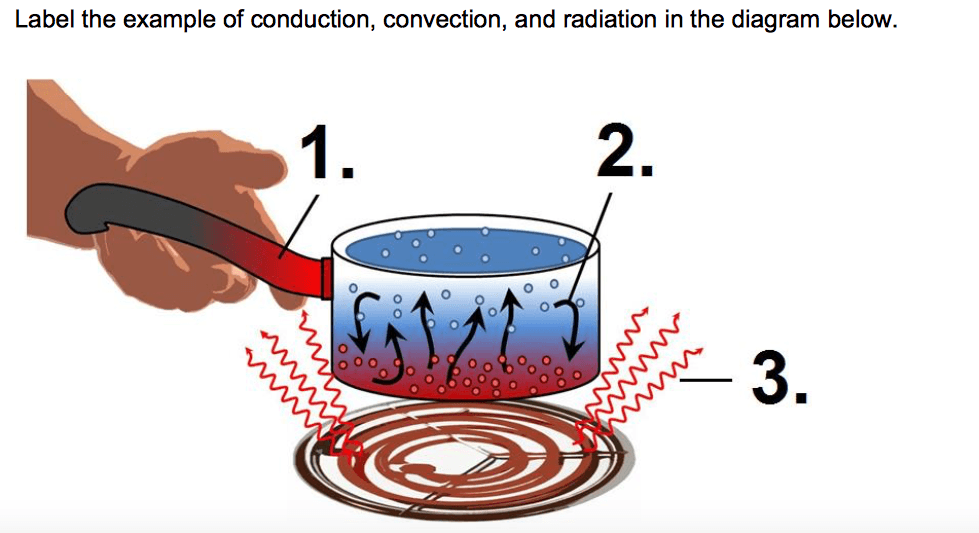
What type of thermal energy transfer is number 1 pointing to?
Convection
Conduction
Radiation
Insulation

What type of thermal energy transfer is number 2 pointing to?
Convection
Conduction
Radiation
Insulation

What type of thermal energy transfer is number 3 pointing to?
Convection
Conduction
Radiation
Insulation
heat flows through
conduction
convection
radiation
What is the way heat moves through liquids and gases called?
convection
radiation
conduction
Which situation involves radiation of heat?
Boiling water in a kettle
Melting metal in a furnace
Warming up in front of a fireplace
Forming dew drops on a leaf
Diagram shows an activity conducted by a student. It is found that the spiral - shaped cardboard rotates. What inference can be made from the activity?
Hot air above the candle rises through radiation
Hot air above the candle rises through convection
Hot air above the candle rises through conduction
Hot air above the candle propagate through vacuum and rises
A form of energy that flows from a hotter region to a colder region.
Heat
Temperature
the measurement of the degree of hotness or coldness of an object.
Temperature
Heat
Heat is measured in Celsius (℃) and Kelvin (K) unit.
True
False
take place in solid, heat is transferred through the vibrating particles that are in contact.
Conduction
Convection
Radiation
takes place in fluid and gas, heat is transferred by the moving of convection current.
Conduction
Convection
Radiation
take place is vacuum, heat flows in the form of electromagnetic waves
Conduction
Convection
Radiation

Sea breeze
Land breeze

Conduction
Convection
Radiation
Example of substance that allows heat to flow through it easily.
Asbestos
Plastic
Copper
Example of substance that prevents or slow down the rate of heat through it.
Aluminium
Polystyrene
Nickel
Heat is measured in __________
Celcius
Joule
Degree
Kelvin

Temperature is measured in ___________
Joule
Celcius
Degree
Kelvin
Heat flows from __________ region to __________ region.
cooler, hotter
hotter, cooler
Heat can be seen.
true
false
plastic is a heat insulator
true
false
________________ has small gaps to let them expand in hot day.
bridges
thermometer
railway tracks
fire alarm
____________ colour can release heat faster.
light
dark
heat conductor __________ heat to flow through it.
allows
does not allow
A solid changing to a liquid is...
Evaporation
Melting
Condensing
Freezing
during the night, the _________cools down faster than the _________
sea, land
land, sea
Why is the fuel tank on an oil tanker truck painted in shiny colours?
Shiny colours are good heat absorbers
Shiny colours are good radiator of heat
Shiny colours are weak heat absorbers
Shiny colours make the truck looks nicer
The silver surface of the teapot retains heat longer. This is because
The silver is a weak heat radiator
The silver is a good heat radiator
Walls of a house are painted with bright colours because
Bright surface are a good heat absorber
Bright surface are a poor heat absorber
Why is avoiding black coloured shirt during activities under the hot Sun a good idea?
Black are weak heat absorber
Black are good heat absorber

Which can is a better heat absorber and radiator
The dark can
The white can

If we filled both glass with hot coffee, which cup of coffee will probably cools down faster, given thay both cup made up of the same material?
The black cup
The white cup
Which surface is a better heat absorber and radiator
Dark, dull surface
White, shiny surface

Sarah is going to take her children to the beach this weekend. She planned to get a huge umbrella to reduce heat from the sun. Which of the following criteria can be taken into consideration when choosing the umbrella?
Type of material
Height of the umbrella
Colour of the umbrella
Flexibility of the umbrella
Why are most of the frying pans black in colour?
The black frying pans are stronger and more durable.
The black frying pans insulate heat better than shiny frying pans.
The black frying pans absorb heat better.
The black frying pans release heat better.
What colour of clothing is most suitable to be worn during hot weather?
Black
White
Red
Dark green
An object with ______________ surface is a good absorber of heat.
shiny
bright
dark
rough

