wayground logo

Free Printable Worksheets

Font size

S
M
L
XL
Worksheets

Biomolecules

Total questions: 45

Worksheet time: 2hrs 7mins

Name
Class
Date
1.

What is a biomolecule?

a)

The dissolved particle in a solution

b)

One of the by-products of respiration

c)

Large molecule that is present in living organisms

d)

None of the above

2.

Which of the following are biomolecules?

a)

RNA, DNA, proteins, lipids

b)

Proteins, lipids, carbohydrates, polymers

c)

Nucleic acid, lipids, carbohydrates, monomers

d)

Proteins, lipids, carbohydrates, nucleic acids

3.

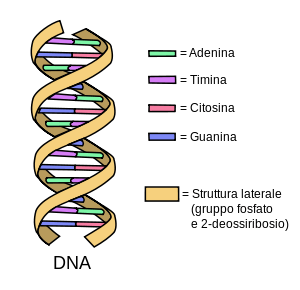
The function of the nucleic acid is --

a)

to store and transmit genetic information inherited from your parents

b)

to maintain our body temperature

c)

to build up muscles bones and other body parts

d)

to regulate sugar in your blood and give your cells energy

4.

What are lipids?

a)

Polymers made of amino acids

b)

Monomers that store and transfer genetic information

c)

Fatty acids not generally soluble in water

d)

Complex carbohydrates like starch

5.

Which of the following is a characteristic of carbohydrates?

a)

Provides structure for cells

b)

Provides energy for all cellular activities

c)

Contain complex carbohydrates known as starches

d)

All of the above

6.

Which biomolecule is useful for a fast source of energy?

a)

Lipid

b)

Nucleic acid

c)

Protein

d)

Carbohydrate

7.
What biomolecule do enzymes belong to? 
a)
Carbohydrate
b)
Lipid
c)
Nucleic Acid
d)
Protein
8.
Which biomolecule is found in pasta and bread?
a)
Lipid
b)
Protein
c)
Nucleic Acid
d)
Carbohydrate
9.
Which biomolecule is found in fats, oils, and waxes and is a source of long-term energy
a)
Proteins
b)
Nucleic Acid
c)
Lipids
d)
Carbohydrate
10.
Carbon, Hydrogen, Oxygen and Nitrogen are elements in what biomolecule?
a)
Carbohydrate
b)
Lipid
c)
Protein
d)
Nucleic acid
11.
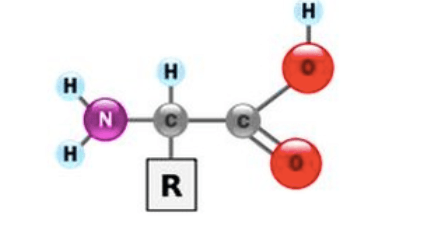
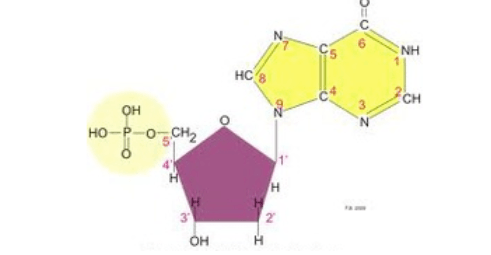
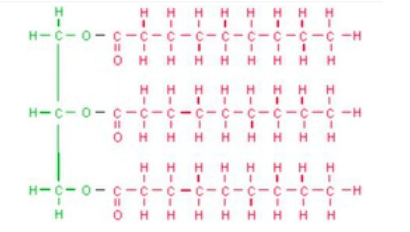
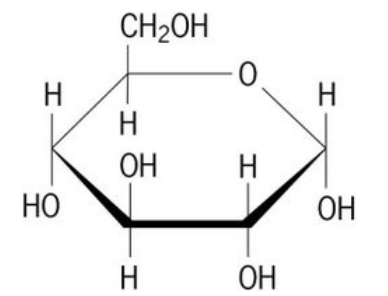
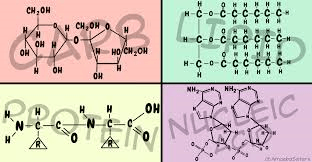
Which biomolecule is this a picture of?
a)
Protein
b)
Nucleic Acid
c)
Lipid
d)
Carbohydrate
12.
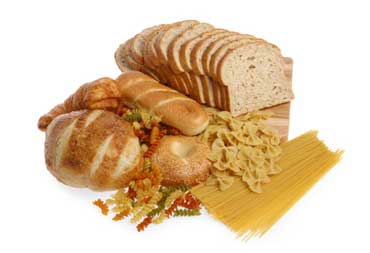
Which biomolecule is this a picture of?
a)
Protein
b)
Nucleic Acid
c)
Lipid
d)
Carbohydrate
13.
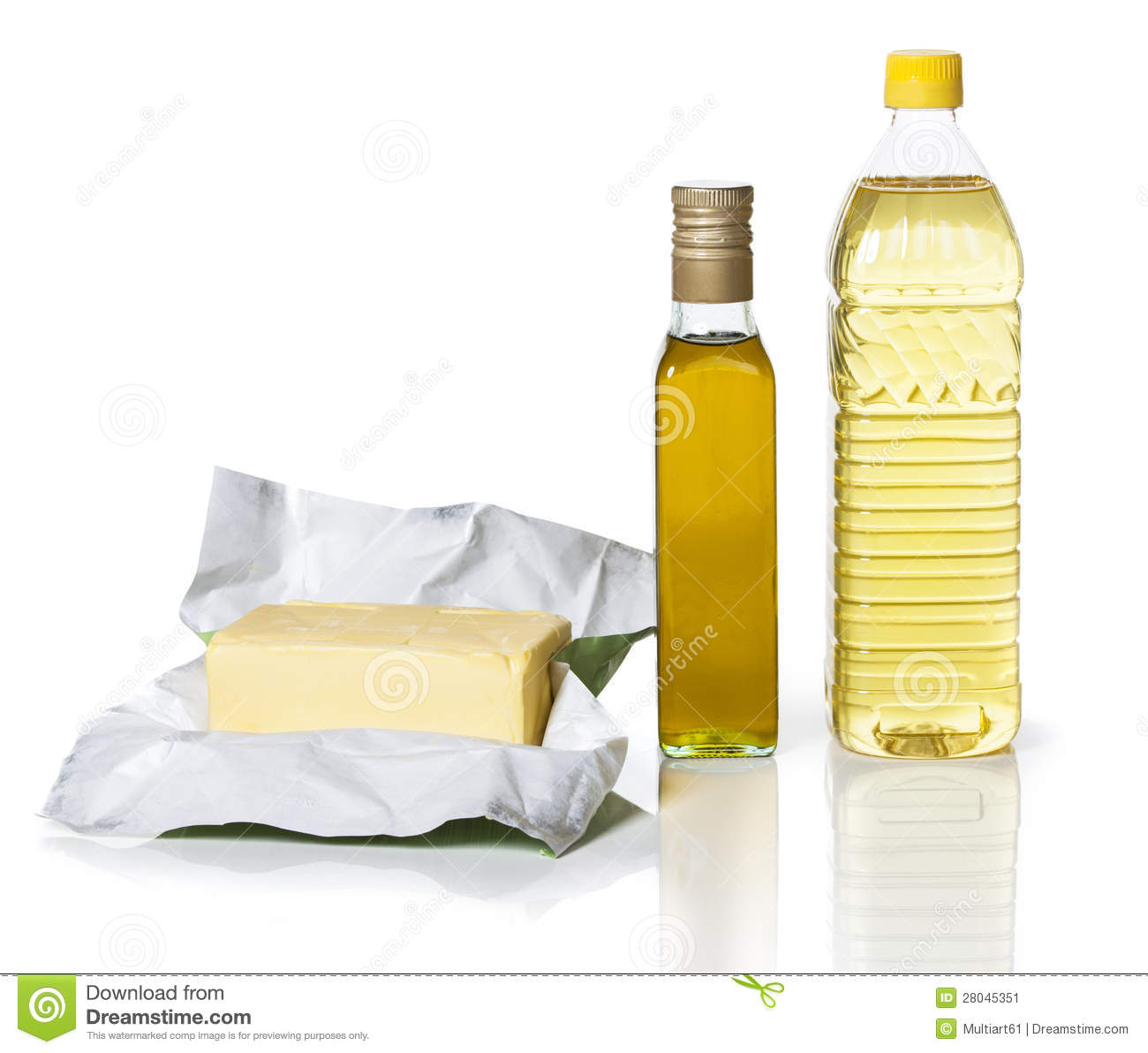
Which biomolecule is this a picture of?
a)
Protein
b)
Nucleic Acid
c)
Lipid
d)
Carbohydrate
14.
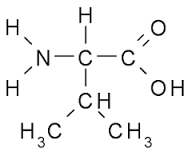
Which biomolecule is this a picture of?
a)
Protein
b)
Nucleic Acid
c)
Lipid
d)
Carbohydrate
15.

Which biomolecule helps form muscles?

a)

Nucleic Acid

b)

Carbohydrate

c)

Protein

d)

Lipids

16.
Which biomolecule has sugars and starches?
a)
Lipids
b)
Proteins
c)
Carbohydrates
d)
Nucleic Acid
17.
What type of molecule is this?
a)
Nucleic acid
b)
Protein
c)
Carbohydrate
d)
Lipid
18.
What elements are common to all 4 biomolecules?
a)
Carbon, hydrogen, nitrogen
b)
Carbon, Nitrogen, Phosphorus
c)
Carbon, Hydrogen, Oxygen
d)
Carbon, Hydrogen, Phosphorus
19.
A monomer is ...
a)
a single atom
b)
a building block for polymers
c)
a single element
d)
is an inorganic molecule
20.
Enzymes are considered to be 
a)
Lipids
b)
Carbohydrate
c)
Protein
d)
Nucleic Acid
21.
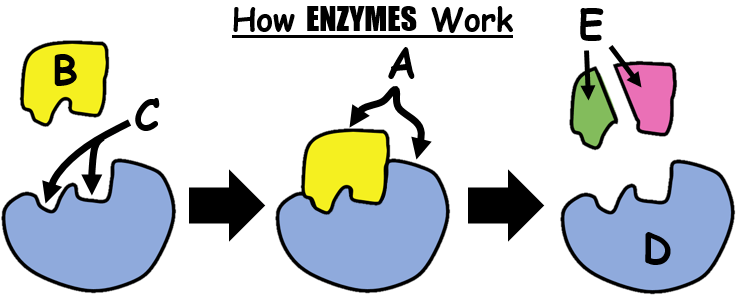
What is the purpose  of an enzyme?
a)
give permission for the reaction
b)
raise activation energy
c)
speed up reactions
d)
control how many reactions occur
22.
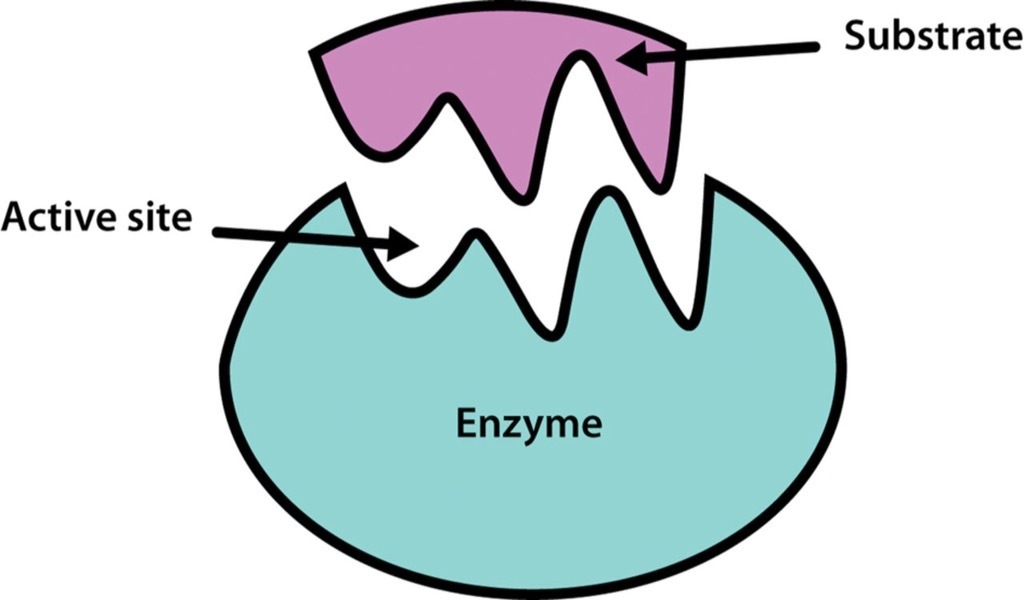
Letter D...
a)
active site
b)
enzyme
c)
substrate
d)
products
23.
Which biomolecule is found in pastas and breads? (Hint: it is a polymer)
a)
Lipid
b)
Protein
c)
Simple Carbohydrate
d)
Complex Carbohydrate
24.
Which biomolecule group includes fats, oils, and waxes?
a)
Proteins
b)
Nucleic Acid
c)
Lipids
d)
Carbohydrate
25.
ALL polymers (large molecules) are made up of...
a)
monosaccharides
b)
monomers
c)
proteins
d)
None of these
26.
Which of the following is NOT a biomolecule?
a)
Water
b)
Nucleic Acid
c)
Protein
d)
Lipid
27.

Which of the following is an example of COHESION?

a)

water sticking to water

b)

water sticking to glass

c)

oil sticking to plastic

d)

hydrogen sticking to oxygen

28.

Water is polar. What does that mean?

a)

it is a molecule with opposite charges on opposite ends

b)

it is a molecule with no charge

c)

it is a molecule with identical charges on opposite ends

d)

it is a molecule with too many protons

29.

Water sticks well to many materials. What term relates to this property of water?

a)

cohesion

b)

adhesion

c)

density

d)

surface tension

30.

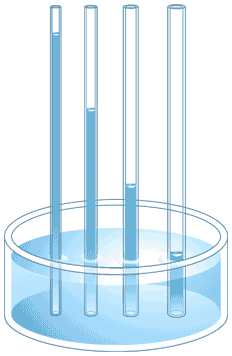
What is the term for water's ability to defy gravity and climb up a tube?

a)

Capillary Action

b)

Specific Heat

c)

Universal Solvent

d)

Magic

31.
The attraction that causes water and other liquids to form drops on thin films is called ________________. This is also water’s ability to be attraction to other water molecules.
a)
adhesion
b)
capillary action
c)
cohesion
d)
surface tension
32.
Water is a universal solvent because it...
a)
It can be found anywhere
b)
It freezes when it gets cold
c)
floats when frozen
d)
Dissolves most substances
33.
Which characteristic of water will allow a paperclip to remain floating on water when the paperclip is gently placed on top of the water?
a)
adhesion
b)
surface tension
c)
solvent properties
d)
nonpolar
34.
Which biomolecule turns iodine solution black?
a)
complex carbohydrate (polysaccharide)
b)
protein
c)
simple carbohydrate (monosaccharide)
d)
lipid
35.
Which reagent is used to test for complex carbohydrates (polysaccharides)?
a)
iodine solution
b)
biuret solution
c)
Benedict's solution
d)
Sudan III solution
36.
Which biomolecule does Benedict's solution test for?
a)
simple carbohydrate (monosaccharides)
b)
complex carbohydrates (polysaccharides)
c)
proteins
d)
lipids
37.
Which reagent is used to test for simple carbohydrates (monosaccharides)?
a)
iodine solution
b)
Benedict's solution
c)
Biuret solution
d)
Sudan III solution
38.
Which reagent is used to test for lipids?
a)
iodine solution
b)
Benedict's solution
c)
Biuret solution
d)
Sudan III solution
39.
Which biomolecule does Sudan III solution test for?
a)
simple carbohydrate (monosaccharides)
b)
complex carbohydrates (polysaccharides)
c)
proteins
d)
lipids
40.
Which reagent is used to test for proteins?
a)
iodine solution
b)
Benedict's solution
c)
Biuret solution
d)
Sudan III solution
41.
Which biomolecule does biuret solution test for?
a)
simple carbohydrate (monosaccharides)
b)
complex carbohydrates (polysaccharides)
c)
proteins
d)
lipids
42.
What color does Benedict's solution turn in the presence of a simple carbohydrate (monosaccharide)?
a)
range from yellow to red
b)
blue/black
c)
purplish/violet
d)
red
43.
What color does biuret solution turn in the presence of a protein?
a)
range from yellow to red
b)
blue/black
c)
purplish/violet
d)
red
44.

What color does Sudan III solution turn in the presence of a lipid?

a)

range from yellow to red

b)

blue/black

c)

purplish/violet

d)

red globules

45.
Tara conducted several tests on a mystery solution.  Her results were as follows:
*Biuret's = purplish/violet; *Benedict's = orange;  *Sudan III = yellow; *Iodine = black.
Which biomolecules were present in the mystery solution?

a)
protein & carbohydrate
b)
protein & lipid
c)
carbohydrate & lipid
d)
protein, carbohydrate, & lipid