wayground logo

Free Printable Worksheets

Font size

S
M
L
XL
Worksheets

Inside the atom

Total questions: 20

Worksheet time: 10mins

Name
Class
Date
1.

2. Rutherford discovered what part of the atom

a)

electron

b)

proton

c)

neutron

d)

nucleus

2.

3.Who proposed the theory that atoms orbit the nucleus in specific orbits.

a)

dalton

b)

bohr

c)

rutherford

d)

chadwick

3.

4. This atomic particle balances the charges from the protons to make the atom neutral

a)

proton

b)

electron

c)

neutron

d)

nucleus

4.

5.These particles are found in the nucleus

a)

protons and electrons

b)

protons and neutrons

c)

nucleus and neutrons

d)

electrons and neutrons

5.

6.What scientist is best known for his "Plum Pudding" model of the atom?

a)

J.J. Tomson

b)

Ernest Rutherford

c)

John Dalton

d)

Democritus

6.

7.How many electrons does this oxygen atom have?

a)

6

b)

8

c)

16

d)

24

7.

10.All matter is made of atoms

a)

true

b)

false

8.
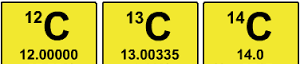
What do these isotopes of carbon all have in common?
a)
neutrons & mass number
b)
atomic number and neutrons
c)
atomic number and electrons
d)
protons, atomic number, and mass number
9.
How many neutrons does the isotope of lithium have?
a)
8
b)
3
c)
4
d)
5
10.
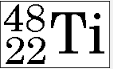
How many protons does this isotope of titanium have?
a)
48
b)
22
c)
26
d)
70
11.
What quantities vary between isotopes of an element?
a)
protons, electrons, and atomic mass
b)
protons, electrons, and atomic number
c)
neutrons and electrons
d)
neutrons and atomic mass
12.

Which radioactive particles were used in Rutherford's scattering experiment?

a)

Gamma particles

b)

Beta particles

c)

Alpha particles

13.

What is the charge over neutron?

a)

Positive

b)

Negative

c)

No charge.

14.

(select the right answer)

Atoms are ______ and have and equal number of ________ and ________

a)

neutrons, protons, electrons

b)

neutral, protons, electrons

c)

elements, electrons, protons

d)

neutral, protons, neutrons

15.
What type of radioactive decay is shown here?
a)
Alpha decay
b)
Beta decay
c)
Gamma decay
16.
Which type of radiation releases an electron?
a)
Alpha radiation
b)
Beta radiation
c)
gamma radiation
17.
What type of radiation can be stopped by clothing or a piece of paper?
a)
Alpha radiation
b)
Beta radiation
c)
gamma radiation
18.
What particle is released when an unstable isotope undergoes alpha radiation?
a)
an helium nucleus
b)
an electron
c)
a photon of light
19.
Which process involves the splitting of large nuclei?
a)
alpha decay
b)
nuclear fusion
c)
beta decay
d)
nuclear fission
20.
What type of nuclear reaction occurs in the Sun?
a)
Nuclear fission
b)
beta decay
c)
alpha decay
d)
Nuclear fusion