
 Worksheets
Cells and theories
Total questions: 26
Worksheet time: 25mins
Name
Class
Date
1.

Which of the following scientists contributed to the cell theory?
a)
Rudolf Virchow, Robert Hooke, Anton van Leuwenhoek
b)
Matthais Schleiden, Theodor Schwann, Rudolf Virchow
c)
Robert Hooke, Theodor Schwann, Anton von Leuwenhoek
d)
Theodor Schwann, Matthais Schleiden, Robert HookeOption 4 (optional)
2.
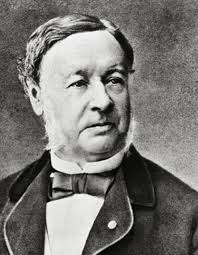
Which of the following scientists concluded that all animals are made of cells?
a)
Rudolf
Virchow
b)
Matthais
Schleiden
c)
Robert
Hooke
d)
Theodor
Schwann
3.

Which of the following scientists was the first to observe bacteria?
a)
Anton
van Leuwenhoek
b)
Matthais
Schleiden
c)
Robert
Hooke
d)
Theodor Schwann
4.
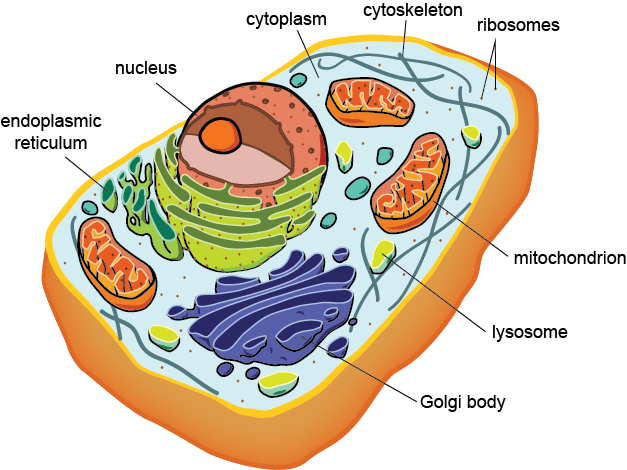
Which of the following statements is not part of the cell theory?
a)
Cells are the basic unit of structure and function in all living things.
b)
All cells are produced from other cells.
c)
Only animal cells are composed of cells.
d)
All living things are composed of cells.
5.

This scientist proposed an idea about the origin of the eukaryote cells.
a)
Anton Van Leewenhoek
b)
Lynn Margulis
c)
Zaccharias Jansen
d)
Theodor schwann
6.
This scientist was the first to identify cells and name them:
a)
Hooke
b)
Leeunwenhoek
c)
Schleiden
d)
Virchow
7.
This scientist proposed that all cells come from other cells:
a)
Leeunwenhoek
b)
Schleiden
c)
Schwann
d)
Virchow
8.
All organisms are made of:
a)
organelles
b)
cytoplasm
c)
DNA
d)
cells
9.
Oldest type of cell
a)
Prokaryote
b)
Eukaryote
c)
both
10.
Smaller
a)
Prokaryote
b)
Eukaryote
c)
both
11.
Which has ribosomes?
a)
Prokaryote
b)
Eukaryote
c)
both
12.
Has cytoplasm
a)
Prokaryote
b)
Eukaryote
c)
both
13.
Has nucleus
a)
Prokaryote
b)
Eukaryote
c)
both
14.
Bacteria
a)
Prokaryote
b)
Eukaryote
c)
both
15.
Has chloroplast
a)
Prokaryote
b)
Eukaryote
c)
both
16.
more complex
a)
Prokaryote
b)
Eukaryote
c)
both
d)
both
17.

Which type of cell?
a)
Prokaryote
b)
Eukaryote
18.
Where is the DNA found in a prokaryotic cell?
a)
floating around in the cytoplasm
b)
in the nucleus
19.
Where is the DNA found in a eukaryotic cell?
a)
floating around in the cytoplasm
b)
in the nucleus
20.
What type of cell has a nucleus?
a)
eukaryotic
b)
prokaryotic
21.
Plants and animal cells are examples of ___ cells
a)
prokaryotic cells
b)
eukaryotic cells
22.
Has membrane bound organelles
a)
Prokaryote
b)
Eukaryote
c)
both
23.
All eukaryotes and prokaryotes are surrounded by a _____.
a)
cell wall
b)
cell membrane
c)
cell envelope
d)
loving, supportive family
24.

¿En qué país se encuentra la torre de Pisa?
a)
Italia
b)
París
c)
Barcelona
d)
África
25.

¿Cuáles son los cinco tipos de sabores primarios?
a)
Dulce, Amargo, Ácido, Salado y Umami
b)
Dulce, Ácido, Agridulce, Guacamole, Plátano
c)
Ácido, Amargo, Ardiente, Frío, Dulce
26.
The Olympic rings are symbolic of
a)
Five continents
b)
Five original countries to participate
c)
Five Greek city-states
d)
Five Patriot Super Bowl wins
100 %

