wayground logo

Free Printable Worksheets

NEW

Font size

S
M
L
XL
Worksheets

TOPIC 3

Total questions: 17

Worksheet time: 6mins
Name
Class
Date
1.
Second layer of the atmosphere, extending about 17-48 kilometers above the earth’s surface. It contains a layer of gaseous ozone, which filters out about 95% of the incoming harmful ultraviolet radiation emitted by the sun
a)
Mesosphere
b)
Troposphere
c)
Stratosphere
d)
Ozone
2.
Layer of gaseous ozone in the stratosphere that protects life on earth by filtering out most harmful ultraviolet radiation from the sun
a)
Greenhouse Gases
b)
Troposphere
c)
Stratosphere
d)
Ozone Layer
3.
The breakdown of stratospheric ozone
I. can originate from the emission of chlorofluorocarbons (CFCs).
II. is catalyzed through a free chlorine (Cl) atom.
III. prevents UV rays from reaching the earth’s surface.
a)
I only
b)
III only
c)
I,&II
d)
I,II,& III
4.
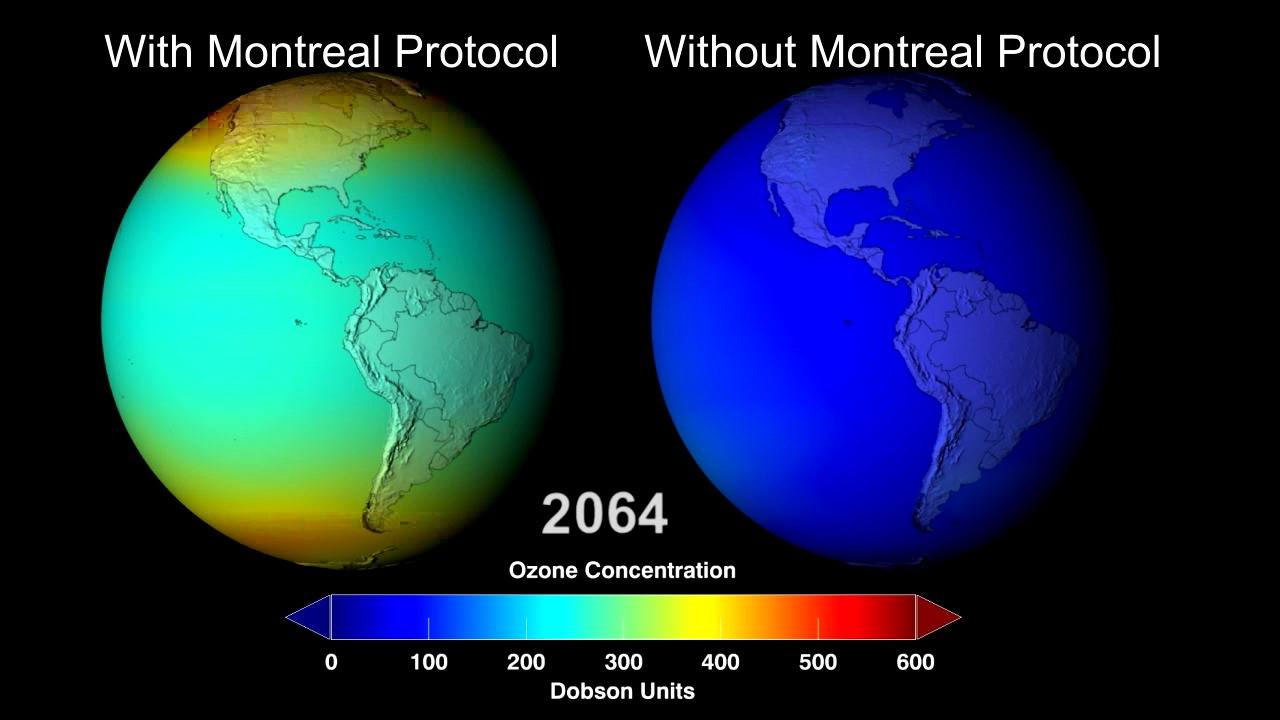
Which agreement allowed for a reduction, and eventual elimination, of CFC production and use?
a)
Montreal Protoccol
b)
Kyoto Protoccol
c)
Paris Agreement
d)
Yo MaMa
5.
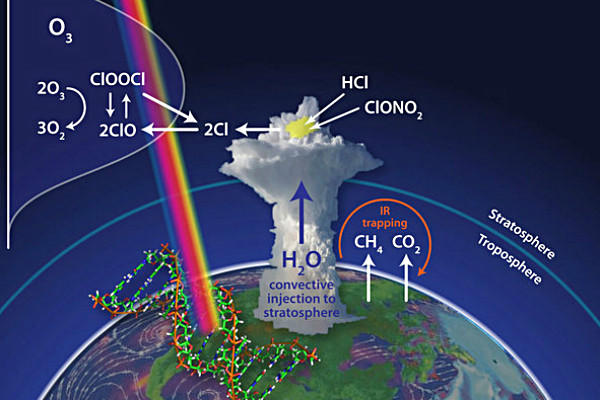
How do CFCs affect ozone production?
a)
UV radiation frees a chlorine atom, which breaks down ozone.
b)
Infrared radiation frees a chlorine atom, which breaks down ozone.
c)
UV radiation frees a fluorine atom, which breaks down ozone.
d)
Infrared radiation frees a chlorine atom, which breaks down ozone.
6.
Depletion of ozone layer is a concern because it normally absorbs ____% of the sun's UV radiation. 
a)
50
b)
75
c)
89
d)
99
7.
Which of these sets of three items produce CFCs
a)
cars, factories, and cardboard
b)
spray cans, cardboard, insulation
c)
spray cans, refrigerant, cardboard
d)
spray cans, refrigerant, insulation
8.
Though CFC production has been curtailed, the threat to upper atmosphericozone continues because CFCs
a)
become harmless quickly.
b)
destroy ozone for only a short time.
c)
persist but stop destroying ozone.
d)
persist and continue to destroy ozone for decades.
9.
When oxygen gas in the lower stratosphere is struck by this, it splits, leading to the formation of a ozone molecule.
a)
visible light
b)
ultraviolet radiation
c)
infrared
d)
gamma rays
10.
The formation of ozone begins when and O2 molecule is split by
a)
UV-A radiation
b)
UV-B radiation
c)
UV-C radiation
d)
UV-A or UV-B radiation
11.
How many ozone atoms can a single chlorine atom break down?
a)
5,000
b)
10,000
c)
50,000
d)
100,000
12.

Which is NOT a result of the reduction in stratospheric ozone?

a)

reduced photosynthetic activity

b)

increased skin cancer

c)

increased likelihood of cataracts

d)

increased birth defects

13.

Which chemical that replaced CFCs in refrigerants is now a concern as a major greenhouse gas?

a)

CFCs

b)

HFCs

c)

DDT

d)

CFCl2

14.

Which is not an example of an ecological consequence of reduced stratospheric ozone?

a)

loss of biodiversity from reduced photosynthesis in plants

b)

collapse of marine food webs

c)

reduced crop yield

d)

reduced terrestrial biome productivity

15.

UV rays can cause obvious short term damage, such as sunburn, as well as long term damage that accumulates with each exposure to the sun.

a)

True

b)

False

16.

Which is most strongly absorbed by ozone in the statosphere?

a)

UV-A

b)

UV-B

c)

UV-C

d)

UV-B and UV-C

e)

UV-A and UV-B

17.

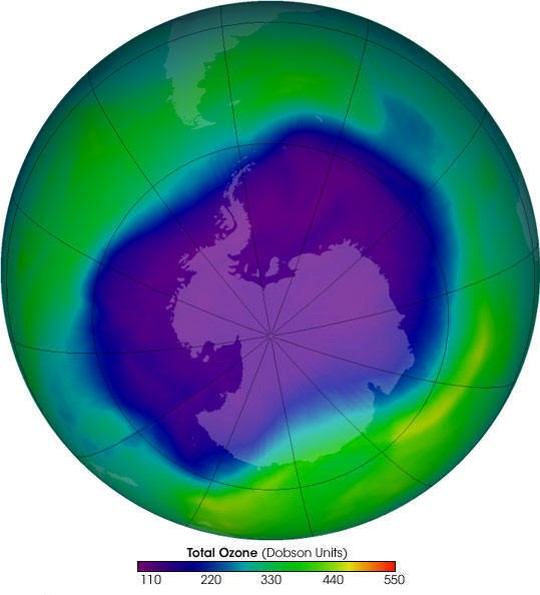
Location of the large whole in the ozone.

a)

Antarctica

b)

Artic

c)

Iceland

d)

Africa