
 Worksheets
Star Life and Death Review
Total questions: 32
Worksheet time: 17mins
Stars form from
Other stars colliding
Other stars exploding
Collapsing gas clouds
Collapsing dust clouds
The first stage any star will go through is
Red giant
Horizontal branch
Asymptotic giant branch
Main sequence
What element do main sequence stars use for fuel?
Hydrogen
Helium
Lithium
Beryllium
Main sequence stars fuse:
Hydrogen into helium
Helium into nitrogen
Helium into carbon
Neon into oxygen
In a red giant, fusion occurs in:
The core
A shell
A shell and the core
Neither a shell nor the core
The names "main sequence", "horizontal branch", and "asymptotic giant branch" come from
Branches of the star family tree
The H-R diagram
An outdated classification system we don't use anymore
Annie Jump Cannon's notebook
Which of these is not a fusion process in stars?
Hydrogen to helium
Helium to carbon
Carbon to nitrogen
Silicon to iron
What is the last fusion product any star can produce?
Oxygen
Helium
Iron
Europium
What determines how long a star will live?
Its chemical composition
Its mass
Its surface temperature
Its size
What determines how many different fusion products a star will eventually produce?
Its chemical composition
Its mass
Its surface temperature
Its size
True or false: large stars live longer than small stars.
True
False
True or false: large stars make more different elements than small stars.
True
False
Roughly what proportion of stars will end up as white dwarfs when they die?
50%
75%
85%
97%
The very heaviest stars will become what when they die?
White dwarf
Black hole
Neutron star
Quasar
What has to happen before a star can become a neutron star or black hole?
Type I supernova
Type II supernova
Nova
Accretion
White dwarfs are created alongside
Planetary nebulae
Neutron stars
Black holes
Binary star systems
One teaspoon of neutron star material weighs about as much as
A semi
Mt. Everest
Mercury
Jupiter
Which stage of life is the Sun in right now?
Main sequence
Red giant
Horizontal branch
Asymptotic giant branch
How much longer will the Sun remain in this current stage?
1 million years
6 million years
50 million years
1 billion years
Red giants fuse:
Hydrogen to helium in the core
Hydrogen to helium in a shell
Helium to carbon in the core
Helium to carbon in a shell
Asymptotic giants (supergiants) fuse
Hydrogen to helium in the core
Hydrogen to helium in a shell
Helium to carbon in the core
Hydrogen to helium and helium to carbon in alternating shells

What type of star is Aldebaran?
Main sequence
Supergiant
Giant
White dwarf

What element/s does Betelgeuse produce?
Helium only
Helium and carbon
Carbon only
Carbon and Neon

Which of these stars is the hottest?
Regulus
Sirius
Betelgeuse
Sun

Which type of star is brightest, generally?
White dwarf
Main sequence
Giant
Supergiant

Which of these stars is the brightest?
Rigel
Achemar
Sirius B
Betelgeuse

The hottest star on the diagram is which type of star?
Main sequence
White dwarf
Supergiant
Giant

Which of these stars is the coldest?
Barnard's Star
Mira
Sirius B
Rigel

What element/s does Mira produce?
Helium only
Helium and carbon
Carbon only
Carbon and neon
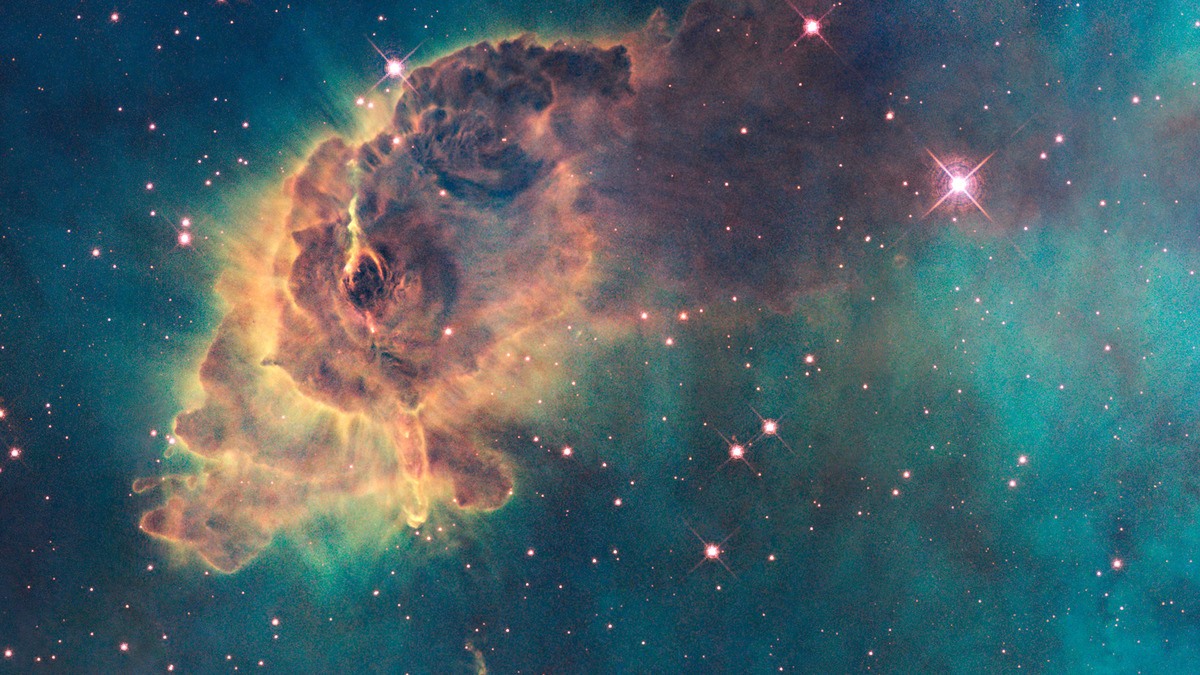
What is the name of a "baby" star that has not begun fusion yet?
Nebula
Protostar

Which statement about stars is correct?
Star formation begins in a nebula
White dwarfs become main-sequence stars when they gain mass
Supergiants are stars that can absorb black holes
Main-sequence stars are formed by comets

