
 Worksheets
Biochemistry Test - Chapter 2
Total questions: 45
Worksheet time: 1hrs 8mins
Atoms in molecules share pairs of electrons when they make _____
covalent bonds
ionic bonds
hyrdogen bonds
The smallest unit of matter is the ________
molecule
atom
cell
What type of bond forms when an atom gains or loses electrons?
Compound
Molecule
Ionic
How many valence electrons does carbon have?
one
two
four
A very strong base might have a pH of _____.
3
5
13
The nucleus of an atom contains _____
protons and neutrons
protons and electrons
neutrons and electrons
The protons of an atom _______
are found in the nucleus along with the electrons.
occupy the space surrounding the nucleus.
have a positive charge.

What process is shown in this picture? (The red chemical formula in the center of the reaction is "H20.")
Dehydration Synthesis
Hydrolysis
The ability of water molecules to stick to each other is called _______, and the ability of water molecules to stick to other surfaces is called ______.
adhesion, cohesion
cohesion, adhesion
Water molecules form which type of bond with other water molecules?
covalent bonds
ionic bonds
hydrogen bonds
What is a property of water?
Frozen water floats
Water retains a large amount of heat.
Water molecules stick to each other
All of the answers are properties of water.
Why does water move from the roots to the leaves of plants?
Water's cohesion causes it to "pull" towards the leaves.
Capillary action pulls water molecules up.
What are the two components of a solution?
solute and solvent
element and compound
The four main types of carbon-based molecules are proteins, lipids, nucleic acids and _______
carbohydrates
amino acids
fatty acids
All organic compounds contain the element ______
carbon
nitrogen
calcium
Which of the following is a carbohydrate?
DNA
wax
glucose
Long chains of amino acids are found in ______
Carbohydrates
Lipids
Proteins
DNA stores _________
genetic information
energy
nitrogen
What is the monomer of enzymes?
nucleic acids
amino acids
nucleotides
Which organic molecules below are most closely related to lipids?
amino acids
fatty acids
nucleotides
Amino acids are linked together through what type of bond?
hydrogen bond
glycosidic bond
peptide bond
Two types of nucleic acids are _____
chlorophyll and cytochrome
lipids and sugars
DNA and RNA
Which of these pairs DOES NOT make sense
carbohydrates, simple sugars
proteins, amino acids
lipids, disacharrides
The following are examples of lipids EXCEPT ______
phospholipid
lactose
oil
The shortage of phosphorous in the soil would make it especially difficult for a plant to manufacture _______.
DNA
proteins
cellulose
Polysaccharides are ______
carbohydrates
lipids
proteins
Oils are liquid at room temperature because they are...
saturated fats
unsaturated fats
have a high boiling point
they are not liquid
Which of the following represents the correct ranking of terms from smallest to largest?
carbon atom, monomer, polymer, macromolecule
monomer, carbon atom, macromolecule, polymer
Which of the following creates a peptide bond?
hydrolysis
dehydration synthesis
inhibition
Nucleotides are a monomer of which biomolecule?
Nucleic acids
Proteins
Carbohydrates
Lipids
What ratio are the elements of a carbohydrate found in?
1:2:1
9:3:3:1
3:1
Carbohydrates are...
doctors who study food-related illnesses.
needed by the body for growth, repair and energy.
energy containing nutrients.
The reactions that release energy are called ______
Exothermic
Catalyzed
Endothermic
A protein is _______ when the temperature or pH of the solution is changed, causing a change in how the protein is folded, making it not functional.
catalyzed
denatured
acidic
In an enzymatic reaction, the reactant is called a _____
active site
substrate
inactive site
Reducing activation energy ______
is a violation of the laws of nature.
is accomplished by enzymes on reactants.
requires higher temperatures than those found within cells.
In an enzymatic reaction, the reactant(s) is (are) called a(n) ______.
active site
substrate
organic molecule
Which of the following, when too high, will denature an enzyme?
number of subunits
heat
enzyme concentration
What is a solution?
2 substances mixed together and cannot be taken apart.
2 substances that mix together and can be taken apart.
A reaction that releases heat is _____ and a reaction that absorbs more energy that it releases is ________.
exothermic; endothermic
endothermic; exothermic
BLAST FROM PAST: Which of these is listed from SMALLEST TO LARGEST?
organism, population, community, ecosystem, biosphere
community, ecosystem, biosphere, population
BLAST FROM THE PAST: Thomas constructs a model by completing the following steps:
1) Draw a diagram that shows different trophic levels;
2) Show the 10% rule at each of the trophic levels;
3) Label each trophic level with producer, primary consumer, etc.
What type of ecological model has Thomas constructed?
biogeochemical cycle
energy pyramid
food web

BLAST FROM THE PAST: The white rabbit in this food web (the animal near the plant) would be considered a:

BLAST FROM THE PAST: Aphids are tiny insects that live on and eat the leaves of plants, removing vital nutrients from the plants.
Predation
Parasitism
Commensalism
Mutualism
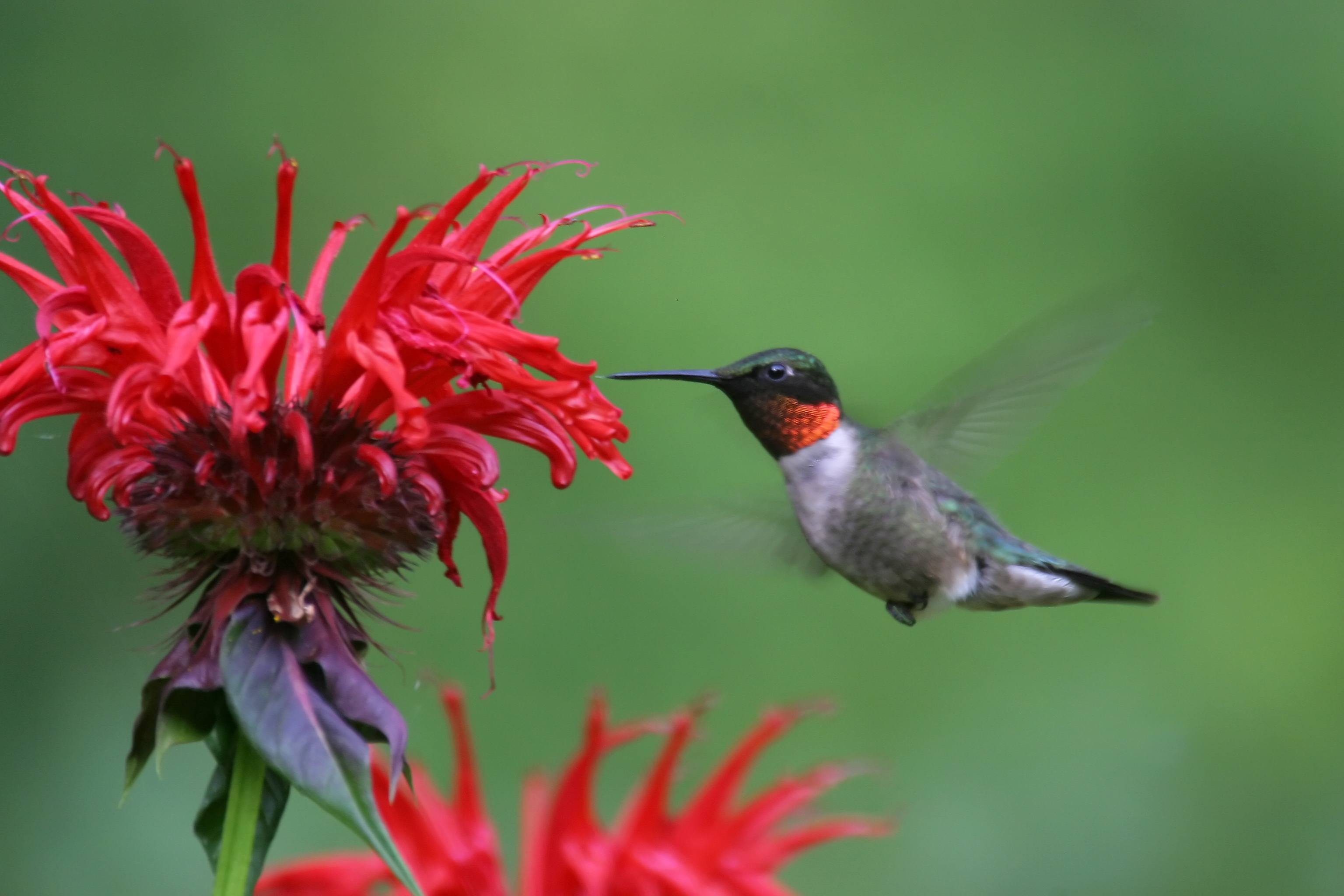
BLAST FROM THE PAST: What type of symbiosis? Hummingbirds feed on nectar from flowers. The flowers are pollinated by hummingbirds as they move from flower to flower.

