wayground logo

Free Printable Worksheets

Font size

S
M
L
XL
Worksheets

Chemistry Midterm - Honors

Total questions: 166

Worksheet time: 4hrs 40mins

Name
Class
Date
1.

How many atoms of sodium (Na) are in one molecule of baking soda?

a)

1

b)

2

c)

3

d)

4

2.

How many atoms make up one molecule of laughing gas?

a)

1

b)

2

c)

3

d)

4

3.

What is the name of the thermodynamic process or reaction that releases energy from the system to its surroundings

a)

endothermic

b)

exothermic

4.
What is a reactant?
a)
The starting substance
b)
The ending substance
5.
What is a product?
a)
The starting substance
b)
The ending substance
6.
Using the following chemical reaction
Hydrogen + Oxygen --> water
Identify the reactant(s).
a)
Hydrogen and Oxygen
b)
water
7.
Using the following chemical reaction
Hydrogen + Oxygen --> water
Identify the product(s).
a)
Hydrogen and oxygen
b)
water
8.

What is 4 cm in mm?

a)

0.4

b)

4

c)

400

d)

40

9.

What is 300 cm in meters?

a)

3

b)

30

c)

0.3

d)

0.03

10.

What is 4000 g in kg?

a)

400

b)

40

c)

0.4

d)

4

11.

What is 3 litres in ml?

a)

30

b)

300

c)

3000

d)

0.3

12.

What is 4.2 km in meters?

a)

420

b)

4200

c)

42

d)

0.42

13.
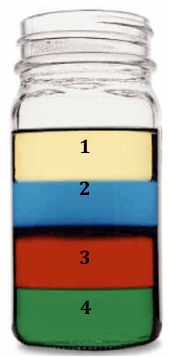
Put the liquids in order from most dense to least dense?
a)
4, 3, 2, 1
b)
1, 2, 3, 4
c)
3, 4, 2, 1, 
d)
4, 3, 1, 2
14.
What is the formula for density?
a)
density = mass x volume
b)
density = mass / volume
c)
density = mass + volume
d)
density = mass - volume
15.

Yusuf has an eraser. It has a mass of 4g, and a volume of 2cm3. What is its density?

a)

8 g/cm3

b)

2 g/cm3

c)

1/2 g/cm3

d)

24 g/cm3

16.

Rishi has a rock. The rock has a mass of 14g and a volume of 2cm3. What is the density of the rock?

a)

7 mL

b)

7 g/cm3

c)

28 g/cm3

d)

1/7 g/cm3

17.
What is the volume of Object X?
a)
10.0 cm3
b)
15.0 cm3
c)
20.0 cm3
d)
25.0 cm3
18.
Which units of measurement are used for volume?
a)
grams
b)
centimeters
c)
grams/milliliter
d)
milliliter
19.
This data is normally distributed.  What percent of the data is in the shaded region?
a)
68%
b)
95%
c)
99.7%
d)
50%
20.

Suppose your friends went to the beach at noon on a warm day. They saw some black and white birds. As you are talking to you friend you think "These birds must have migrated from Minnesota". Is this an observation or an inference?

a)

observation

b)

inference

21.

Suppose your friends went to a basketball game. You walk in and the score is 24 to 2. You state "Butler is winning". Is this an observation or an inference?

a)

observation

b)

inference

22.

Judy noticed that Hana was wearing new boots. Is this an observation or an inference?

a)

observation

b)

inference

23.

What type of variable impacted by another variable?

a)

dependent

b)

independent

24.
Name the INDEPENDENT variable from the table below.
a)
words
b)
minutes
25.
Name the DEPENDENT variable from the table below.
a)
minutes
b)
bubbles
26.

Nabeel harvests mushrooms in the forests of Oregon and then sells them to local restaurant chefs. The greater the weight of the mushrooms, the greater their value.

w = the weight of the mushrooms

v = the value of the mushrooms

a)

v is the independent variable and w is the dependent variable

b)

w is the independent variable and v is the dependent variable

27.

A team from the Department of Public Works is painting lines of the freeway. The number of hours needed to finish the project depends on the length of road that needs to be lined.


h = the number of hours needed

r = the length of road

a)

h is the independent variable and r is the dependent variable

b)

r is the independent variable and h is the dependent variable

28.

Aus and his friends are at an arcade and are redeeming their tickets for prizes. The number of prizes they can get is calculated based on how many tickets they have won.

p = the number of prizes the friends can get

t = the number of tickets the friends have won

a)

t is the independent variable and p is the dependent variable

b)

p is the independent variable and t is the dependent variable

29.

Lizzi wanted to see if the type of fertilizer made sunflowers grow larger. What is the independent variable?

a)

Type of fertilizer

b)

Size of sunflower

c)

type of sun flower

30.

It defines an object, event, variable, concept, or construct in terms of the specific processes, tests, and measurements used to determine its presence or quantity.

a)

Operational Definition

b)

Conceptual Definition

c)

Definition

31.

What type of mixture is sugar water? 

a)

solution

b)

suspension

c)

colloid

32.

What type of mixture is milk?

a)

solution

b)

suspension

c)

colloid

33.
What type of mixture separates upon standing?
a)
Solution
b)
Alloy
c)
Colloid
d)
Suspension
34.

A type of mixture that does not separate on its own but still contains undissolved particles.

a)

solution

b)

colloid

c)

suspension

35.

The Tyndall Effect is NOT visible in which of the following?

a)

Solution

b)

Suspension

c)

Colloid

d)

Heterogeneous Mixture

36.

Which type of mixture has the largest particles?

a)

Solution

b)

Colloids

c)

Suspension

d)

None of the above

37.
Something that takes up space and has mass.
a)
volume
b)
matter
c)
mass
d)
density
38.
The amount of space something takes up
a)
density
b)
volume
c)
mass
d)
matter
39.

You put a glass of water on the table and 3 weeks later the glass is there with no water in it. Which of the following is an inference to what happened to the water?

a)

sublimation

b)

evaporation

c)

precipitation

d)

solubility

40.

Fusion, vaporization, and sublimation are what type of process?

a)

endothermic

b)

exothermic

41.

Example for Physical Property

a)

Taste

b)

Flammability

42.

A physical property can be observed with your

a)

Eyes

b)

Ears

c)

Tongue

d)

All of the above

43.
Cutting an orange is a physical change.
a)
True
b)
False
44.

Which of the following can cause a change in the state of matter?

a)

physical properties

b)

chemical energy

c)

temperature

45.

When a substance increases in temperature which of the following is true?

a)

There is more space between the particles

b)

Particles are moving slower

c)

Particles are closer together

d)

There is an increase in intermolecular bonds

46.

When particles are heated they begin to ____.

a)

move faster

b)

mover slower

c)

move up

d)

jump out of the pot

47.

A large amount of matter needs ______ thermal energy to warm up than a small amount of matter.

a)

less

b)

the same amount of

c)

more

d)

no

48.

What is the meaning Greek prefix thermo- means _____?

a)

thermometer

b)

heat

c)

sun

d)

microwave

49.

Different substance's particles speed up at different rates.

a)

True

b)

False

50.

Kinetic energy is the energy of————-

a)

Temperature

b)

Ocean

c)

Lotion

d)

Motion

51.

The total energy of all the particles in a sample of matter is called —————

a)

Temperature

b)

Thermal Energy

c)

Kinetic Energy

52.

Temperature of a material depends upon the average —————— of its particles

a)

Kinetic energy

b)

Thermal energy

c)

Heat energy

d)

Potential energy

53.

Thermal Energy depends upon the energy of the particles as well as the number of particles.

Which would have more thermal energy, a small cube of Ice at zero Celsius or a large cube of ice at zero Celsius?

a)

The large ice cube because it has more particles than the small ice cube

b)

The small cube of ice because it will melt faster than the large ice cube

c)

Neither, they are cold so they do not have thermal energy

d)

both have the same thermal energy because they are both at zero Celsius.

54.
Which of the following chemical formulas represents a compound? 
a)
C3
b)
O2
c)
CH3CHO
d)
H2
55.
Which statement best describes an element?
a)
made from mixture 
b)
thousands in the world
c)
pure, made of only one atom
d)
can be separated 
56.
Carbon is considered an element while carbon dioxide is considered a compound. This is because carbon dioxide is –
a)
a gas at room temperature.
b)
made of two different elements.
c)
given off by green plants.
57.
This picture represents which of the following?
a)
element
b)
compound
c)
mixture
58.
This picture represents which of the following?
a)
element
b)
compound
c)
mixture
59.
What is the term for combining 2 or more atoms together?
a)
atoms
b)
elements
c)
molecules
d)
compounds
60.
What is the term for combining 2 or more DIFFERENT atoms together?
a)
atoms
b)
elements
c)
molecules
d)
compounds
61.
Are these molecules also compounds?
a)
YES
b)
NO
62.
Are these molecules also compounds?
a)
YES
b)
NO
63.

A diamond is made up of Carbon atoms. Is a diamond a pure substance or a mixture?

a)

Pure Substance

b)

Mixture

64.
a)

Pure Substance

b)

Mixture

65.

Buko Juice

a)

Pure Substance

b)

Mixture

66.

Salt is made up of sodium and chlorine atoms. Is salt a pure substance or a mixture?

a)

Pure Substance

b)

Mixture

67.

Vegetable Salad

a)

Pure Substance

b)

Mixture

68.

Coffee

a)

Pure Substance

b)

Mixture

69.

Water

a)

Pure Substance

b)

Mixture

70.

How much KNO3 solute is saturated at 40 degrees?

a)

75

b)

55

c)

65

d)

85

71.

How much C12H22O11 solute is saturated at 40 degrees?

a)

240

b)

220

c)

230

d)

250

72.

How much Ce2(SO4)3 solute is saturated at 80 degrees?

a)

20

b)

15

c)

30

d)

2

73.

How much NaBr solute is saturated at 70 degrees?

a)

110

b)

120

c)

130

d)

140

74.

Which solute is MOST likely a gas?

a)

KNO3

b)

NaNO3

c)

KCl

d)

Ce2(SO4)3

75.

At what temperature can you fully dissolve 140g of NaNO3?

a)

62

b)

73

c)

81

d)

You cannot determine this

76.
A(n) __________ is a pure substance made of only one type of atom.
a)
compound
b)
element
c)
proton
d)
electron
77.

Reactivity (bubbling, fizzing) is a --- property.

a)

Chemical

b)

Physical

78.
Ice melting is an example of a
a)
physical change
b)
chemical change
c)
physical property
d)
chemical property
79.
Physical properties are
a)
properties that can be observed without changing the identity of the substance
b)
properties that describe how a substance changes into a completely different substance
c)
properties that we can only observe with our eyes
d)
properties that we need special tools to observe
80.
Which is an example of a chemical change?
a)
melting ice to make water
b)
baking cake batter to make a cake
c)
putting cheese on bread to make a cheese sandwich
d)
cutting an orange into slices for a snack
81.
Hammering wood together to build a playhouse
a)
Chemical change
b)
Physical change
82.
a copper penny turning greenish after a few years.
a)
Chemical Change
b)
Physical Change
83.
Burning a marshmallow over a campfire
a)
Physical
b)
Chemical
84.

______________________ can only be recognized when substances react or do not react chemically with one another.

a)

Physical properties

b)

Chemical properties

c)

Flammable properties

d)

Colorful properties

85.
Which is an example of a physical property?
a)
ability to react with acid
b)
 state of matter
c)
flammability
d)
ability to react with oxygen
86.
Which of the following is NOT an example of a physical change?
a)
crumpled paper
b)
pencil sharpening
c)
shrunken clothing
d)
rust
87.
A gas that has a pressure of 2 atm and a volume of 10 L.  What would be the new volume if the pressure was changed to 1 atm?
a)
P1/T1 = P2/T2
b)
P1V1 = P2V2
c)
V1/n1 = V2/n2
d)
PV = nRT
88.

The sugar cubes are called the

a)

solute

b)

solvent

89.

The water is called the

a)

solvent

b)

solute

90.

Zara filled a ​cup with hot tea. Then she added a sugar cube. ​Which of these will help to make the sugar cube dissolve more quickly?

a)

stirring the hot tea

b)

adding more sugar cubes

c)

adding ice to the tea

d)

pouring more tea into the cup

91.

Eshaan and Nathan fill two cups with water. They use hot water in one cup and cold water in the other cup. Next, they will stir a spoon of salt into each cup.

In which cup will the salt dissolve more slowly?

a)

The salt will not dissolve in either cup

b)

The salt dissolves more slowly in the hot water

c)

The salt dissolves more slowly in the cold water

d)

The salt dissolves at the same speed in both cups

92.
Gases have...
a)
A definite shape and volume
b)
A definite shape but no definite volume
c)
No definite shape but a definite volume
d)
No definite shape or volume
93.

What does R stand for

a)

Ideal gas constant

b)

Real gas constant

c)

Temperature constant

d)

Ideal gas law

94.
What pressure, in atm, is exerted by 2.50 L of gas containing 1.35 mol at 320 K?
PV=nRT
a)
14.19 atm
b)
16.53 atm
c)
18.42 atm
d)
22.54 atm
95.
Determine the Celsius temperature of 2.49 moles of gas contained in a 1.00-L vessel at a pressure of 143 kPa. 
a)
-266 degrees C
b)
-622 degrees C
c)
622 degrees C 
d)
266 degrees C
96.
Determine the number of moles in a container of gas at STP with a volume of 99.2 L. 
a)
2222.08 moles
b)
4.43 moles
c)
22.4 moles 
d)
76.8 moles
97.

If we are using Boyles' law and our pressure goes up, what happens to the volume?

a)

Go up

b)

Go down

c)

Stays the same

d)

Wrong law.

98.
When Volume increases then Pressure must...
a)
Increase
b)
Decrease
99.
What is the new volume of the gas if the pressure on 350 L of oxygen at 720 mm Hg is decreased to 600 mm Hg?
a)
420 L
b)
29.16 L
c)
4200.0 L
d)
291.6 L
100.
A gas occupies 4.98 L at 2.6 atm of pressure. What volume does it occupy at 1.8 atm pressure?
a)
12.9 L
b)
0.72 L
c)
7.2 L
d)
3.44 L
101.
A gas at a volume of 4 liters is at a pressure of 2 atm. The volume is changed to 16 Liters, what must the new pressure be?
a)
2 atm
b)
12 atm
c)
10 atm
d)
0.5 atm
102.
What is 50 C in Kelvin?
a)
223
b)
323
c)
100
d)
50
103.

(Charles Law) There are 65 liters of helium in a balloon at 35 K. If the temperature of the balloon is increased to 40 K, what will the new volume of the balloon be?

a)

40 L

b)

70 L

c)

74.3 L

d)

75.9 L

104.

(Charles Law) There are 40 liters of helium in a balloon at 100 K. If the temperature of the balloon is increased to 200 K, what will the new volume of the balloon be?

a)

80 L

b)

45 L

c)

54 L

d)

45.33 L

105.

Kailee wants her balloon back to normal size so she decides to put it on a heating vent. If the balloon initially has a volume of 0.6 L and a temperature of 293 K, what will the volume of the balloon be when it heats up to a temperature of 176°C?

a)

0.39 L

b)

0.92 L

c)

0.78 L

d)

0.92 K

106.

A gas has a volume of 45 liters at a pressure of 90.8 kPa. If the volume is increased to 55 liters, what will be the new pressure? Round answer to one decimal place.

(a)  

107.

A gas occupies a volume of 5.6 liters at a temperature of 100 degrees Celsius. To what temperature must the gas be lowered, if it is to occupy 4.0 liters? Answer in Kelvin to one decimal place. (DO NOT FORGET TO LABEL YOUR ANSWER)

(a)  
108.
If a balloon is cooled what will happen to the volume?
a)
Volume will increase
b)
Volume will decrease
c)
Volume will not change
d)
Balloon freezes to death
109.
Which of the following would increase the (gas) pressure of a system?
a)
Increase the Temperature
b)
Pump in more gas
c)
Decrease the volume
d)
All of these
110.
Boyle's law :  The pressure and volume of a gas show a _____ relationship. 
a)
No relationship 
b)
Direct 
c)
Inverse 
d)
Equal
111.
You have a gas that has a pressure of 2 ATM and a volume of 10L.  What would be the new volume if the pressure was changed to 1 ATM?
a)
5 L
b)
20 L
c)
It would stay at 10L
d)
1 L
112.
The state of matter having no definite shape or volume.
a)
solid
b)
liquid
c)
gas
113.
The amount of energy needed to change a material from a solid to a liquid state.
a)
Heat of Solids
b)
Heat of Liquids
c)
Heat of Fusion
d)
Heat of Vaporization
114.
As a material is heated, it's particles....
a)
get smaller
b)
slow down
c)
get cooler
d)
move more quickly
115.
The state of matter with definite volume but no definite shape.
a)
solid
b)
liquid 
c)
gas
116.
A solid whose name comes from a Greek word meaning "without form."
a)
colloid
b)
amorphous
c)
plasma
d)
liquid crystals
117.
A measure of the average kinetic energy of the particles in a sample of matter.
a)
temperature
b)
meter
c)
second
118.
The amount of energy needed to change a material from a liquid to a gas.
a)
Heat of Liquids
b)
Heat of Gas
c)
Heat of Fusion
d)
Heat of Vaporization
119.

True or False (Kinetic Theory)- Tiny particles are always in motion. The higher the temperature the faster the particles move.

a)

True

b)

False

120.
Which state of matter has a definite shape?
a)
solid
b)
liquid 
c)
gas
d)
plasma
121.
The drops of water that appear on the outside of a glass of cold juice on a warm day are an example of?
a)
Sublimation: A solid turning into a gas.
b)
Condensation: A gas changing to a liquid.
c)
Evaporation: A liquid changing to a gas.
d)
Deposition: A gas changing to a solid.
122.
The theory that states that all particles in matter are constantly moving; helps to describe the phases of matter
a)
behavior of gases
b)
kinetic theory 
c)
matter matters
d)
temperature 
123.
Solids are described as having a 
a)
definite shape and indefinite volume
b)
indefinite shape and indefinite volume
c)
definite shape and definite volume
d)
indefinite shape and definite volume
124.
Gases are described as having a 
a)
definite shape and indefinite volume
b)
indefinite shape and indefinite volume
c)
definite shape and definite volume
d)
indefinite shape and definite volume
125.
Liquids are described as having a 
a)
definite shape and indefinite volume
b)
indefinite shape and indefinite volume
c)
definite shape and definite volume
d)
indefinite shape and definite volume
126.
Gas particles have the ________ kinetic energy because they move the fastest.
a)
least
b)
most
127.
When a liquid changes its phase and turns into a solid it is known as
a)
condensation.
b)
melting.
c)
vaporization.
d)
freezing or solidification.
128.
When a gas changes its phase and turns into a liquid it is known as
a)
condensation.
b)
sublimation.
c)
vaporization.
d)
freezing or solidification.
129.
When a gas changes its phase and turns into a solid it is known as
a)
deposition.
b)
sublimation.
c)
condensation.
d)
freezing or solidification.
130.
When a solid changes its phase and turns into a gas it is known as
a)
deposition.
b)
melting.
c)
condensation.
d)
sublimation.
131.
All phase changes are
a)
chemical changes
b)
chemical reactions
c)
physical changes
d)
irreversable
132.
During a phase change, the temperature remains the same
a)
True
b)
False
133.
What kind of energy is added to or removed from matter to cause a phase change?
a)
Radiation
b)
Heat
c)
Solar
d)
Wind
134.
Which state of matter take up ALL the space inside a container? 
a)
solid
b)
liquid
c)
gas
d)
all of the above
135.
Which state of matter has a definite shape?
a)
solid
b)
liquid 
c)
gas
d)
plasma
136.
What is happening in the statement below?
The ice cube melted.
a)
Matter is changing from a liquid to a solid.
b)
Matter is changing from a liquid to a gas.
c)
Matter is changing from a solid to a liquid.
d)
Matter is changing from a gas to a liquid.
137.
When heat is added to a solid, it ______________.
a)
freezes
b)
evaporates
c)
melts
d)
condenses
138.
Liquids and gases are similar because __________________________.
a)
they both take the shape of their container
b)
they both have their own shape
c)
liquids pour and gases don't
d)
liquids take the shape of the container but gases have their own shape
139.
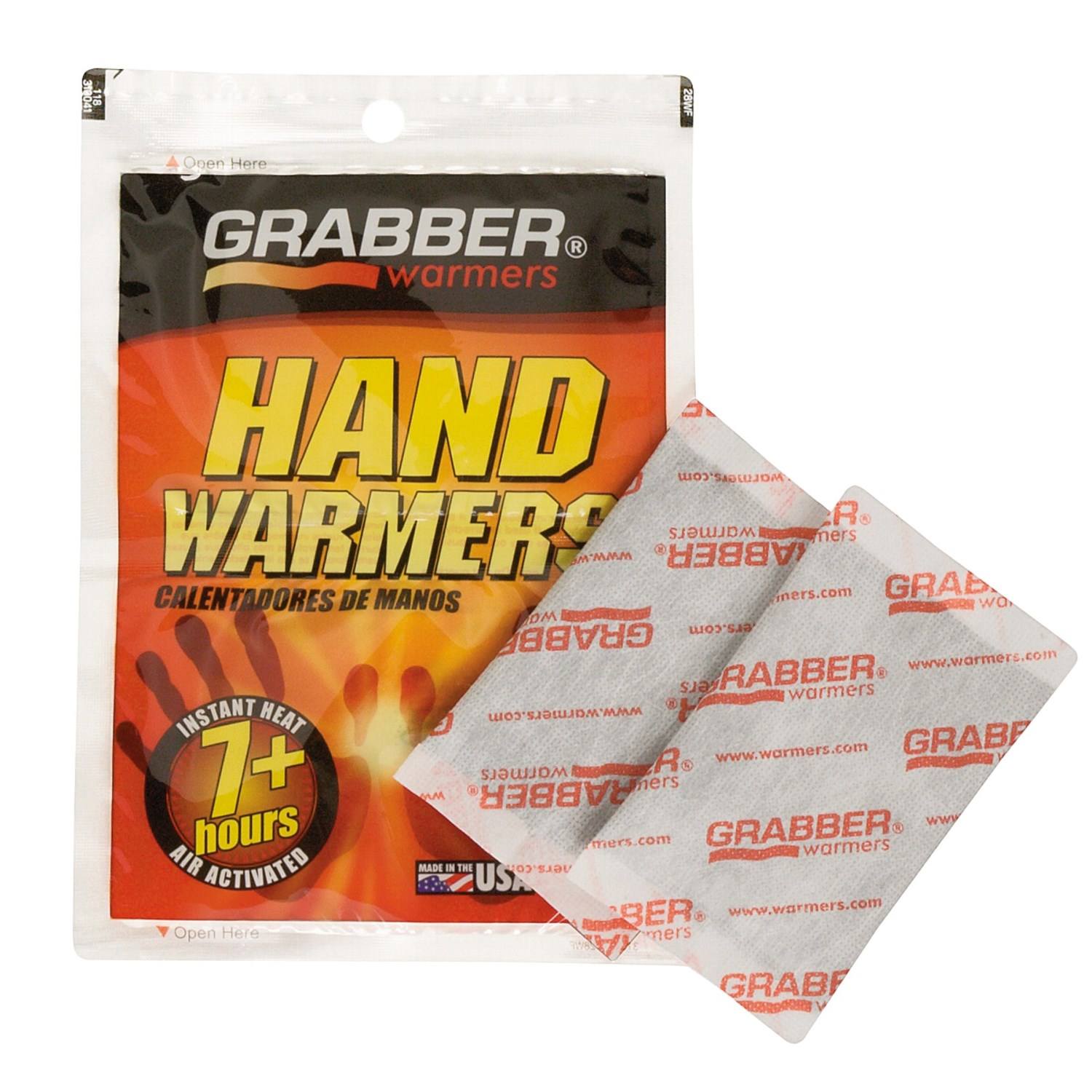
What type of reaction occurs in a hand warmer
a)
exothermic
b)
endothermic
140.
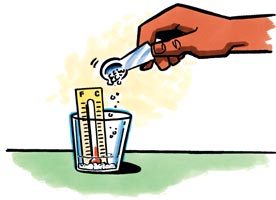
Exothermic reactions...
a)
Absorb energy
b)
Release energy
c)
Release Color
d)
Absorb Color
141.
In an endothermic reaction, heat is ...
a)
taken in or absorbed
b)
given out or released 
142.
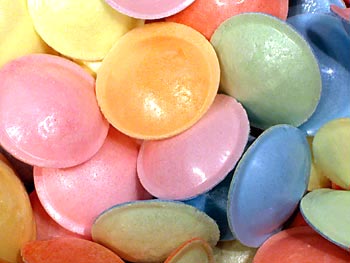
Have you ever eaten sherbet sweets candy? They fizz in your mouth and your tongue feels cold. Why do you think that is?
a)
It is an exothermic reaction
b)
It is an endothermic reaction
c)
It is made of ice
d)
It is dissolving your mouth
143.
If they energy required to break the bonds is greater than the energy given out by making new bonds the reaction is
a)
Exothermic
b)
Endothermic
c)
Neutralisation
144.
5. What is it called when a solid turns directly into a gas?
a)
Sublimation
b)
Condensation
c)
Liquid
145.
7. All phase changes (changing states) requires energy to be added or taken away.
a)
True
b)
False
146.
Change from gas to liquid...
a)
condensation
b)
evaporation
c)
expansion
d)
movement
147.
Change from Liquid to Solid is call......
a)
fusion
b)
Freezing
c)
sublimation
d)
evaporation
148.
The molecules in the picture are tightly held together with little movement. They have shape and energy.  Therefore, the picture represents _________.
a)
solid
b)
liquid
c)
gas
d)
plasma
149.
When the temperature of matter decreases the particles ...
a)
speed up and move farther apart
b)
speed up and move closer together
c)
slow down and move farther apart
d)
slow down and move closer together
150.
When the temperature of matter increases the particles...
a)
speed up and move closer
b)
speed up and move farther apart
c)
slow down and move closer together
d)
slow down and move farther apart
151.
What does this picture represent? 
a)
solid
b)
liquid
c)
gas
d)
plasma
152.
What does this picture represent? 
a)
solid
b)
liquid 
c)
gas
d)
plasma
153.
The liquid in a thermometer ______________ as the temperature increases.
a)
expands
b)
disappears
c)
freezes
d)
explodes
154.
What phase change occurs between points B and C if heat is added?
a)
Freezing
b)
Melting
c)
Boiling
d)
Condensing
155.

Plasma can be found in which of the following

a)

Auroras

b)

Lightening

c)

LED light bulbs

d)

Stars

e)

Moons

156.

A plasma can be made in a laboratory by

a)

cooling a gas to very low temperatures

b)

cooling a gas and reducing the pressure

c)

heating a gas to extremely hot temperatures

d)

heating a liquid to the point it turns into a gas

157.

In a plasma the electrons are no longer associated with a particular nucleus.

a)

True

b)

False

158.
When water is heated from 10°C to 15°C What is the change in temperature?
a)
10 °C
b)
5 °C
c)
15 °C
d)
25 °C
159.
When a  piece of aluminum foil is taken out of the oven and cools from 100°C to 50°C.
What is the change in temperature?
a)
50°C
b)
0°C
c)
100°C
d)
150°C
160.
If I have 2 blocks of Aluminium (one of 1kg and one of 10 kg) and heat them up.
Which one heats up the fastest.
a)
1 kg
b)
10 kg
c)
They both heat up at the same speed
d)
They don't heat up.
161.
If I heat up 2 pans of water one has 100 mL in it and one has 1000mL. Which one heats up the fastest?
a)
100 mL
b)
1000 mL
c)
They both heat up at the same speed
d)
They cool down.
162.
Calculate the amount of energy required to melt 35.0 grams of ice.
(not in sig figs)  Hf = 80.0 cal/g,  Hv = 560.0 cal/g, SH = 1.00 cal/g ºC
a)
19,600 cal
b)
35.0 cal
c)
2,800 cal 
d)
1,568,000 cal 
163.

Water molecules have the greatest kinetic energy in

a)

Ice at 0 ⁰C

b)

Water at 90 ⁰C

c)

Water at 373 K

d)

Steam at 150 ⁰C

164.

How much energy is needed to raise the temperature of 5.0 grams of lead from 25°C to 35°C? [specific heat (c) = 0.129 J/(g•°C)]

a)

6.45 J/(g•°C)

b)

6.45 J

c)

16.1 J/(g•°C)

d)

d.16.1 J

165.

True and False - Pressure can cause a phase change (change a substance state of matter)

a)

True

b)

False

166.

Which of the following mixtures has the largest particle size?

a)

Solution

b)

Alloy

c)

Colloid

d)

Suspension