
 Worksheets
Science Trivia
Total questions: 80
Worksheet time: 45mins
Human beings are classified as:
Echinoderms
Reptiles
Fungi
Mammals
Which part of the electromagnetic spectrum can humans see with their eyes?
Ultraviolet
Infrared
Gamma rays
Visible light
Who invented gravity?
Isaac Newton
Galileo
Stephen Hawking
Nobody. Gravity’s always been here.
Storm clouds are typically:
Cirrus
Cumulonimbus
Nimbus
Stratus
Which Law states that an object in motion tends to stay in motion unless acted upon by an outside force?
Newton's First Law
Newton's Second Law
Newton's Third Law
Cole's Law
Which of the following best describes cells?
The larger the living thing, the larger its cells.
All living things have the same number of cells.
Cells are the building blocks of life.
There is only one kind of cell.


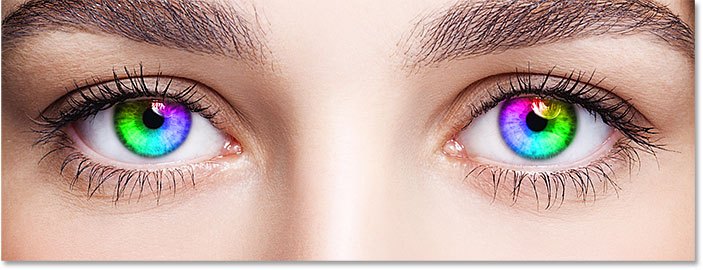


Which of the following is the most common source of energy for brain cells in humans?
Glucose
Nucleic Acids
Pectin
Proteins

Why is Pluto no longer a planet?
It is too far away
It is too cold
It doesn't have moons
It is too small

What environmental factor most directly involved in phototropism?
Water
Sunlight
Heat
pH

What is the scientific name for the human windpipe?
Trachea
Medulla Oblongata
Adam's Apple
Aorta

White light is ...
The absence of light
All colors of light combined
The first color in the rainbow
The last color in the rainbow

What is the name for the land form at the mouth of a river?
Canyon
Plateau
Oxbow
Delta


Which long bone do you see in the figure?
humerus
femur
collarbone
rib
Which organ does pump blood in all the body?
liver
brain
heart
stomach
Which organ does pump blood in all the body?
liver
brain
heart
stomach


20% of Earth’s oxygen is produced by the Amazon rainforest.
TRUE
FALSE
Balloons are filled with
Nitrogen
Oxygen
Helium
Argon
What is the biggest planet in our solar system?
Earth
Saturn
Jupiter
Venus
What is the name of the closest star to the earth?
The sun
Sirius
Vega
Alpha Centauri A
How many bones do sharks have in their bodies?
29
14
0
5
Pineapples and tomatoes are alike in this way. They're both what?
Offshoots of corn
Berries
Ectothermic
Mammals
What do Venus and Mercury have in common?
Their atmosphere are identical
They don't have moons
They have nothing in common
Their surface temperatures are exactly the same
What do red blood cells transport around the human body?
Nitrogen
Oxygen
Nutrients
Oxygen & Nutrients
What force stops a ball rolling on the ground forever?
Gravitational
Tension
Electrical
Frictional
What is the name for the process of a liquid becoming a gas?
Condensation
Evaporation
Melting
Sublimation
What is the name for the process of a liquid becoming a gas?
Condensation
Evaporation
Melting
Sublimation
What word would you use to describe a material that is see-through?
Refractive
Reflective
Opaque
Transparent
Which is not a type of rock?
Sedimentary
Mineromorphic
Igneous
Metamorphic
What powder do flowers make?
Loose
Pollen
Pressed
Nylon
Human beings are classified as:
Echinoderms
Reptiles
Fungi
Mammals

What is the boiling point of water in Celsius?
100 degrees
300 degrees
230 degrees
90 degeees

How many elements are there in the periodic table?
138
95
100
118

What is the tallest type of grass?
mondo grass
crab grass
bamboo
honohono

The first animal to be cloned was a sheep. What was her name?
Elizabeth
Greta
Dolly
Inez

Desquamation is the scientific term for
peeling skin
bulging eyeballs
smelly feet
a perfect heartbeat

Jupiter has how many moons?
12
40
3
79

Pennies are mostly made of
copper
zinc
nickel
brass

How many teeth does an adult human have?
80
28
24
32
Which is the fastest land snake?
Black Mamba
Texas rat snake
Southern black racer
Diamondback rattlesnake
Which is the rarest blood type?
B+
B-
AB+
AB-

Where in the body would you find the pinna?
Ear
Knee
Toe
Nose

The Nobel Peace Prize is one of the most prestigious awards in the field of science. The man behind the award – Alfred Nobel – invented what?
Printing press
Electricity
Steam engine
Dynamite

This animal’s fingerprints closely resemble that of a human’s. What animal is it?
Koala
Gorilla
Bear
Squirrel

Space travelers from the United States are called astronauts. From Russia, they’re called cosmonauts. Where are taikonauts from?
Japan
Sweden
China
France

This jungle animal, when in groups, is referred to as an ambush. What kind of animal is this?
Giraffe
Sloth
Tiger
Elephant

How long is the memory of a goldfish?
A few seconds
A few minutes
A few hours
A few months

What percentage of the total number of known animals are invertebrates?
95%
75%
55%
35%

Mycology is the scientific study of what?
Bacteria
Fungi
Viruses
All types of microbes

How many large bones are in a giraffe's neck?
5
7
23
45
Who is credited with the discovery of Electricity?
Benjamin Franklin
Thomas Edison
Sir Isaac Newton
What are the poles of a magnet called?
Top and Bottom
East and West
North and South
What materials are attracted to magnets?
Wood
Aluminum
Iron
What do we call molten rock when it is inside the earth?
Magma
Lava
Volcano
Which of the following has a larger gravitational pull?
Earth
Mars
Jupiter
What substance or chemical is in your mouth to help soften food and begin carbohydrate digestion?
Saliva
Water
Blood
Which was once a planet, but is now renamed a dwarf planet?
Earth
Pluto
Moon
Which planet in our solar system has an axis that is titled by 98 degrees?
Earth
Uranus
Jupiter
Saturn
Who discovered that white light is a spectrum of coloured rays
Albert Einstein
Isaac Newton
Galileo Galilei
Charles Darwin
In which month is Earth closest to the sun?
January
February
March
April
What do you call the pigment in your skin and hair that gives them color?
Lutein
Melanin
Protein
Carotene
Which group of mammals lay eggs instead of giving birth to live young?
Marsupial mammals
Placental mammals
Monotremes
Extremes

