
 Worksheets
AP Chemistry vsepr geometry imf
Total questions: 20
Worksheet time: 39mins
Draw the Lewis Dot structure for ICl2- and determine its predicted molecular geometry.
see-saw
trigonal bipyramidal
linear
bent
Draw the Lewis Dot structure for PCl5 and determine the predicted molecular geometry
octahedral
trigonal pyramidal
seesaw
trigonal bipyramidal

What are the bond angles in this molecule?
all are exactly 90o
all are slightly more than 90o
all are slightly less than 90o
more information is needed
some of the bonds are 90o, others are 120o


The carbon atom undergoes what type of hybridization?
sp hybridization
sp2 hybridization
sp3 hybridization
dsp3 hybridization
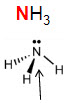
The nitrogen atom undergoes what type of hybridization?
sp hybridization
sp2 hybridization
sp3 hybridization
dsp3 hybridization

Determine the VSEPR shape and intermolecular forces that exist between molecules of the given structure.
Square Pyramidal; LDF
Square Pyramidal; LDF and Dipole-Dipole
Octahedral; LDF
Octahedral; LDF and Dipole-Dipole

Identify the hybridization and IMF of the given structure.
sp3d; LDF
sp3d; LDF and Dipole-Dipole
sp3d2; LDF
sp3d2; LDF and Dipole-Dipole
Which best describes the bonding in the cyanide ion (CN-)?
3 (sigma) bonds
2 (sigma) bonds and I (pi) bond
1 (sigma) bond and 2 (pi) bonds
3 (pi) bonds
The effect of lone pairs of electrons on molecular geometry is
to push other atoms closer together because lone pairs are
localized on only one nucleus, so they spread out more.
to allow the other atoms to be further apart because lone pairs
take up less space than bonding pairs.
to create an aysmmetical distribution of the electrons within
the atom, thus creating a polar molecule by creating dipoles.
to help to create resonance structures through the formation of
pi bonds.
Why can a molecule with the structure of NBr5 not exist?
Nitrogen only has two energy levels and is thus unable to expand its octet.
Bromine is much larger than nitrogen and cannot be a terminal atom in this molecule
It is impossible to complete the octets for all six atoms using only valence electrons.
Nitrogen does not have a low enough electronegativity to be the central atom of this molecule.
The molecule that uses sp3d hybrid orbital on the central atom is
BCl3
NCl3
ICl3
PCl3

