

wayground logo

Free Printable Worksheets

Font size

S
M
L
XL
Worksheets

First Semester Final Review

Total questions: 246

Worksheet time: 2hrs 9mins

Name
Class
Date
1.
What act divided up Indian reservations into plots of land to be given to the Indian families?
a)
Hayes Act
b)
Sherman Anti-Trust Act
c)
Bland-Allison Act
d)
Dawes Act
2.
Many Native Americans longed for the return of their way of life.  Many turned to a religious ceremony called the ______________.
a)
Moon Dance
b)
Sun Dance
c)
Greasy grass Dance
d)
Ghost Dance
3.

About how many people were killed at the Wounded Knee Massacre?

a)

3

b)

30

c)

300

d)

3,000

4.

Where were the Lakota forced to live after the US government took most of its land?

a)

in large cities

b)

in the desert

c)

on reservations

d)

on the coast

5.

When one of the guns of the Lakota went off, what did the soldiers do?

a)

retreat

b)

opened fire

c)

investigated peacefully

d)

none of these

6.

A _____________________ was a person who claimed land in the Great Plains.

a)

Cattle Driver

b)

Homesteader

c)

Exoduster

d)

Transcontinental conductor

7.

A long journey to guide animals from one place to another was called a ___________.

a)

exoduster

b)

transcontinental railroad

c)

homestead ride

d)

poverty

e)

cattle drive

8.

A __________________ is a system of transportation that goes from one side of the country to the other.

a)

cattle drive

b)

homestead

c)

transcontinental railroad

d)

exodust

9.

People who journeyed to Kansas for freedom called themselves ________________.

a)

Exodusters

b)

Transcontinental Conductors

c)

Homesteaders

d)

Poverished

e)

Cattle Drivers

10.

________________________________ is the idea that Americans should rule from the Atlantic Ocean to the Pacific Ocean.

a)

Frontierism

b)

Monopoly

c)

Manifest Destiny

d)

Patriotism

11.

What issues did farmers have in the latter half of the 19th century?

a)

More Debt

b)

bad weather

c)

high shipping costs

d)

inflation/money supply

e)

diseased crops/animals

12.

Who were the Exodusters?

a)

Newly freed slaves who left the south to own land

b)

Newly freed slaves who left the south to work the railroads

c)

Newly freed slaves who left the south to fight in the Civil War

d)

Newly freed slaves who left the south to go mine for gold

13.

The picture symbolizes...

a)

Assimilation

b)

Manifest Destiny

c)

Immigration

d)

Conquest

14.

How would bimetalism help the nation?

a)

It would put more money in circulation

b)

It would make the nation’s money supply safer

c)

It would lower the prices of seed and farm machinery

d)

It would allow them to profit from the mineral rights on their land

15.

The Grange supported

a)

banks

b)

farmers

c)

railroads

d)

factory owners

16.

Who won the 1896 election?

a)

William Jennings Bryan

b)

Populist Party

c)

Republican Party

d)

William McKinley

e)

Bimetallism

17.

What political party turn the US system into a 3 party system?

a)

William Jennings Bryan

b)

Populist Party

c)

Republican Party

d)

William McKinley

e)

Bimetallism

18.

This was a monetary system in which the government would give people silver or gold in exchange for paper currency.

a)

William Jennings Bryan

b)

Populist Party

c)

Republican Party

d)

William McKinley

e)

Bimetallism

19.

Delivered the “Cross of Gold” speech

a)

William Jennings Bryan

b)

Populist Party

c)

Republican Party

d)

William McKinley

e)

Bimetallism

20.
Forcing a group of people to give up their way of life and become more like the majority
a)
Transformation
b)
Transcendentalism
c)
Assimilation
d)
Conservation
21.

From this image, who is in control of the US lawmakers.

a)

Large monopolies

b)

small private business

c)

political machines

d)

labor unions

22.

Why does this image depict Rockefeller so large?

a)

He was a political boss who tried to win governmental favors

b)

He was a government inspector looking for corruption

c)

He was a robber baron who used his money and power to influence government

d)

He was looking to correct all of pollution cause by industrialization

23.

What does this image say about the control of Stand Oil?

a)

Standard Oil is a monster trying to control the entire USA

b)

Standard Oil is trying to save government from political bosses

c)

Standard Oil is trying to keep government on the right track to benefit laborers

d)

Stand Oil had control over many aspects of government

24.

What does this image say about the need for labor unions?

a)

labor unions were desirable because the workers were being crushed by difficult living conditions and poor pay.

b)

Labor unions decreased nativism

c)

Labor unions helped big business keep control of the workers

d)

Labor unions helped reduce the length of the work day

25.
Economic philosophy based on "Survival of the fittest"
a)
Social Darwinism
b)
National Market
c)
Knights of Labor
d)
Free Enterprise System
26.
designed to prevent companies from engaging in unfair practices that eliminated fair competition
a)
Gospel of Wealth
b)
Corporation
c)
Interstate Commerce Act
d)
Sherman Antitrust Act
27.
complete control of a product or service; the elimination of fair competition
a)
Robber Barons
b)
Bessemer Process
c)
Monopoly
d)
Philanthropy
28.
theory that government should not interfere in the operation of the free market
a)
Cul-de-sac
b)
Laissez-Faire
c)
Fleur de Lis
d)
Achtung
29.

Many immigrants found work as-

a)

unskilled labor in factories

b)

farmers on the Great Plains

c)

skilled craftsmen

d)

Educators

30.

Who accepted bribes in return for favors?

a)

Industrialists

b)

Natavists

c)

Political bosses

d)

Immigrants

31.

What statement about tenements was true during the Gilded Age?

a)

The living conditions of tenements improved greatly

b)

The number of people living in tenements declined

c)

Many immigrants lived in crowded tenements

d)

Tenements were torn down and rebuilt

32.

What term attempted to assimilate people of different cultures?

a)

Americanization movement

b)

Nativism

c)

Patronage System

d)

Labor unions

33.

What was one way workers tried to get better working conditions?

a)

By homesteading on the Great Plains

b)

By joining labor unions

c)

By working for Political bosses

d)

Through better education

34.

What was one positive of wealthy industrialists?

a)

Paying their workers low wages

b)

Philanthropic donations to charity

c)

Supporting social darwinism

d)

Working with political machines

35.
A less expensive and easier way to make steel.  It increased production and lowered the price of steel in the US dramatically. Allowed skyscrapers to be built.
a)
Industrial Revolution
b)
Bessemer Process
c)
JP Morgan
d)
Hull House
36.
____________ is a negative term to describe the great industrialists of the Gilded Age and __________ is a positive term to describe them.
a)
Robber Barons, Captains of Industry
b)
Captains of Industry, Robber Barons
37.
________________ is the term used to describe the wealthy that used ruthless business practices. 
a)
Industrial Giants
b)
Captains of Industry
c)
Robber Barons
d)
Union Leaders
38.
Carnegie, Rockefeller or Morgan: Was an oil tycoon
a)
Carnegie
b)
Morgan
c)
Rockefeller
39.
Cornelius Vanderbilt made his fortune in...
a)
flight
b)
oil
c)
railroads
d)
automobiles
40.
Oil industry
a)
Rockefeller
b)
Morgan
c)
Carnegie
d)
All of them
41.
Owned every step of the steel making process
a)
Rockefeller
b)
Morgan
c)
Carnegie
d)
All of them
42.
Became the head of US Steel after buying the company
a)
Rockefeller
b)
Morgan
c)
Carnegie
d)
All of them
43.
Banking industry
a)
Rockefeller
b)
Morgan
c)
Carnegie
d)
All of them
44.

This prohibited unfair practices by railroads such as charging higher rates for shorter routes.

a)

Interstate Commerce Act

b)

National Market

c)

Sherman Anti-trust Act

d)

Clayton Anti-trust Act

45.
What was Jane Addams' establishment called?
a)
The Escape.
b)
Convalescent Home.
c)
Hull House.
d)
The Mansion.
46.
Who benefited the most from Jane Addams?
a)
Battered women.
b)
Poor Immigrants.
c)
Business Owners.
d)
Homeless toddlers.
47.

The Social Gospel Movement strove to

a)

force the government to help the poor

b)

improve conditions in the city using biblical ideals of charity and justice

c)

keep immigrants from coming to the U.S.

d)

give immigrants jobs

48.
Nativism is
a)
the idea that Native Americans should have more land
b)
the distrust of immigrants by Americans
c)
a fear of radical ideas
d)
hatred of all people by Native Americans
49.
What is the term for the mixture of people of different cultures and races together into Americans?
a)
Mixing Bowl
b)
Angel Food Cake
c)
Fish Tank
d)
Melting Pot
50.

During the period from 1880 to 1910, why did the majority of immigrants to the United States settle in urban areas in the North?

a)

The Populists were successful in preventing immigrants from buying farmland.

b)

Rapid industrialization had created many job opportunities.

c)

Labor unions gave financial help to immigrants willing to work in the factories.

51.

What was the Chinese Exclusion Act?

a)

Letting Chinese in America with open arms

b)

Banning Chinese people from immigrating to the United States for 10 years

c)

The Europeans taking over China

52.

Why did immigrants often live in neighborhoods with others from their homelands?

a)

It was illegal to live anywhere else

b)

They didn't want to be in the US

c)

It made their adjustment to their new life easier

d)

No other housing was available

53.

What challenges did immigrants face in the US?

a)

They caught diseases

b)

Had trouble learning the language/faced prejudice

c)

Uncomfortable in the large homes in the US

d)

Difficult to study for the citizenship test

54.

Which is an example of the idea of assimilation?

a)

Native Americans following their ancient religious traditions.

b)

German immigrants learning to speak English.

c)

The development of ethnic neighborhoods like "Chinatown".

55.
The agreement that Teddy Roosevelt negotiated between striking workers and management at a coal mine
a)
New Deal
b)
Fair Deal
c)
Square Deal
d)
Super Deal
56.
True or False:  Teddy Roosevelt destroyed all trusts.
a)
True
b)
False
57.
This disaster killed over 100 workers and resulted in workplace safety codes
a)
Triangle Shirtwaist Factory Fire
b)
Circle Pantswaist Factory Fire
c)
Sherman Factory Fire
d)
The Jungle Factory Fire
58.
The Jungle--by muckraker Upton Sinclair--exposed the unsanitary conditions in the meatpacking industry and led to this law
a)
Sherman Anti-Trust Act
b)
Meat Inspection Act
c)
Food Cleanliness Act
d)
Clayton Anti-Meat Act
59.
This law banned harmful medical products and false medical claims.
a)
Pure Food and Drug Act
b)
Food Inspection Act
c)
Meat Inspection Act
d)
Pure Food Analysis Act
60.
This president created the national parks system and helped to preserve America's natural resources
a)
Teddy Roosevelt
b)
Grover Cleveland
c)
William McKinley
d)
Franklin Roosevelt
61.
Which group of immigrants came to the United States and settled mostly along the EAST coast?
a)
European
b)
Asian
c)
African
d)
Indian
62.
Which group of immigrants came and settled mostly along the WEST coast?
a)
European
b)
Asian
c)
African
d)
Indian
63.
Where was Angel Island located?
a)
San Antonio, Texas
b)
New York, New York
c)
San Francisco, California
d)
Los Angeles, California
64.
Where was Ellis Island located?
a)
San Antonio, Texas
b)
New York, New York
c)
San Francisco, California
d)
Pittsburgh, Pennsylvania
65.

To help someone by providing them with something they need in return for political support.

a)

Automation

b)

Patronage

c)

Exploit

d)

Advocate

66.
Who was the leader of the corrupt Tammany Hall, New York Political Machine?
a)
Andrew Carnegie
b)
Henry Ford
c)
John D. Rockefeller
d)
William "Boss" Tweed
67.
Legislation to reform the spoils system.
a)
Chinese Exclusion Act
b)
Blue Laws
c)
Pendleton Civil Service Act
d)
Political Machine
68.
The use of one's job to gain profit.
a)
Political Machine
b)
Ghetto
c)
Graft
d)
Blue Laws
69.

What was one of the results of Plessy v. Ferguson?

a)

The Supreme Court ruled in favor of Plessy saying segregation was illegal.

b)

The Supreme Court never made a ruling.

c)

The Supreme Court ruled that segregation was legal.

70.

What did Trusts do?

a)

Allowed for shareholders to buy stocks.

b)

Controlled an entire industry and limited competition.

c)

Allowed for fair competition in an industry.

71.

Trust =

a)

Fair competition

b)

Monopoly

c)

Low prices and high quality

72.

What was the impact of Trusts?

a)

Increased choices, lower prices, and higher quality.

b)

Limited choices, higher prices, and lower quality.

c)

Increased competition between many businesses.

73.

How did anti-trust laws try to protect consumers?

a)

By decreasing competition in the marketplace.

b)

By limiting the amount of businesses in a particular industry.

c)

By increasing competition in the marketplace.

74.

In what ways did the Sherman Anti-trust Act help make things better for consumers? (check all that apply)

a)

Can't agree to fix prices

b)

Can't be a monopoly and not compete fairly.

c)

Can make agreements that would limit competition.

d)

All of these!

75.

The Clayton Act:

a)

Allowed for monopolies if a fee was paid to the government.

b)

Stopped the merger of companies that stopped competition.

c)

Allowed mergers that stopped competition.

76.

The FTC (Federal Trade Commission) enforces

a)

Anti-Trust laws

b)

Illegal stock market trades

c)

Pro-monopoly laws

77.

Define/describe Laissez-Faire economic policy

a)

The government heavily subsidizes new businesses.

b)

The government plays a major role in regulating business and economic matters

c)

The government plays little to no role in regulating business and economic matters

d)

The government supports the forming of Trusts
78.
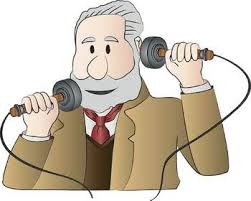
"Watson, come over here - I need you." were the first words spoken over a telephone.  Who said these words when he invented the first phone?
a)
Guglielmo Marconi
b)
Alexander Graham Bell
c)
Christopher Sholes
d)
Samuel Morse
79.
Christopher Sholes invented the ___________ in 1868 and changed the way people communicate.
a)
telephone
b)
telegraph
c)
typewriter
d)
computer
80.

What inventions are Thomas Edison known for? Select all that apply.

a)

the phonograph

b)

a printing press

c)

the microwave

d)

a vote counter to be used in elections

e)

the light bulb

81.

What invention of Thomas Edison do we use the most often?

a)

the phonograph

b)

the telephone

c)

the printing press

d)

the light bulb

82.

What is owning all the businesses in a particular field?

a)

Vertical Integration

b)

Horizontal Integration

c)

Trust

d)

Antitrust

83.

Owning every step in the manufacturing process is

a)

trust

b)

monopoly

c)

vertical integration

d)

horizontal integration

84.

HORIZONTAL integration occurs when...

a)

firms in the same industry and at the same stage of the production process combine to form a larger business.

b)

when a firm expands by combining with an existing business in the same industry but at a different stage of the production process.

c)

Involves take over or merger with another firm in an unrelated industry.

85.

Vertical integration occurs when...

a)

firms in the same industry and at the same stage of the production process combine to form a larger business.

b)

when a firm expands by combining with an existing business in the same industry but at a different stage of the production process.

c)

Involves take over or merger with another firm in an unrelated industry.

86.

When a combination of companies control an industry to reduce competition

a)

monopoly

b)

trust

c)

laissez faire

d)

patent

87.

Violent 1984 railway workers' strike which began outside of Chicago and spread nationwide

a)

Haymarket Riot

b)

Pullman Strike

c)

Homestead Strike

88.

1896 labor-related protest in Chicago which ended in deadly violence

a)

Pullman Strike

b)

Haymarket Riot

c)

Homestead Strike

89.

_______ is when workers refuse to work in order to force an employer to meet their demands.

a)

labor unions

b)

lockouts

c)

strike

d)

sweatshop

90.

Refusing to buy goods as a form of protest

a)

strike

b)

yellow dog contracts

c)

lockout

d)

boycott

91.

Formation of national labor unions in the late 1800's was mainly because of

a)

passage of laws that supported workers

b)

laws restricting immigration

c)

poor working conditions and low wages

d)

economic depression that led to high unemployment

92.
Temporary worker hired by company usually black or immigrant
a)
Strike Breaker (Scab)
b)
"Yellow Dog" Contract
c)
American Federation of Labor
d)
Immigrant breaker
93.
War, poverty, and discrimination are all examples of.......
a)
Pull Factors
b)
Push Factors
c)
Jump Factors
d)
Falling Factors
94.
Economic opportunities, religious freedom, and political and social equality are all examples of...
a)
Push Factors
b)
Pull Factors
c)
Falling Factors
d)
Jump Factors
95.
Which amendment to the United States Constitution defines citizenship?
a)
16th
b)
14th
c)
13th
d)
None of the above
96.
What is the Quota System?
a)
A system created to limit the number of immigrants who could be in America
b)
The end of the Civil War
c)
The Basic rules of Immigration
d)
The first rule of immigration
97.

People who moved to the US after 1880 seeking economic opportunity or political or religious freedom were called

a)

old immigrants

b)

nativists

c)

new immigrants

d)

steerage

98.

Included many who spoke English

a)

Old immigrants

b)

New Immigrants

99.
Who wrote the expose piece of literature that revealed the extensive corrupt monopolistic business practices of Standard Oil?
a)
Ida Tarbell
b)
Lewis Hines 
c)
Jacob Riis
d)
Upton Sinclair
100.
Writers that dig up the bad things going on in society
a)
Suffragists
b)
Muckrakers
c)
Students
d)
Chaffinators
101.
Who was the photographer who revealed to the world how the lower class lived?
a)
Alexander Bell
b)
Jacob Riis
c)
Upton Sinclair
d)
Theodore Roosevelt
102.
Muckrakers were
a)
progressive reformers who sought legal changes to problems
b)
politicians who passed laws cleaning up the "muck" in society
c)
governors who wanted to get rid of monopolies
d)
journalists who wrote about the problems in society
103.
Which Muckraker exposed problems with the meat-packing industry in the book 'The Jungle'?
a)
Jacob Riis
b)
Ida B. Wells
c)
Upton Sinclair
d)
Ida Tarbell
104.

Elizabeth Cady Stanton and ________________ formed the National Woman Suffrage Association.

a)

Harriet Tubman

b)

Sojourner Truth

c)

Susan B. Anthony

105.

Elizabeth Cady Stanton is well known because she fought for ...

a)

slavery

b)

women's suffrage

c)

popular sovereignty

106.
The agreement that Teddy Roosevelt negotiated between striking workers and management at a coal mine
a)
New Deal
b)
Fair Deal
c)
Square Deal
d)
Super Deal
107.
What nickname did Roosevelt get after breaking up monopolies with the Sherman Anti-Trust Act?
a)
Trustbuster
b)
Monopolybuster
c)
Theodore Roosevelt Destroyer of Trusts
d)
Slayer of trusts and eradicator of monopolies
108.
True or False:  Teddy Roosevelt destroyed all trusts.
a)
True
b)
False
109.
The Jungle--by muckraker Upton Sinclair--exposed the unsanitary conditions in the meatpacking industry and led to this law
a)
Sherman Anti-Trust Act
b)
Meat Inspection Act
c)
Food Cleanliness Act
d)
Clayton Anti-Meat Act
110.
This law banned harmful medical products and false medical claims.
a)
Pure Food and Drug Act
b)
Food Inspection Act
c)
Meat Inspection Act
d)
Pure Food Analysis Act
111.
This president created the national parks system and helped to preserve America's natural resources
a)
Teddy Roosevelt
b)
Grover Cleveland
c)
William McKinley
d)
Franklin Roosevelt
112.
Allowed people to directly elect their Senators
a)
17th Amendment
b)
Referendum
c)
Direct Primary
d)
Initiative
113.
Allowed voters to start a law through a petition
a)
Referendum
b)
Initiative
c)
Recall
d)
Secret Ballot
114.
Allowed voters to remove a public official from office
a)
Referedum
b)
Impeachment
c)
Recall
d)
Initiative
115.
Allowed voters to choose their candidates for office
a)
Secret Ballot
b)
17th Amendment
c)
Direct Primary
d)
Referendum
116.
Allowed voters to accept/reject a legislature’s law
a)
Initiative
b)
Recall
c)
Referendum
d)
Direct Primary
117.
Which of the following was one thing that Roosevelt did as part of his conservation efforts?
a)
Formed the US Forest Service
b)
Formed National Parks
c)
Put land into wildlife preserves
d)
All of the above
118.
Which of the following was one thing that Roosevelt did as part of his efforts to regulate business?
a)
Regulating the amount of money meat packers could make
b)
Regulating railroad rates
c)
Regulating the wages businesses could pay workers
d)
Regulating the number of employees each factory could have
119.
Which of the following was NOT part of Teddy Roosevelt's efforts to protect consumers?
a)
Forming the Food and Drug Administration
b)
Signing the Pure Food and Drug Act
c)
Signing the Meat Inspection Act
d)
Passing the Clayton Antitrust Act
120.
This man was elected after Roosevelt to continue the progressive reform agenda.
a)
Andrew Johnson
b)
Franklin Roosevelt
c)
William Howard Taft
d)
William McKinley
121.
What happened in the election of 1912?
a)
Roosevelt runs as a third party and wins
b)
Roosevelt runs as a third party and loses
c)
Taft runs as a Republican and wins
d)
Wilson runs as a Democrat and loses
122.
What political party did Roosevelt run as in the election of 1912?
a)
Democrat
b)
Republican
c)
Bull Moose
d)
Libertarian
123.
Who won the election of 1912?
a)
Roosevelt
b)
Taft
c)
Wilson
d)
McKinley
124.
How did Taft anger progressives?
a)
raised tariffs
b)
lowered tariffs
c)
eliminated tariffs
d)
shot a cow
125.

I won the election of 1912 because of a split within the Republican Party.

a)

William McKinley

b)

Theodore Roosevelt

c)

William Howard Taft

d)

Woodrow Wilson

126.

I supported the program New Freedom which would give government power to regulate big businesses to protect smaller businesses.

a)

William McKinley

b)

Theodore Roosevelt

c)

William Howard Taft

d)

Woodrow Wilson

127.

I was the only President to also serve as Chief Justice of the Supreme Court.

a)

William McKinley

b)

Theodore Roosevelt

c)

William Howard Taft

d)

Woodrow Wilson

128.

I helped establish a national income tax.

a)

William McKinley

b)

Theodore Roosevelt

c)

William Howard Taft

d)

Woodrow Wilson

129.

I was considered the conservative Republican choice in the 1912 election.

a)

William McKinley

b)

Theodore Roosevelt

c)

William Howard Taft

d)

Woodrow Wilson

130.

Gave women the right to vote

a)

19th Amendment

b)

15th Amendment

c)

23rd Amendment

d)

26th Amendment

131.
16th Amendment
a)
Congress collects taxes on incomes
b)
Congress regulates interstate commerce
c)
Congress eliminated poll taxes
d)
Congress bans alcohol
132.
21st Amendment
a)
Prohibited alcohol
b)
Repealed prohibition of alcohol
c)
Made alcohol illegal
d)
Both a and c
133.
17th Amendment
a)
2 Senators, elected for 6 years
b)
2 Vice Presidents, elected for 6 years
134.

This government agency regulates and enforces laws that protect consumers from unfair business practices (ex. fraud, scams) -

a)

Food and Drug Administration (FDA)

b)

Federal Trade Commission (FTC)

c)

Occupational Safety and Health Administration (OSHA)

135.
The Federal Reserve
a)
is made up of 12 district banks and 25 branch banks.
b)
is managed by a 12-member board of directors.
c)
is made up of district banks that operate independently from one another.
136.
The primary role of the Federal Reserve Bank is to steer the economy by
a)
controlling the budget
b)
setting spending levels.
c)
controlling the money supply.
d)
loaning out money.
137.
What was the group of anti-foreigners who attacked Christian missionaries and Chinese Christians in China? 
a)
Boxer Rebellion
b)
Russo-Japanese War
c)
Yellow Journalism
d)
Rough Riders
138.
What said that the US could intervene in the internal affairs of Latin American countries? 
a)
protectorate
b)
Roosevelt Corollary
c)
Dollar Diplomacy
d)
Moral Diplomacy
139.
What was the policy of influencing Latin America through economic rather than military intervention?
a)
protectorate
b)
Roosevelt Corollary
c)
Dollar Diplomacy
d)
Moral Diplomacy
140.
What is the extension of a nation's power over other lands? 
a)
Imperialism
b)
Sphere of Influence
c)
Open Door Policy
d)
Liliuokalani
141.
President Roosevelt wanted to build the Panama Canal to shorten travel time between 
a)
Panama and Colombia
b)
Atlantic Ocean and Gulf of Mexico
c)
Atlantic Ocean and Pacific Ocean
d)
Atlantic Ocean and West Indies
142.
The members of the Triple Entente were
a)
Germany, France and Serbia
b)
France, Great Britain and Russia
c)
Germany, Italy and Austria-Hungary
d)
Great Britain, Italy and Spain 
143.
Wilson believed this violated the laws of neutrality
a)
use of poison gas
b)
Schlieffen Plan
c)
submarine warfare
d)
secret agreement
144.

The Zimmerman note proposed an alliance between Germany and

a)

Italy

b)

Mexico

c)

China

d)

Canada

145.
Why did Germany use U-boats?
a)
British blockade of German ports and transportation
b)
attack on Sussex
c)
sinking of Lusitania
d)
British bombing of Dresden
146.
The Sedition Act made it illegal to
a)
give aid or comfort to enemy and refusing military duty
b)
say, write or publish any disloyal language criticizing the gov't, flag of military
147.
Why did the US propose the Open Door Policy in China?
a)
to keep out the Japanese
b)
to keep out European spheres of influence
c)
to put down the Boxer Rebellion
d)
to end the Russo-Japanese War
148.
Which president supported dollar diplomacy?
a)
Roosevelt
b)
Wilson
c)
Taft
149.
Which president supported moral diplomacy?
a)
Roosevelt
b)
Taft
c)
Wilson
150.
Which of the following is an example of moral diplomacy?
a)
nurturing constitutional governments
b)
controlling the harvesting of raw materials in a country 
c)
supporting a civil war in order to have fuller access to their economy
d)
supporting a leader friendly to American business interests
151.
Which of the following is an example of moral diplomacy?
a)
nurturing constitutional governments
b)
controlling the harvesting of raw materials in a country 
c)
supporting a civil war in order to have fuller access to their economy
d)
supporting a leader friendly to American business interests
152.
What was President Wilson's plan for a just and lasting peace? 
a)
the League of Peace
b)
the Treaty of Versailles
c)
the Big Four
d)
the Fourteen Points
153.
How did the US help war materials get to the troops during WW1?
a)
Committee on Public Information
b)
War Industries Board
c)
Selective Service Act
d)
Reparations
154.
The US law upheld in Schenck vs. the US, punishing citizens for aiding the enemy or interfering in the draft
a)
Second Amendment
b)
First Amendment
c)
Espionage Act
d)
Selective Service Act
155.

Which of the following was not acquired by the US after the Spanish-American War?

a)

Cuba

b)

Puerto Rico

c)

Guam

d)

Phillipines

156.

What was in the contents of the De Lome letter?

a)

a proposed alliance between Germany and Mexico

b)

an admission of guilt by the Spanish regarding the USS Maine

c)

criticism of McKinley

d)

invitation to an NBA Youngboy concert

157.

Which of the following did the US force Cuba to include in its constitution?

a)

Teller Amendment

b)

Platt Amendment

c)

Open door policy

d)

Roosevelt Corollary

158.

How did the sinking of the Lusitania cause the US to enter WWI?

a)

It caused the US to question Britain's military competence

b)

It caused the US public to support war against Germany

c)

It exposed German spies with poor intentions toward the US

d)

It forced Great Britain to leave the war

159.
True/False.  The sinking of the Lusitania in 1915 was one of the reasons for US entry into WW1.
a)
False
b)
True
160.
The United States Senate did not ratify the Treaty of Versailles because of a desire to resume prewar __.
a)
imperialism
b)
nationalism
c)
isolationism
d)
militarism
161.

Information, that may be true or false, that is put out to influence public opinion is called . . .

a)

FAKE NEWS

b)

PERSUASION

c)

BIAS

d)

PROPAGANDA

162.

What government agency was formed to rally public support for the entry of the U.S. into the Great War?

a)

COMMITTEE ON PROPAGANDA

b)

DEPARTMENT OF COMMUNICATION

c)

COMMITTEE ON PUBLIC INFORMATION

d)

DEPARTMENT OF WAR

163.

What laws were passed that made it illegal to take actions against the U.S. government.

a)

ESPIONAGE AND TRAITOR ACT

b)

ESPIONAGE AND SEDITION ACT

c)

SELF DEFENSE ACT

d)

ALIEN AND SEDITION ACT

164.

In order to increase the size of the U.S. army, what act was passed which required men between certain ages to register with the government with the possibility of being drafted.

a)

ARMY ENLISTMENT ACT

b)

SELECTIVE SERVICE ACT

c)

DRAFT DECLARATION

d)

DEFENSE ACT

165.

In order to raise funds to pay for the war, what did the government sell to U.S. citizens?

a)

LIBERTY BONDS

b)

VICTORY BONDS

c)

DEFENSE BONDS

d)

PATRIOTISM BONDS

166.

Which of the following were causes of the Spanish- American war

a)

Sinking of the USS Maine

b)

Yellow Journalism

c)

De Lome Letter

d)

Annexation of Cuba

e)

Annexation of Hawaii

167.

Did not want the U.S. involved in European matters

a)

Woodrow Wilson

b)

Henry Cabot Lodge

168.

Wanted the U.S. to join the League of Nations

a)

Woodrow Wilson

b)

Henry Cabot Lodge

169.
Because of the Treaty of Versailles …
a)
Germany had to give up 1 million square miles of land
b)
Germany had to pay war reparations to the Allies
c)
Germany’s government was reconstructed.
d)
ALL OF THE ANSWERS ARE CORRECT
170.
Payment for damages after a war is called
a)
Demilitarization
b)
Self-determination
c)
Reparations
171.
What nation had to drop out of the war because there was a communist revolution in their country?
a)
US
b)
France
c)
Britain
d)
Russia
172.
Who had to take full blame for WWI in the Treaty of Versailles?
a)
Britain
b)
Ottoman Empire
c)
Germany
d)
Russia
173.
How did the German people react to the Treaty of Versailles?
a)
They were ok with it because they realized that they lost the war
b)
They loved it because it was so favorable to them
c)
They hated it because it treated them severely
d)
Most Germans didn't really care
174.
Why did the U.S. not ratify the Treaty of Versailles?
a)
Thought the League of Nations would force us to get involved in every issue that takes place in Europe.
b)
We were upset that Kaiser Wilhelm was removed
c)
We were mad at Britain and France
d)
None of the Above
175.
What impact did the Treaty of Versailles have on the borders of Europe?
a)
No impact, all borders remained the same.
b)
France gave land to Germany.
c)
The Soviet Union was given more land to keep them from invading the rest of Europe.
d)
All of the empires of Europe were split up, and many new countries were created.
176.
America did not want to get involved in other country's conflicts. This was known as __________________________
a)
Imperialism
b)
Axis
c)
Isolationism
d)
Dictatorship
177.
Nativism is
a)
the idea that Native Americans should have more land
b)
the distrust of immigrants by Americans
c)
a fear of radical ideas
d)
hatred of all people by Native Americans
178.
What did the Immigration Acts of 1921, 1924 and 1929 do?
a)
Increased the amount of immigrants allowed in the US
b)
Decreased the amount of immigrants allowed in the US
c)
Outlawed all immigration
d)
Only allowed immigrants from Russia
179.
What was the Red Scare?
a)
fear of the spread of wealth
b)
fear of the spread of Communism
c)
fear of the spread of Capitalism 
d)
fear of job competition
180.
During the Red Scare, Americans often linked __________ with radicalism.
a)
workers
b)
criminals
c)
immigrants
d)
Progressives
181.
Who were the Palmer Raids meant to find and root out?
a)
Anarchists
b)
Communists
c)
Socialists
d)
All of the above
182.
What action violated the 6th Amendment, which guarantees the right to a speedy trial and the right to confront one's accusers?
a)
Palmer Raids
b)
Unrestricted Submarine Warfare
c)
Consumer culture
d)
Invasion of Normandy
183.

Which group targeted African Americans, immigrants, Catholics and Jews?

a)

Ku Klux Klan

b)

Flappers

c)

Gangsters

d)

Fundamentalists

184.

Sacco and Vanzetti were on trial for robbery and murder, but also for their

a)

membership in the Ku Klux Klan

b)

refusal to board the Buford

c)

political beliefs and ethnicity

d)

resistance to the leadership of John L. Lewis

185.

Which of the following statements is supported by the political cartoon above?

a)

Decrease of immigrants due to the passage of immigration quotas

b)

Increase of tax rates for immigrants

c)

Increase in the difficulty of the United States naturalization exam

d)

Decrease of jobs available for immigrants

186.

What is the Harlem Renaissance?

a)

A travelling basketball team

b)

A rebirth of African American culture in art, music, and literature

c)

A medieval game

d)

Time period of around 1210 a.d. when the games of jousting and art became popular

187.
Coolidge became president in 1923 because ____.
a)
the people impeached Harding
b)
John Wilkes Booth assassinated Harding
c)
the US went to war
d)
Harding died while touring the US
188.
Which president would be more likely to appoint unqualified people to important government positions? 
a)
Coolidge
b)
Harding
189.
Which president was known for his "no-nonsense" demeanor and silent personality?
a)
Harding
b)
Coolidge
190.
The American economy boomed under Coolidge's "hands-off" approach in the 1920s.
a)
True
b)
False
191.

Which was the name of a scandal during Harding's presidency?

a)

Business Boom Scandal

b)

Supplemental Draft Scandal

c)

Toaster Scandal

d)

Teapot Dome Scandal

192.

Which president promised a "return to normalcy"?

a)

Taft

b)

Hoover

c)

Harding

d)

Coolidge

193.

Which president was quoted, "The business of America is business"?

a)

Harding

b)

Coolidge

c)

Taft

d)

Hoover

194.
As President Harding's Secretary of Interior, I played a major role in the Teapot Dome Scandal by taking kickbacks from wealthy oil men.
a)
W.H. Taft
b)
Calvin Colidge
c)
Albert Fall
195.
Which President had a lot of scandals occur during his time in office? 
a)
Woodrow Wilson
b)
Calvin Coolidge
c)
Herbert Hoover
d)
Warren G. Harding
196.
Harding & Coolidge did all of the following to boost big business EXCEPT:
a)
appointed business people to regulate businesses that opposed regulation
b)
selected Supreme Court Justices that ruled against progressive legislation
c)
Named conservatives to powerful cabinet positions
d)
raised taxes on big business
197.

Which presidents below come to mind when you see the following: Republican, Pro-Business, Less Government Spending, Scandal (seems like all politicians I know 😉)

a)

Teddy Roosevelt

b)

Herbert Hoover

c)

Calvin Coolidge

d)

William McKinley

e)

Warren G. Harding

198.

This term describes all three presidents approaches in regards to government involvement in the 1920s.

a)

Egalitarianism

b)

Laissez-faire

c)

Liberty

d)

Popular Sovereignty

199.

What term identifies the philosophy held by Hoover, that people should find solutions to their problems instead of the government?

a)

Rugged Individualism

b)

Command Economy

c)

Democratic Socialism

d)

Free Enterprise

200.

The Teapot Dome Scandal is important because:

a)

The government did not intervene in business in Wyoming

b)

The government was looking to expand its power through the state legislature.

c)

The government accepted bribes through a Cabinet Member. who was eventually imprisoned.

d)

The government was completely unaware of what was happening in Wyoming.

201.

Between 1910 and 1920 many black Americans headed

a)

North

b)

South

c)

East

d)

West

202.
Emphasized Protestant teachings and the belief that every word in the Bible was the literal truth.
a)
Modernism
b)
Harlem Renaissance
c)
Fundamentalism
d)
Consumer Revolution
203.
A flood of new, affordable goods available after WWI.
a)
Modernism
b)
Harlem Renaissance
c)
Fundamentalism
d)
Consumer Revolution
204.
Illegal saloons.
a)
People who sold illegal alcohol.
b)
The “new women” of the twenties who shocked many.
c)
Speakeasies
d)
A system where many workers perform specific jobs to complete a task
205.
Bootleggers   
a)
People who sold illegal alcohol.
b)
The “new women” of the twenties who shocked many.
c)
Speakeasies
d)
A system where many workers perform specific jobs to complete a task
206.
New music of the 1920s.
a)
Flappers
b)
Jazz
c)
Bull Market
d)
Modernism
207.
The act of making a small down payment on a product and then paying off the rest in monthly payments.
a)
Buying on Margin 
b)
Installment Buying
c)
Mass Production
208.
Famous Jazz trumpeter. 
a)
Charlie Chaplin
b)
Babe Ruth
c)
Charles Lindbergh
d)
Louis Armstrong
209.
First pilot to fly from NY to Paris.
a)
Charlie Chaplin
b)
Babe Ruth
c)
Charles Lindbergh
d)
Louis Armstrong
210.
First pilot to fly from NY to Paris.
a)
Charlie Chaplin
b)
Babe Ruth
c)
Charles Lindbergh
d)
Louis Armstrong
211.
At the heart of the Scopes Trial was a clash between
a)
biology and science
b)
education and science
c)
evolution and science
d)
religion and science
212.
What was the Volstead Act?
a)
A constitutional amendment that outlawed alcohol.
b)
The law under which Al Capone was prosecuted.
c)
A tax on illegal saloons.
d)
The law that officially enforced Prohibition.
213.
African-American Poet during the 1920s
a)
Langston Hughes
b)
Henry Ford
c)
Marcus Garvey
214.
Who stared the back to Africa movement to free Africans from their colonial oppressors?
a)
Langston Hughes
b)
Henry Ford
c)
Marcus Garvey
215.

What did the 18th Amendment accomplish?

a)

It granted all men the right to vote

b)

It granted all women the right to vote

c)

It banned the sale and consumption of alcohol (prohibition)

d)

It provided equal rights for women of all races

216.

Define Prohibition.

a)

A partial ban on the sale and consumption of tobacco

b)

A partial ban on the sale and consumption of alcohol

c)

A total ban on the sale and consumption of tobacco

d)

A total ban on the sale and consumption of alcohol

217.

What were young women who wore looser clothes, used make-up, cut their hair, and pursued new activities?

a)

fundamentalists

b)

speakeasies

c)

bootleggers

d)

flappers

218.

21st Amendment

a)

Repeals 19th Amendment

b)

Repeals 18th Amendment

c)

Repeals 15th Amendment

d)

Repeals 17th Amendment

219.
Which of the following statements best describes what happened on Black Tuesday?
a)
Stock prices fell and the stock market crashed.
b)
Bank runs forced many banks to close their doors.
c)
Federal troops attacked the Bonus Army marchers.
d)
The Supreme Court ruled that the NRA was unconstitutional.
220.

When the economy is expanding, leading to a rise in stock prices and increased investing, the market is described as a...

a)

DOW-JONES Cycle

b)

Bear Market

c)

Boom-Bust Cycle

d)

Bull Market

221.
This is the process of taking money borrowed from the bank or a broker, and putting it into the stock market
a)
Buying on Margin 
b)
Speculation 
c)
Buying on Credit 
d)
Overconsumption 
222.
A way of borrowing money from a bank or finance company so that you can have what you want and pay for it later
a)
Speculation 
b)
Buying on Credit 
c)
Buying on Margin 
d)
Overproduction 
223.
This is the idea that the rich become richer, while the poor become poorer
a)
Black Tuesday 
b)
Speculation 
c)
Unequal distribution of wealth
d)
Buying on Credit 
224.
When a large number of customers line up to withdraw cash from deposit accounts from a financial institution
a)
Speculation 
b)
Black Friday 
c)
Bank Run 
d)
Underconsumption 
225.
When the purchase of goods and services is at a lower level then the supply (not enough goods are being purchased by consumers)
a)
Underconsumption
b)
Overproduction 
c)
Speculation 
d)
Buying on Margin 
226.
This is making a very risky investment in the stock market, in hopes of earning a large profit
a)
Speculation 
b)
Buying on Margin 
c)
Bank Run 
d)
Bull Stock 
227.
A sudden dramatic decline of stock prices, resulting in a significant loss of wealth.
a)
Bull Market 
b)
Speculation 
c)
Bank Run 
d)
Stock Market Crash 
228.
This cause led many businesses to close, because they were producing more goods than consumers were willing to buy.
a)
Overproduction 
b)
Underconsumption 
c)
Buying on Credit 
d)
Stock Speculation 
229.

The Bonus Army was a group of (a)   veterans who marched to Washington

D.C. to demand their bonus pay. Their march and the government’s reaction

was a major event of the Great Depression.

230.
Many people lost their jobs during the Great Depression.  The national government responded with President Franklin Roosevelt's "New Deal," which
a)
provided programs to help people make money to provide for their needs. 
b)
helped reduce the national debt, providing more capital for businesses
c)
forced people to join the military forces to make money for their needs. 
d)
forced people to use charities to help them provide for their needs. 
231.
One difference between the administrations of President Roosevelt and President Hoover was that Roosevelt was-
a)
more willing to use government intervention to solve economic problems
b)
unwilling to allow government agencies to establish jobs
c)
able to ignore economic issues for most of his first term in office
d)
opposed to any type of government regulation of financial institutions
232.
What problem were both the Civilian Conservation Corps and the Works Progress Administration developed to address?
a)
Excessive stock market speculation
b)
High unemployment
c)
Increased use of credit
d)
Overproduction of goods
233.
During the New Deal, how did the government attempt to improve conditions for farmers?
a)
By ending the practice of sharecropping
b)
By encouraging farmers to grow more to increase profits
c)
By paying farmers to grow fewer crops
d)
By training farmers for jobs in a new field
234.
A major reason for creating the Tennessee Valley Authority in 1933 was to-
a)
Provide health care benefits to southerners
b)
Encourage African-Americans to settle in the valley
c)
Improve economic conditions in a poor rural region
d)
Evacuate farmers from the impoverished region
235.
What was a major result of FDR’s New Deal programs?
a)
The national deficit declined for most U.S. citizens
b)
The suffrage rights for women changed
c)
The power of the federal government was expanded
d)
The federal government lowered taxes for most Americans
236.
What was the first order of business by FDR when he got into office?
a)
End the depression
b)
closed the stock market for a week
c)
4 day bank holiday
d)
close hoovervilles
237.
What institution opposed parts of the New Deal because it believed it gave the federal government an unconstitutional amount of power over the states and economy?
a)
Congress
b)
Supreme Court
c)
Stock Market
d)
Executive Branch
238.
What was created to protect bank deposits up to $5,000?
a)
WPA
b)
CCC
c)
TVA
d)
FDIC
239.
The largest New Deal program which worked on public projects such as roads, bridges, public buildings, etc.
a)
Works Progress Administration
b)
World Peace Association
c)
Working Period Administration
d)
Tennessee Valley Authority
240.
People who could no longer afford their homes were forced to live in cardboard shacks that they built in public parks. What were these shacks called?
a)
Shantyshacks
b)
Town Homes
c)
Tenement Housing
d)
Hoovervilles
241.

Who was most directly affected by the Dust Bowl?

a)

farmers

b)

investors

c)

industrial workers

d)

WWI Veterans

242.

situation in which government spends more money

than it takes in

a)

deficit spending

b)

on margin

c)

national debt

243.
What tool - passed during the Hoover Administration -  designed to protect American manufacturers actually ended up creating a worldwide depression?
a)
Reconstruction Finance Committee
b)
Hawley-Smoot Tariff
c)
New Deal
d)
Second New Deal
244.

Through _________, Roosevelt explained his policies in simple conversational terms

a)

Fireside Chats

b)

Bank Holidays

c)

First Hundred Days

d)

the New Deal

245.
What was FDR’s plan to add justices to the Supreme Court called?
a)
The Yes Man Trials
b)
Court Packing Scheme
c)
Operation Puppet
d)
Court Repatriation
246.
_________________ was an American suffragist, leader, and founder of the National Women's Party.
a)
Nellie Taylor Ross
b)
Alice Paul
c)
Margaret Sanger
d)
Genevieve R. Cline