
 Worksheets
fun with magnets
Total questions: 20
Worksheet time: 10mins
Magnetic poles
Always exist in pairs
Sometimes exist in pairs
Always exist separately
Some times exist separately
How many poles are there in a magnet ?
1
5
3
2
North pole of a magnet can be identified by
Another magnet having its poles marked as North pole and South pole.
Another magnet no matter whether the poles are marked or not.
Using an iron bar.
Using iron filings.
A bar magnet is immersed in a heap of iron filings and pulled out. The amount of iron filling clinging to the
North pole is almost equal to the south pole.
North pole is much more than the south pole.
North pole is much less than the south pole.
Magnet will be same all along its length.
Which is an example of a magnetic substance?
Iron
Nickel
Cobalt
All of these
Magnet attracts
Wood
Plastic
Paper
Iron
Where is the force of attraction of the magnet maximum?
At the sides
All over the magnet
At its poles
At its centre
A magnet can lose its properties when.....
It is dropped from height
Applying heat
Hitting it with a hard object
All of above
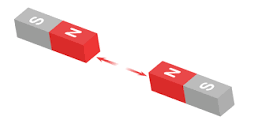
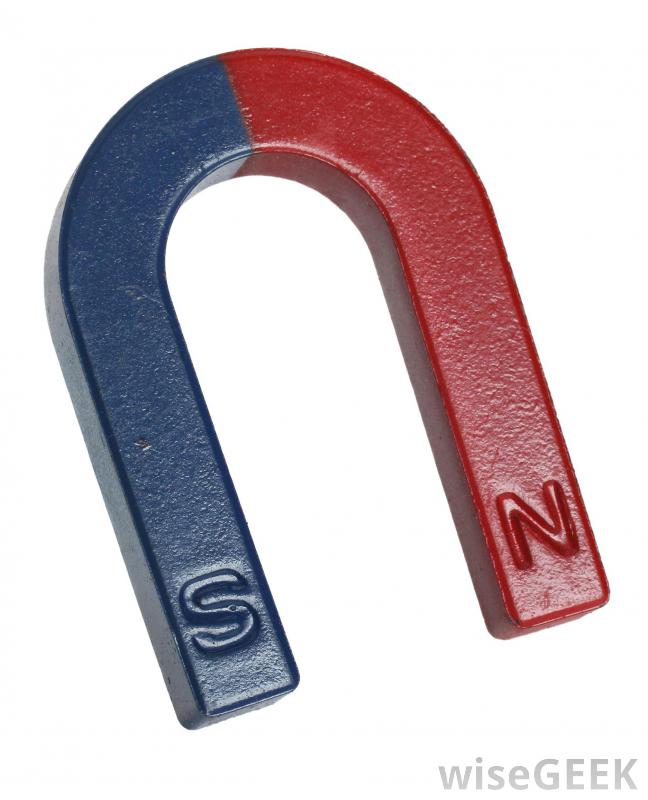
Magnets have a ________ shape
Cylindrical
Ball ended
Horse shoe
All of these
A freely suspended bar magnet rests in
North south directions
East west directions
Upside down
Any direction by chance
Which is a natural magnet?
Magnetite
Haematite
Bakelite
Copper
Like poles of magnets -------- each other.
Attract
Repel
Both a and b
None
In ancient times, humans made crude navigational compass by using -
Steel
Lodestone
Alnico
Soft iron
How is a compass useful to us?
In finding the altitude of a place
In finding only the north of a place
In finding all the directions of a place
In making artificial magnets

In which direction the pointed end of the needle of a compass always points?
North
South
East
West

Observe the pictures A and B given in pictures carefully Which of the following statement is correct for the above given pictures?
(a) cars 1 and 2 will come closer
cars 3 and 4 will come closer.
(b) cars 1 and 2 will move away from each other cars 3 and 4 will move away.
(c) cars 1 and 2 will move away
3 and 4 will come closer to each other.
(d) cars 1 and 2 will come closer to each other
3 and 4 will move away from each other.

