wayground logo

Free Printable Worksheets

NEW

Font size

S
M
L
XL
Worksheets

Anatomy End of Semester

Total questions: 35

Worksheet time: 21mins

Name
Class
Date
1.

Humans evolved different skin tones based on their ________________.

a)

time spent sunbathing

b)

geographic location in the world

c)

completely different genetics

d)

diet

2.

Humans evolved to have darker skin tones if their ancestors lived near the equator because the darker melanin in dark skin protected the person from the breakdown of ______________ by the sun's rays.

a)

vitamin D

b)

calcium

c)

folic acid

d)

DNA

3.

People who migrated to the northern regions of earth evolved to have lighter skin tones. A lighter skin tone allowed them to capture more of the sun's rays to use for the synthesis of ____________.

a)

vitamin D

b)

folic acid

c)

DNA

d)

calcium

4.

_______________ is a chemical that the body needs to absorb calcium and grow bones.

a)

folic acid

b)

vitamin D

c)

vitamin B12

d)

DNA

5.

___________ is a B complex vitamin that is needed for healthy sperm production and the normal development of a baby.

a)

vitamin D

b)

folate or folic acid

c)

calcium

d)

phosphorus

6.

There are _________________ types of melanin that are produced in human skin.

a)

1

b)

2

c)

3

d)

4

7.

What is structure 1?

a)

dermis

b)

epidermis

c)

hypodermis

d)

neurodermis

8.

What is structure 5?

a)

epidermis

b)

dermis

c)

hypodermis

d)

neurodermis

9.

What is structure 14?

a)

the gland that produces oil

b)

a touch receptor

c)

the muscle involved in shivering

d)

the vessel that carries oxygen

10.

During which phase of wound healing does vasodilation occur?

a)

hemostasis

b)

inflammatory

c)

proliferative

d)

remodeling

11.
The skin provides protection.  As such, what type of epithelial tissue comprises the epidermis?
a)
simple cuboidal
b)
stratified squamous
c)
simple squamous
d)
pseudo stratified columnar
12.
The muscle that causes goose bumps when a person is frightened or cold is the?
a)
angled muscle
b)
secretory muscle
c)
absorption muscle
d)
arrector pili muscle
13.
The tiny grains of pigment deposited in cells that provide skin with its color are?
a)
protein
b)
keratin
c)
melanin
d)
collagen
14.
Layer of the dermis responsible for fingerprints
a)
Reticular layer
b)
Stratum Basale
c)
Papillary layer
d)
Hypodermis
15.
The waterproofing protein that fills the cells in the upper layers of the epidermis.
a)
Keratin
b)
Melatonin
c)
Melanin
d)
Actin
16.
Layers of skin from superficial to deep
a)
epidermis, dermis, hypodermis
b)
hypodermis, epidermis, dermis
c)
dermis, epidermis, hypodermis
d)
epidermis, hypodermis, dermis
17.

Which area would contain adipose tissue?

a)

10

b)

9

c)

8

18.
What is the name of tube that our hair grows from?
a)
Follicle
b)
Root
c)
Shaft
d)
Sebaceous
19.
What causes acne?
a)
clogged sebaceous glands
b)
clogged apocrine glands
c)
clogged merocrine glands
d)
clogged sweat glands
20.
Which layer of the skin does NOT contain blood vessels? 
a)
epidermis
b)
hypodermis
c)
dermis
21.

What is the most dangerous form of skin cancer, often characterized by black or dark brown patches on the skin that may appear uneven in texture, jagged, or raised?

a)

basal cell carcinoma

b)

malignant melanoma

c)

squamous cell carcinoma

d)

verruca cell

22.

A ____________ is a slightly raised mark on the skin formed after an injury or lesion of the skin has healed.

a)

mole

b)

scar

c)

scale

d)

stain

23.

Most common and least severe type of skin cancer; often characterized by light or pearly nodules

a)

Vitiligo

b)

Malignant Melanoma

c)

Psoriasis

d)

Basal Cell Carcinoma

24.

Based on the data observed in the picture, which skin disease or disorder does this patient likely have?

a)

MRSA (methicillin resistant staphylococcus aureus) infection

b)

rosacea

c)

psoriasis

d)

dermatitis

25.
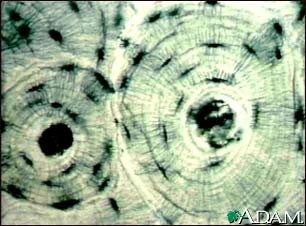
a)

smooth muscle

b)

bone

c)

nerve

d)

blood

26.
a)
nerve
b)
elastic cartilage
c)
fibrocartilage
d)
cardiac muscle
27.
What is the function of epithelial cells?
a)
Act as barriers between the external environment, or between organs and fluidfilled cavities
b)
Provide movement by pulling on bones
c)
Provide secretions which help to digest food
d)
Act as the messaging pathway between different areas of the body
28.
Define tissue with regards to anatomy
a)
A group of structurally and functionally related cells that come together to perform common functions
b)
Multiple sheets of thin paper used to clean your nose
c)
A series of different cells in the same area
d)
The smallest structural and functional unit of an organism
29.
Which type of muscle tissue would line the intestines?
a)
Smooth
b)
Cardiac
c)
Skeletal
d)
Transitional
30.
What type of tissue SIGNALS the intestines to move food along?
a)
Nervous Tissue
b)
Blood Tissue
c)
Smooth muscle tissue
d)
Skeletal Muscle Tissue
31.
What tissue type is this?
a)
Adipose tissue
b)
Cardiac muscle
c)
Nervous tissue
d)
Skeletal muscle
32.
What tissue type is this?
a)
Skeletal muscle
b)
Nervous tissue
c)
Adipose tissue
d)
'Specialised' connective tissue
33.
Which of the following tissues binds everything together?
a)
Epithelial
b)
Connective
c)
Muscle 
d)
Nervous
34.
Which of the following tissues is made up of cells that contract when stimulated?
a)
Epithelial
b)
Connective
c)
Muscle 
d)
Nervous
35.

What tissue is this?

a)

Muscle

b)

Epithelial

c)

Nervous

d)

Connective