wayground logo

Free Printable Worksheets

Font size

S
M
L
XL
Worksheets

Review for Final Exam Fall 2021

Total questions: 72

Worksheet time: 2hrs 24mins

Name
Class
Date
1.

One chicken is injected with a growth hormone while another chicken is not injected with a growth hormone. After one year, both chickens are weighed. What is the independent variable?

a)

If a chicken was injected with a growth hormone or not

b)

The weight of the chicken

c)

The type of chicken

2.

One chicken is injected with a growth hormone while another chicken is not injected with a growth hormone. After one year, both chickens are weighed. What is the dependent variable?

a)

If the chicken was injected with a growth hormone or not

b)

The weight of the chicken

c)

The type of chicken

3.

A bug repellent was sprayed on one arm. On the other arm, the bug repellent was not sprayed. After 2 hours, the number of bug bites are recorded. What is the dependent variable?

a)

The type of bug repellent

b)

If an arm was sprayed with bug repellent or not

c)

The number of bug bites

4.
How would you write 564,000,000 in scientific notation?
a)
5.64 x 10⁻⁷
b)
5.64 x 10⁶
c)
5.64 x 10⁸
d)
56.4 x 10⁷
5.
How do you write
1001
in scientific notation?
a)
1.0001 x 10⁴
b)
1.01 x 10⁵
c)
1.001 x 10³
d)
10.1 x 10³
6.
Express the following in scientific notation:
.000457
a)
457 x 106
b)
457 x 10-6
c)
4.57 x10⁴
d)
4.57 x 10⁻⁴
7.
How many significant figures does the following number have: 100.3
a)
4
b)
3
c)
5
d)
2
8.
The students measured length during a science experiement, they got 12 cm. But the actual measurement was 14.25 cm. What was the percent error?
a)
15.79%
b)
18.75%
c)
2.25%
d)
18%
9.

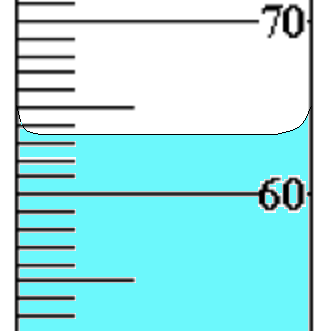
Volume?

a)

63.50 mL

b)

63.5 mL

c)

63.55 mL

d)

6 mL

10.

What is the correct measurement of the red line?

a)

2 cm

b)

2.3 cm

c)

2.5 cm

d)

2.30 cm

11.

What is the length of the object in centimeters?

a)

3.40 cm

b)

4.3 cm

c)

3.5 cm

d)

1 1/4 inches

12.

Which is the more precise measurement?

a)

4 mL

b)

4.3 mL

c)

4.30 mL

d)

4.300 mL

13.

Answer to the correct number of significant figures:

6.2 g+ 1g + .49g + 3.028g =

(a)  
14.
The deer population is estimated to be 17,600 in northern Illinois, but an actual count was 21,300. What is the percent error?
a)
21%
b)
17.37%
c)
17.4%
d)
21.02%
15.
The students measured length during a science experiement, they got 12 cm. But the actual measurement was 14.25 cm. What was the percent error?
a)
15.79%
b)
18.75%
c)
2.25%
d)
18%
16.
What term describes a solid changing to a gas?
a)
Deposition
b)
Sublimation
c)
Evaporation
d)
Freezing
17.
What term describes a liquid changing to a solid?
a)
Deposition
b)
Sublimation
c)
Evaporation
d)
Freezing
18.
Particles of a liquid
a)
are tightly packed together and stay in a fixed position.
b)
have no viscosity.
c)
decrease in volume with increasing temperature.
d)
are free to move around one another but still touch.
19.
At higher temperatures
a)
particles in an object have less energy
b)
particles in an object move faster
c)
a gas contracts
20.

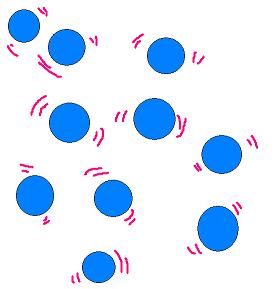
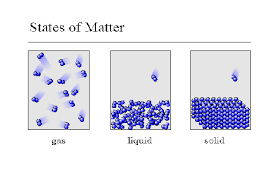
Which state of matter does this picture show?

a)

Solid

b)

Liquid

c)

Gas

21.

As temperature decreases, what happens to particles?

a)

They speed up

b)

They slow down

22.

____ is the ability to be pressed, hammered or rolled into various shapes and sizes without breaking.

a)

Elasticity

b)

Strength

c)

Hardness

d)

Malleability

23.

What is a chemical property?

a)

A property that describes the state of a system

b)

A property observed during a reaction

24.

What is a physical change?

a)

A change that does not affect the chemical properties of a substance

b)

A change that affects the chemical properties of a substance

25.

What is a chemical change?

a)

A change that alters the physical and chemical properties of a substance

b)

A change of state (melting, freezing, etc.)

26.

Is toasting bread a physical or chemical change?

a)

Physical

b)

Chemical

27.

Flammability means the ability to _______ and is a _________ property.

a)

melt; chemical

b)

rust; physical

c)

change; physical

d)

burn; chemical

28.
Which of the following is not a chemical property? 
a)
rusting 
b)
boiling 
c)
rotting 
d)
burning 
29.
Which one of these is a chemical property?
a)
melting point
b)
boiling point
c)
color
d)
flammability
30.

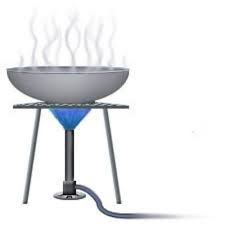
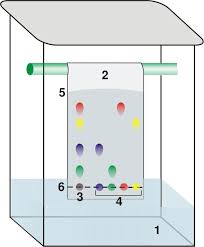
Name the separation technique shown in the diagram.

a)

evaporation

b)

distillation

c)

filtration

31.

Dyes in water soluble markers may be separated by means of..

a)

crystallization

b)

sublimation

c)

chromatography

d)

sedimentation

32.
To separate a mixture of salt and water what separation method is used?
a)
Filtration
b)
Distillation
c)
Chromatography
d)
Evaporation
33.
The atomic number tells you what?
a)
number of electrons
b)
number of protons
c)
number of neutrons
d)
both electrons and protons in an atom.
34.
Which is a halogen?
a)
Helium
b)
Chlorine
c)
Oxygen
d)
Neptune
35.
Which is an alkali metal?
a)
Magnesium
b)
Iron
c)
Sodium
d)
Europium
36.
If an atom had the same properties as fluorine (F), it would probably be located in
a)
period 1.
b)
period 2.
c)
group 2.
d)
group 17.
37.
what does the 6 represent?
a)
Atomic mass
b)
atomic number
c)
chemical symbol
d)
element name
38.
Which element that starts with a B is an Alkaline Earth Metal?
a)
Barium
b)
Boron
c)
Bread
d)
Bromine
39.
What is the atomic mass of Neon?
a)
10
b)
30
c)
10.18
d)
20.18
40.
Which of these grouping of elements could have the characteristic of brittle?
a)
Metal
b)
Nonmetal
41.
Some characteristics of a metal are that it is malleable and ductile.
a)
TRUE
b)
FALSE
42.
Iron is a good conductor, malleable and magnetic. What type of element is Iron? 
a)
Metal
b)
Nonmetal
c)
Metalloid
d)
Pretty
43.
Which element is a metalloid?
a)
Titanium
b)
Selenium
c)
Potassium
d)
Polonium
44.
Anytime you see the word SEMICONDUCTOR - what substance do you have?
a)
Metal
b)
Nonmetal
c)
Metalloid
45.
Look at the periodic table that is provided. Where would nonmetals be located? 
a)
to the left of the table 
b)
to the right of the table 
c)
in the zigzag line 
46.

Which of these is a distinguishing property for the noble gases?

a)

Soft - can cut with a plastic knife

b)

Unreactive - don't give or receive electrons

c)

Shiny - exhibits luster

d)

Poor conductors of electricity

47.

Which of these is a distinguishing property for the nonmetals?

a)

Soft - can cut with a plastic knife

b)

Unreactive - don't give or receive electrons

c)

Shiny - exhibits luster

d)

Poor conductors of electricity

48.

Which of these are excellent conductors of heat & electricity and are hard, yet malleable & ductile?

a)

transition metals

b)

alkali earth metals

c)

halogens

d)

alkali metals

49.

The shaded elements shown here are the...

a)

transition metals

b)

non-metals

c)

alkali earth metals

d)

alkali metals

50.
What electron configuration matches an oxygen atom?
a)
1s22s22p63s2, 3p64s23d104p5
b)
1s22s22p4
c)
1s22s22p6
d)
1s22s22p63s23p64s23d1
51.
The electron configuration of an atom is 1s22s22p6.  The number of electrons in the atom is 
a)
3
b)
6
c)
8
d)
10
52.
Identify the Electron Configuration for Aluminum (Al)
a)
1s2s2p3s3p1
b)
1s2s2p3s3p3
c)
1s2s2p3s4p1
53.
Electrons occupy orbitals of lowest energy first is part of what electron configuration rule?
a)
Hund’s Rule
b)
Aufbau Principle
c)
Pauli Exclusion Principle
54.

What is the maximum number of electrons that an S orbital can have?

a)

1 electron

b)

2 electrons

c)

3 electrons

d)

4 electrons

55.
How many valence electrons are represented here?
a)
7
b)
5
c)
2
d)
8
56.
Which of the following is a p block element?
a)
Ca
b)
Ar
c)
Re
d)
Au
57.
How many electrons does Si contain? (click to see image)
a)
14
b)
28
c)
2
d)
4
58.
What is the noble gas shorthand electron for Sulfur atom?
a)
[Ar] 3p4
b)
[He] 3s23p4
c)
[Ne] 3s23p4
d)
[Na] 3s23p4
59.
a)

10

b)

2

c)

8

d)

18

60.

The elements in this group all have 5 valance electrons.

a)

Group 5

b)

Group 15

c)

Group 3

d)

Group 18

61.

What atom matches this electron configuration?

[Xe] 6s2 4f14 5d9

a)

tungsten

b)

gold

c)

silver

d)

copper

62.
Which has more energy?
a)
electron in the 1 energy level
b)
electron in the 2 energy level
c)
electron in the 3 energy level
d)
electron moving from the 2 to the 1 energy level
63.
A wave with a large wavelength will have a ______ frequency and _____ energy
a)
high, low
b)
high, high
c)
low, high
d)
low, low
64.
Which has the LONGEST wavelength and, therefore, the lowest frequency/energy
a)
Gamma Rays
b)
Radio Waves
c)
Visible Light
d)
Infrared rays
65.
Which has the SHORTEST wavelength and, therefore, the highest frequency/most energy
a)
Radio waves
b)
Ultraviolet Rays
c)
Gamma Rays
d)
X-rays
66.
As the frequency of an electromagnetic wave increases, the amount of energy in that wave...
a)
increases.
b)
decreases.
c)
stays the same.
67.
High frequency waves have _________ wavelengths.
a)
varying
b)
long
c)
the same
d)
short
68.
The distance between two crests or two troughs of a wave is called:
a)
frequency
b)
amplitud
c)
wavelength
d)
hertz
69.

Potassium-39 has how many neutrons?

a)

19

b)

18

c)

20

d)

21

70.
What quantities vary between isotopes of an element?
a)
protons, electrons, and atomic mass
b)
protons, electrons, and atomic number
c)
neutrons and electrons
d)
neutrons and atomic mass
71.
Isotopes are atoms of the same element with different #’s of __________ & therefore different __________.
a)
n0 ;  atomic #’s
b)
p+ ; atomic #’s
c)
e- ; atomic masses
d)
n0 ; atomic masses
72.
If X is the symbol for an element, which of the following two symbols represent    isotopes of the same element?     I. 7735X  II. 7733X  III. 8137X  IV. 8135 X
a)
I and II
b)
III and IV
c)
I and IV
d)
I and III