
 Worksheets
Earthquakes
Total questions: 30
Worksheet time: 33mins
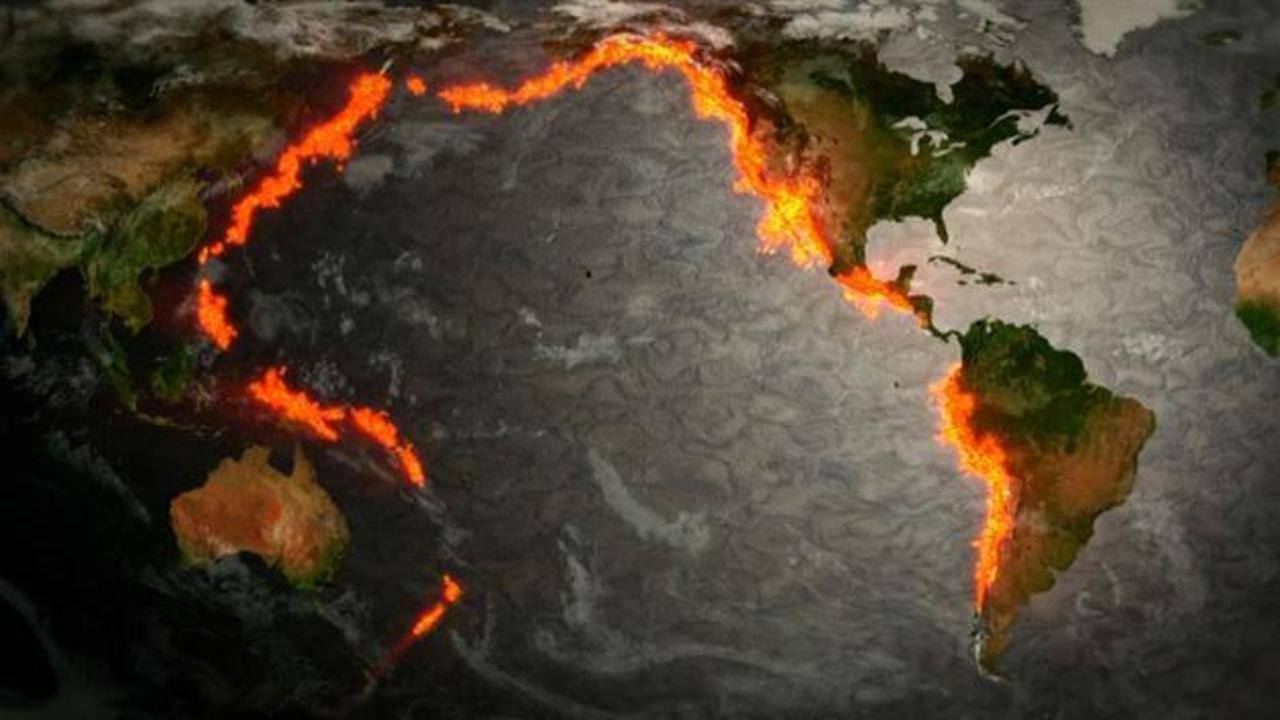
Most earthquakes occur on or near
(a)
California is divided into the North American Plate and Pacific Plate. What kind of boundary do those plates have?
divergent
convergent
transform
where quake begins below surface
elastic rebounding
focus
epicenter
fault
where quake begins on surface
epicenter
joint
fault
focus
Which feature is created by all 3 types of plate boundaries.
Earthquakes
Mountains
Subduction Zones
Volcanoes
What is the measure of the amount of ground shaking during an earthquake?
Intensity
Epicenter
Magnitude
Seismogram
Which scale rates earthquakes based on the amount of damage done?
Mercalli Intensity Scale
Richter Magnitude Scale
Seismogram Shakey Scale
Bernoulli Scale
How does the Richter Magnitude Scale calculate its measurements?
Eyewitnesses
Amount of damage caused
The amount of time the earthquake lasted
The strength of the seismic waves recorded by a seismograph machine.
All of the following are reasons some buildings are damaged more than others during an earthquake EXCEPT....
The strength of the building materials.
How close the building was to the earthquake's epicenter.
What type of soil the building sat on.
The people living inside of the building.
The design of the building.
What does a seismograph measure?
The amount of oil and gas underground.
The amount of damage an earthquake causes.
The temperature of the earth's core.
The amount of shaking of the crust.
What is a warning before a tsunami hits?
The television news will make a prediction about a week ahead based upon the weather in the area.
The water will move away from the shore unusually fast and strong into the ocean.
The fish in the ocean will start jumping out of the water.
There will be lots are rain and wind about 2 hours before one hits.
It's easy to outrun a tsunami so you don't get hurt.


Most earthquakes happen along _________________.
the coast
faults
the desert
mountain ranges

Many earthquakes happen along the borders of...
Countries
Tectonic Plates
Climate Zones
None of the above.
The crack in the surface of the Earth along which rocks break and earthquakes sometime occur:
focus
fault
epicenter
hypocenter

The place on the Earth's surface, above the origin of the earthquake.
Epicenter
Focus
Surface
Crust

What is the instrument used to measure earthquakes?
Seismograph
Seismologist
Scale
Seismogram

Which city is closest to the epicenter?
A
B
C
Measures the magnitude or size, of an Earthquake
epicenter
focus
Richter scale
Mercalli Scale
How much bigger is a magnitude 8 earthquake compared to magnitude 6 quake on the Richter Scale?
2 times bigger
20 times bigger
48 times bigger
100 times bigger
What is the temporary state in which loose soil and rock materials take on the property of quicksand?
Aftershock
Liquefaction
Seismic Gap
Tsunami

When upper floors crash down on lower floors from an earthquake
pancaking
landslide
tsunami
strike-slip
The San Andreas Fault is a what kind of fault?
normal
reverse
strike slip
The scale that focuses on the size/depth of the fault is the:
Modified Mercalli
Moment Magnitude
Richter
The west coast of South America experiences lots of large earthquakes because:
It's in a subduction zone
it's a a divergent plate boundary
the soil is prone to liquefaction

