Wayground logo

Free Printable Worksheets

Font size

S
M
L
XL
Worksheets

Final Review - Ecology & Evolution (zoo)

Total questions: 28

Worksheet time: 15mins

Name
Class
Date
1.
Which of these animals goes into winter sleep? 
a)
amphibians
b)
bats
c)
bears
d)
rodents
2.
Which of these describes torpor? 
a)
daily decrease of metabolic rate to conserve energy
b)
seasonal decrease of metabolism to conserve energy
c)
inactivity due to drought
d)
extended period of rest from which animals can awaken easily
3.
A species of butterfly has evolved to appear very similarly to a toxin-producing butterfly to evade predators. This is an example of
a)
cryptic coloration
b)
camouflage
c)
mimicry
d)
aestivation
4.
Corals benefit from zooxanthellae algae by getting oxygen, and algae benefit from corals by getting a place to live. This symbiotic relationship is called
a)
parasitism
b)
mutualism
c)
commensalism
d)
predation
5.
which symbiosis is this 
a)
parasitism 
b)
mutualism
c)
commensalism
d)
nonalism 
6.
Which of these has a high mortality rate among their young based on the graph? 
a)
Type 1 (humans)
b)
Type 2 (songbirds)
c)
Type 3 (frogs)
d)
all of these
7.
Which of these is a density-independent limiting factor? 
a)
climate
b)
available food
c)
available water
d)
mates
8.

Which type of adaptation allows some animals to protect themselves with bright colors or patterns?

a)

mimicry

b)

camouflage

c)

cryptic coloration

d)

aposematic coloration

9.

What type of camouflaging gives some animals dark pigment on top and light pigment on bottom?

a)

aposematic coloration

b)

cryptic coloration

c)

mimicry

d)

counter-shading

10.

What type of energy is expended through activities like mating, growth, and caring for young?

a)

Existence energy

b)

Excretory energy

c)

Productive energy

11.
Burmese Pythons are __________ in the Florida Everglades
a)
Native
b)
Natural
c)
Invasive/Introduced
d)
Dancing
12.

In the food web, which of these animals would be considered an omnivore?

a)

mouse

b)

grizzly bear

c)

aardvark

d)

hyena

13.

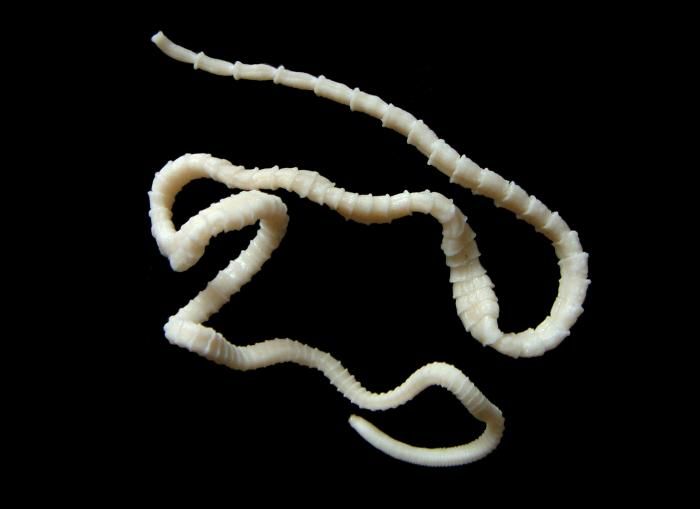
A tapeworm lives in the intestine of a cat absorbing nutrients through its skin. A tapeworm and a cat have this type of relationship.

a)

mutualism

b)

parasitism

c)

commensalism

d)

competition

14.

Which of these best describes a parasitoid?

a)

Feeds on host organism

b)

Lays eggs within / on a host organism

c)

Lays eggs on host but does not harm host

d)

Latches to host and benefits host

15.
Giraffes with average length necks have higher fitness than giraffes with long or short necks. This is an example of
a)
directional selection
b)
stabilizing selection
c)
disruptive selection
16.
Monkeys with shorter or longer tails are more fit than those with average length tails. This is an example of 
a)
directional selection
b)
stabilizing selection
c)
disruptive selection
17.
a measure of how commonly a particular allele occurs in a population is known as the 
a)
gene pool
b)
allele frequency
c)
mutation rate
d)
phenotype
18.
What is speciation?
a)
combining of tow species to form one with different traits
b)
isolation that affects mating behaviors
c)
timing of mating that prevents normal sexual selection
d)
divergence of two or more species from an existing one
19.
two species are in different environments and look very similar.  However, that are not closely related (analogous).  Their resemblance is most likely an example of.
a)
sexual selection
b)
temporal isolation
c)
convergent evolution
d)
divergent evolution
20.
Behavioral and temporal isolation are both examples of isolation that lead to
a)
mass extinction
b)
sympatric speciation
c)
allopatric speciation
d)
parapatric speciation
21.
A random change caused by natural disaster that leads to changes in allele frequency is called
a)
founder effect
b)
bottleneck effect
c)
genetic drift
d)
geologic drift
22.
Which diagram is used to identify common ancestory with respect to time?
a)
Cladogram 
b)
Biological Hierachy 
c)
Taxonomic Hierarchy
d)
Phylogenic Tree
23.
Opossums and primates have both evolved to have opposible thumbs. This is an example of
a)
convergent evolution
b)
divergent evolution
c)
coevolution
d)
punctuated equilibrium
24.

Which of these is not an example of an exaptation?

a)

Feathers on birds

b)

Hair on mammals

c)

Echolocation in bats

d)

Lungs in some fishes

25.

When an adaptive trait becomes useful in other ways, we call this adaptation a(n)

a)

exaptation

b)

extinction

c)

adaptation bonus

d)

mutation

26.

Which of these animals does not have/produce an amniotic egg? (choose 2)

a)

Turtle

b)

Tuna

c)

Lamprey

d)

Leopard

27.

According to this tree, which phylum is considered the outgroup?

a)

Porifera

b)

Cnidaria

c)

Chordata

d)

Arthropoda

28.

What number is the common ancestor of C and D

a)

1

b)

2

c)

3

d)

4