wayground logo

Free Printable Worksheets

Font size

S
M
L
XL
Worksheets

Circulatory System

Total questions: 53

Worksheet time: 1hrs 3mins

Name
Class
Date
1.

Humans and animals need what to survive

a)

oxygen

b)

carbon dioxide

c)

oxygen and food

d)

food

2.

What is circulatory sysytem

(a)  

3.

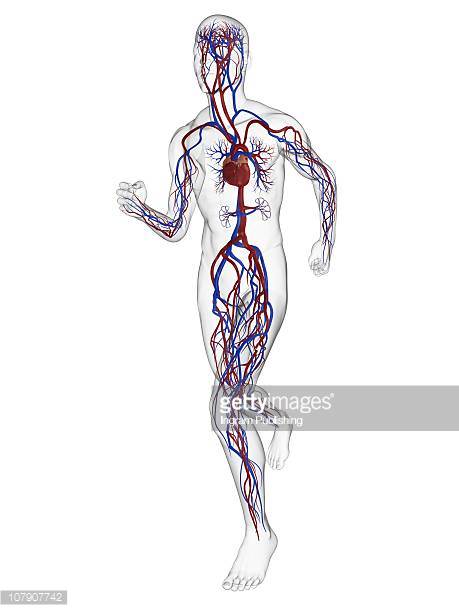
What does the circulatory system comprise of?

4 lines
4.

What are the three fluids in the body

a)

Blood ,

b)

Bile juice

c)

Tissue fluid

d)

Lymph

5.
Separates the chambers of the heart.
a)
mitral valve
b)
septum
c)
aortic valve
6.
name of the valve that separates right atrium from right ventricle.
a)
tricuspid
b)
aortic
c)
mitral
7.
Unoxygenated blood enters the right atrium from the bottom of the heart.
a)
inferior vena cava
b)
superior vena cava
c)
pulmonary veins
8.
Unoxygenated blood enters the right atrium from the top of the heart.
a)
inferior vena cava
b)
superior vena cava
c)
aorta
9.
About how large is the human heart?
a)
the size of an onion
b)
the size of a fist
c)
4.5 pounds
10.

How many chambers does the heart have?

a)

4

b)

10

c)

3

d)

1

11.

What is the main organ of the circulatory system?

a)

small intestine

b)

bone

c)

lungs

d)

heart

12.
How many types of blood vessels are in our body?
a)
1
b)
2
c)
3
d)
4
13.

Veins carry oxygen poor blood back to the heart.

a)

False

b)

True

14.
______________ are the second largest blood vessel. 
a)
Arteries
b)
Veins
c)
Capillaries
15.
______________ are the smallest blood vessels.
a)
Arteries
b)
Veins
c)
Capillaries
16.
The circulatory system works with the __________ system to obtain energy from nutrients that we eat. 
a)
respiratory 
b)
digestive
c)
skeletal
d)
nervous
17.
What does Deoxygenated mean?
a)
Oxygen-rich
b)
Blood flow
c)
Oxygen-poor
d)
Water Flow
18.
What is the Circulatory System also known as?
a)
The heart
b)
Cardiovascular System
c)
Nervous System
d)
Aorta
19.
What do Red-Blood cells do?
a)
Carry oxygen from the lungs to the body cells and  transport carbon dioxide from the cells back to the lungs
b)
keeps blood flowing in one direction to the heart and prevent blood from flowing backwards
c)
Collects  blood from the capillaries and drain it into the veins
d)
Bring nutriients to the cells and carries away waste materials.
20.
Carbon dioxide is considered a _________________
a)
food
b)
waste
c)
energy
d)
fun party favor
21.

Who is he and what did he do?

a)

Karl Landsteiner differentiated the blood groups

b)

Alexander Flemming. discovered penicillin

c)

I don't know

d)

He is not related to biology at all

22.

I am a disease that is caused due to stress and anxiety sometimes even certain food. What am I?

(a)  

23.

Which two diseases are life-threatening diseases of cardiac muscle

a)

Heart attack and gastric

b)

Heart attack and Cardiac arrest

c)

Don't know

d)

Typhoid and heart attack

24.

What is the function of heart

a)

I have no idea

b)

To pump blood to all parts of the body

c)

To receive blood from all parts of the body

d)

To purify blood

25.

WBC's give immunity and protect the body from disease

a)

True

b)

False

26.
The circulatory system works with the ___________ system to provide our body with oxygen.
a)
respiratory
b)
digestive
c)
muscular
d)
skeletal
27.

Which of the following is NOT part of the circulatory system?

a)

heart

b)

blood

c)

bones

d)

arteries

28.

What structure doesn't belong in the circulatory system?

a)

Blood

b)

Blood vessels

c)

Heart

d)

Voluntary muscle

29.

The heart is made up of what kind of muscle?

a)

smooth

b)

cardiac

c)

skeletal

d)

voluntary

30.
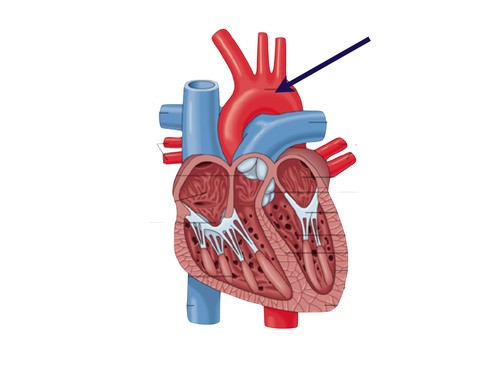
What part of the heart is the arrow pointing to?
a)
Pulmonary veins
b)
Pulmonary artery
c)
Aorta
d)
Vena cava
31.
These blood vessels carry blood Away from the Heart
a)
Arteries
b)
Veins
c)
Capillaries
d)
Atrium
32.
These blood vessels carry our blood to the Heart.
a)
Arteries
b)
Capillaries
c)
Veins
d)
Ventricles
33.
The Blood Vessels where the exchange of Oxygen and CO2 (carbon dioxide) takes place are the_______.
a)
Arteries
b)
Veins
c)
Capillaries
34.
What is pulmonary circulation?
a)
Blood travelling between the heart and lungs.
b)
Blood travelling to the heart and the rest of the body.
c)
A blood clot in the lungs
d)
The vessel that brings blood to the lungs
35.
Blood traveling from the heart to the rest of the body is called our __________________ circulation.
a)
Full body
b)
Systemic
c)
pulmonary
d)
heart to lung
36.
What is the range of our Resting Heart Rate?
a)
130-170
b)
60-100
c)
200-220
d)
0-100
37.

You can feel your heart beating when you feel your _____________.

a)

pulse

b)

breathing

c)

stomach growling

38.

Which is a good way to keep your heart healthy?

a)

Eating healthy foods

b)

Playing video games

c)

Eating greasy foods

39.

Which two body systems are primarily responsible for gas exchange between the body and the environment?

a)

skeletal and muscular

b)

circulatory and respiratory

c)

circulatory and digestive

d)

respiratory and excretory

40.

Delivers oxygen to your body cells. Made in bone marrow.

a)

white blood cell

b)

red blood cell

c)

respiratory system

d)

lungs

41.

The system that makes red blood cells.

a)

nervous

b)

circulatory

c)

respiratory

d)

skeletal

42.

Which is NOT a way to exercise your heart?

a)

Running

b)

Sitting on the couch

c)

Swimming

43.

Valve that connects right ventricle to pulmonary artery

a)

Mitral or Bicuspid

b)

Aortic

c)

Pulmonary

d)

Tricuspid

44.

Solid part of the blood that helps blood clot

a)

Red blood cells

b)

White blood cells

c)

Platelets

d)

Plasma

45.

Liquid part of the blood

a)

Red blood cells

b)

White blood cells

c)

Platelets

d)

Plasma

46.

Blood types

a)

A, B, C, D

b)

A, B, C, O

c)

A, B, AB, O

d)

A, B, C, AB

47.

Universal donor blood type

a)

A-

b)

B-

c)

C-

d)

O-

48.

Universal recipient blood type

a)

A+

b)

B+

c)

O+

d)

AB+

49.

Normal blood pressure

a)

150/200

b)

180/20

c)

80/120

d)

120/80

50.

Represents the positive or negative with blood type

a)

Valves

b)

Hemoglobin

c)

Carbon dioxide

d)

Rh factor

51.

High blood pressure

a)

Heart attack

b)

Stroke

c)

Hypertension

d)

Diabetes

52.

This chamber receives oxygenated blood first

a)

Right atrium

b)

Right ventricle

c)

Left atrium

d)

Left ventricle

53.

This chamber receives de-oxygenated blood first

a)

Right atrium

b)

Right ventricle

c)

Left atrium

d)

Left ventricle