Font size
 Worksheets
1st Semester Benchmark Review
Total questions: 175
Worksheet time: 4hrs 11mins

The study of matter and energy and the interactions between them.
Physics
Chemistry
Biology
Earth Science
A test model of product that allows engineers to see if their design works the way they expected is a/an
prototype
experiment
variable
none of these
A test model of product that allows engineers to see if their design works the way they expected is a/an
prototype
experiment
variable
none of these
The use of tools, machines, materials, and processes to meet human needs is
research
apps
data
technology
Data displayed on the vertical (y) axis; what is measured/counted in an experiment is the
independent variable
dependent variable
prototype
constraints
Data displayed on the horizontal (x) axis; what is changed on purpose in an experiment is the
rules
independent variable
dependent variable
model
Graph used when showing how each group of data relates to all of the data; also called a pie graph is a/an
line graph
bar graph
circle graph
none of these
A graph used to show continuous change over time is a/an
bar graph
circle graph
pie graph
line graph
A graph used to display and compare data in a number of separate categories is a/an
bar graph
circle graph
pie graph
line graph
The number of times something happens is called the
frequencies
frequency
constraints
both 1 and 2
The facts, figures, and other evidence gathered through observations and experimentation is the
frequencies
observations
laws
data
1. If the range of your data is 36 units, how high should the numbers go on your y axis?
You must have 30 units on the y axis
You must have units divided into 3's on the y axis
You need to have at least 36 numbers on your y axis
You need to have as many units as you do on the x axis
What information goes on the y- axis?
The indedpendent variable. The factor that is manipulated or changed in order to test the effect of the change on another variable- in other words, the thing that "I" the scientist will change or test.
The dependent variable. It is units of measurement for the data being gathered.
Different categories to be tested
Names of the people conducting the experiment
What is an experiment?
Observing carefully and recording movements of live animals
Practice with chemicals and potions
An organized procedure to study something under controlled conditions
Building a model to demonstrate a theory
1. What is the difference between a theory and a law?
A law describes, a theory explains
A law explains, a theory describes
A law can change, theories can't
A law has to be accepted by 100 scientists, a theory does not
1. What is an independent variable?
The results that we measure
The numbers that include the units of measurement
The factor that is manipulated or changed in order to test the effect of the change on another variable- in other words, the thing that the scientist will change or test
The part of the experiment that the scientist must perform alone

Which is NOT a step in the scientific method?
state a problem
Form a theory
analyze data
Form a hypothesis
Which happens first?
make a hypothesis
make a plan
ask a question/make an observation
draw conclusions
What's the dependent variable?


The vertical axis of a line graph is called the __________.
slope
line of best fit
x-axis
y-axis

The horizontal axis of a line graph is called the __________.
slope
line of best fit
x-axis
y-axis
What type of graph would you make to show how many of your classmates were born in each month of the year?
line
bar
circle
scatter plot


Theory or Law? _________ of Thermodynamics: Matter can never be created or destroyed. Tells what happens with matter.
Theory
Law
Theory or law: Atomic _____ of matter: all matter is made up of atoms. Explains why matter behaves a certain way.
Theory
Law
Theory or Law? Tectonic ________ of Geology: the surface of the earth is made of tectonic plates, which move slowly. Explains why mountains are formed, earthquakes happen, etc.
Theory
Law
A scientific theory cannot be modified (changed)
True
False
Scientific laws often include a mathematical relationship observed in nature.
True
False
Which statement below correctly identifies the difference between laws and theories?
Laws describe phenomena, while theories explain why and how phenomena exist
Laws are a statement of fact, while theories are a statement of opinion
Laws explain why phenomena exist, while theories explain how
Laws are a prediction of phenomena, while theories are an explanation


Newton's Third Law is also known as...
The Law of Inertia
The Law of Acceleration
The Law of Action Reaction
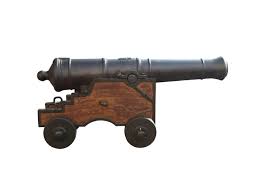


Which law explains why when you put a book on a table the table pushes on the book?
3rd law
4th law
1st law
2nd law
According to Newton’s second law of motion, force equals mass times ________.
velocity
inertia
acceleration
mass
1st
Law of Motion
2nd
Law of Motion
3rd
Law of Motion
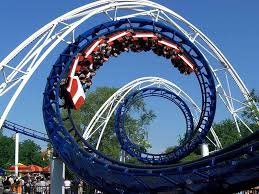


force that opposes the motion of objects that move through the air
gravity
air resistance
friction
net force
The ____________of an object consists of its speed and direction
velocity
average speed
instantaneous speed
displacement


Calculate the net force and direction.
7
7N
7N to the left
7N to the right

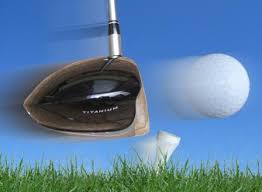

Wind blowing at 20 knots

A student drives his car 6.0 km North, then 6.0 km to the East. Finally, 2.0 km to the north. What is the magnitude of the overall displacement of the student?
14 km
8.4 km
10 km
7.2 km


What is the purpose of this tool?
to measure liquids, not exact
used to stir
to measure exact amounts of liquid
used to find mass
A sample of bismuth has a mass of 343 g and a volume of 35.0 cm3. What is the density of bismuth? ( D=vm )
0.102 g/cm3
9.80 g/cm3
378 g/cm3
1.20 ´ 104 g/cm3
Which of these is not an SI base unit?
meter
pound
kelvin
ampere
The measurement 0.0265 g, rounded off to two significant figures, would be
0.026 g.
0.027 g.
0.03 g.
0.030 g.
The number of significant figures in the measurement 170.040 km is
three
four
five
six
The dimensions of rectangular solid are measured to be 1.27 cm, 1.3 cm, and 2.5 cm. The volume should be recorded as
4.128 cm3.
4.12 cm3.
4.13 cm3.
4.1 cm3.
Expressed in scientific notation, 0.0930 m is
93 X 10-3 m.
9.3 X 10⁻³ m.
9.30 X 10⁻² m.
9.30 X 10⁻⁴ m.
Samples with masses of 0.12 g, 1.8 g, and 0.562 g are mixed together. The combined mass of the three samples, expressed to the correct number of significant figures, should be recorded as
2.4 g.
2.48 g.
2.482 g.
2.5 g.
Which type of data is based on numerical observations?
Qualitative
Hypothetical
Scientific
Quantitative
Which unit expresses a measurement of density?
g/cm3
cm2
cm/mL
L/kg
How would you convert 50,000 g into a mass in kilograms (kg)?
Divide by 100
Divide by 1,000
Multiple by 100
Multiply by 1,000
How is the measurement 73,400 cm expressed in scientific notation?
734 x 102 cm
7.34 x 104 cm
7 x 101 cm
7.34 x 105 cm
A scientists records the color and texture of a plants leaves while conducting an experiment. This data would be...
qualitative
quantitative
What is the density of a metal cube if its mass is 1.75 kg and its volume is 200 cm3? (Hint: what do you need to convert kg to?)
1.14 g/cm3
8.75 g/cm3
0.0875 g/cm3
11.4 g/cm3
How is the measurement 0.00045 g expressed in scientific notation?
4.5 x 10⁻⁵ g
45 x 10-5 g
4.5 x 10⁻⁴ g
45 x10-4 g
400 grams =____kilograms
0.4kg
4kg
40kg
40,000kg
1 Metre = ______cm
100
10
1
1000


Which of the following has the MOST momentum?
rolling ping-pong ball
rolling bowling ball
rolling soccer ball
rolling basketball
If an object has a momentum of 40 kgm/s and a mass of 60 kg, what is it's velocity?
2400 m/s
1.5 m/s
240 m/s
.67 m/s
If an object has a velocity of 15 m/s and a momentum of 30 m/s, what is its mass?
450 m/s
2 m/s
4,500 m/s
.5 m/s
If an object has a mass of 20 kg and a velocity of 4 m/s, what is the momentum of the object?
80 kgm/s
4 kgm/s
5 kgm/s
.2 kgm/s
An object has a mass of 5 kg, a displacement of 5 m, and a time of 25 s, what is its momentum?
1 kgm/s
750 kgm/s
25 kgm/s
625 kgm/s


A car is of mass 15kg is travelling east at a velocity of 3m/s. the value of its momentum is:
30kg.m.s-1
45kg.m.s-1
18kg.m.s-1
5kg.m.s-1
a bat strikes a 0.05 kg baseball so that its velocity changes by +30 m/s in 0.1 s. With what average force was the ball struck?
+15 N
-15 N
+300 N
-300 N
+150 N
A 5 N force is applied to a 3 kg ball to change its velocity from +9 m/s to +3 m/s. The impulse on the ball is ______ N s.
-2.5
-10
-18
-45