
 Worksheets
Science Practice Quiz
Total questions: 182
Worksheet time: 2hrs 56mins
What contains all of the material necessary for life?
ATP
Cells
Metabolism
Protein
Characteristics that are passed down from parents to offspring is known as what?
Heredity
Homeostasis
ATP
Metabolism
What is the name for the rate that organisms use energy?
Stimulus
ATP
Phospholipids
Metabolism
What is the name of the energy carrying molecule?
ATP
Metabolism
Producer
Stimulus
What makes up the cell membrane?
Cells
Phospholipids
ATP
Carbohydrates
A type of nucleic acid is:
carbohydrates
ATP
DNA
Lipids
Organisms store energy in:
Water
Nucleic Acid
Salt
Lipids (fats)
A change in an organism's environment that causes the organism to respond is a(n):
Producer
Stimulus
Response
Metabolism
A fat that does not dissolve in water.
Lipid
Protein
Consumer
Carbohydrate
An organism that receives its nutrients by breaking down dead organisms and waste.
Lipid
Consumer
Protein
Decomposer
An organism that makes its own food.
Carbohydrate
Producer
Consumer
Decomposer
Provides energy for cells.
Protein
Lipids
Carbohydrates
Consumer
Helps to build and repair the body.
Protein
Lipid
Producer
Carbohydrate
An organism that eats other organisms.
Decomposer
Producer
Protein
Consumer

Birds build a nest and lay eggs. This is good evidence for which characteristic of life?
Homeostasis
Reproduction
Response to stimuli
Made of cells

Micah looks through a microscope at a pepper. He notices that it is organized into small compartments. What Micah sees is evidence of which characteristic of life?
Made of Cells
Homeostasis
Growth and Development
Reproduction

A seed grows into a plant with water and sunlight. The changes it goes through are evidence of life. Which characteristic of living things does this best
Homeostasis
Made of Cells
Complex Chemistry
Growth and Development

Frogs go through a life cycle from an egg to tadpole to a grown frog. Which characteristic of life is this an example of?
Growth and Development
Homeostasis
Reproduction
Made of Cells

Two cats mate and produce kittens. Which characteristic of life is this the best example of?
Made of Cells
Complex Chemistry
Respond to Stimuli
Reproduction

Is the sun living or non-living?
living
non-living
Which one of these is non-living?


Which one of these is NOT a characteristic of living things?
Communicate
Respond to Stimulus
Grow and Develop
Homeostasis

To make more living things of the same kind
nutrient
vertebrate
reproduce
senses
An animal that crawls along the ground on short legs or its belly
amphibian
mammal
invertebrate
reptile
An animal without a backbone
invertebrate
vertebrate
reptile
organism

An animal that begins life in the water and later lives on land
reptile
amphibian
mammal
vertebrate

An animal whose young are fed with milk from the mother
mammal
reptile
amphibian
organism
Every __________ is a vertebrate
organism
plant
amphibian
living thing
Small hard scales may cover the dry skin of a reptile
true
false

A backbone for a plant comes from the earth
true
false

Every organism needs.....
air
water
nutrients
all of the above

Hair or fur cover the body of every vertebrate
true
false
Living things require _________________________ for growth and development.
Food and water
Slime
air

Which of these reproduces?
slime
fire
book
kitten
We feel cold during winter and hot during summers this is an example of ________________
Living things reproduce
Living things feel changes in their surroundings.
Living things breathe.

This animal responds to change by . . . .
standing its fur
hiding into its shell
twisting its body
curling into a ball
The plant which responds to touch by closing its leaves is . . . .


What does "classify" means?
To place things that share properties together in tissues.
To place things that share properties together in groups.
To place nonliving things that share properties together in groups.
To eliminate things that share properties together in groups.
What Traits scientists look at when classifying living things?
Body form
How do they obtain food
Number of cells
Eye color
How many kingdoms are there?
(a)
One of the following is NOT a kingdom.
Virus
Animals
Plants
Archaea
Bacterias and Archaea are made up of ONE cell.
True
False
Fungi and plants can move from a place to another.
True
False
Yeast, Mushrooms and Moles belong to the (a) kingdom.

A place where plants and animals live and grow naturally is called a ______________.
soil
sky
habitat
land

Where does this animal live?
Mountain
Desert
Tundra
Ocean
A living thing is something that —
moves and talks
grows and changes
eats and changes
stays the same
A way of hiding or covering something so it blends in with its environment.
producer
camouflage
omnivore
adaption
True or False
A giraffe is a living thing,
true
false
An environment that gets little rain.
Rain Forest
Tundra
Desert
Pond
All living things need —
Parents, soil, and air
food, clothes, and air
love, food, and friends
shelter, nutrients, water, and oxygen
Which of these is a nonliving part of a forest?
mushroom
soil
worm
tree
An environment is made up of —
only living thing
only nonliving things
living things and nonliving things
humans and animals
Habitats change over time. If animals do not adapt —
the habitat will change again
the seasons will become longer
they will live
they will die

What is biodiversity?
Is the variety of plants in our planet
Is the variety of animals in our planet
Is the variety of living things in our planet
Is the variety of human beings in our planet

What are the 3 life processes of all living things?
nutrition, swimming and reproduction
cytoplasm, membrane and nucleus
animals, plants and fungus
nutrition, interaction and reproduction

What life process can you see in this image?
reproduction
interaction
nutrition

What life process can you see in this image?
nutrition
reproduction
interaction

What is the smallest unit of living things?
the cytoplasm
the cell
the bacteria
the spore

What´s the name of an organism made up of only 1 cell?
unicellular
multicellular
cell wall
seed

What is the name of organisms that have many cells?
uniecllular
multicellular
bacteria
fungus

What is the name of the part of the cells that control the functions?
membrane
nucleus
cytoplasm
organelles

What is the name of the liquid (jelly) inside the cell ?
organelles
cytoplasm
nucleus
vacuole

what is the name of the part of the plant cells that contains food and water?
nucleus
cell wall
vacuole
cytoplasm

What is the name of the part of the plant cell that is green and contains chloropyll?
cell wall
vacuole
cytoplasm
chloroplast

Tissues are made up of
cells
organs
systems

Systems are...
a group of nucleus
a group of organs
a group of organs working together
a group of organs working independently

Look at the picture: Cells can have different
nutrients
containers
shapes or functions

When we are running, in order to move our body, we are using mostly the....
nervous system
digestive system
muscular system
reproductive system

When we eat or drink, the body system that we use the most is the...
reproductive system
respiratory system
digestive system
circulatory system

What do humans use to detect information from the environment aroud us?
the nose
the 5 senses
smell and touch


All living things require sunlight to survive.
True
False
All living things can live in every temperature possible
True
False
Plants use sunlight to make their own food (sugar)
True
False
The basic building blacks from which all living organisms are made are
cells
DNA
chromosomes
Amoeba
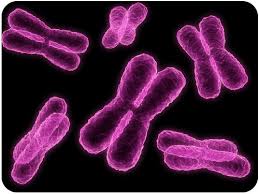
A normal human cell contains how many chromosomes?
16
26
46
14
It is true, not all cells have a true nucleus, but all cells must have some sort of
DNA
Cytoplasm
Osmosis
Call Wall
Surrounds and protects plant cells provides the structure stiff and strong
Endoplasmic Reticulum
Mitochondria
Cell Wall
Ribosomes
Hold and protect cell control the movement of materials into and out of the cell gate
Cell Membrane
Chromosomes
Vacuoles
Nucleus
A watery gel-like material in which cell orgeanelles move
vacuole
Golgi Apparatus
Cytoplasm
cell membrane
Powerhouse of the cell organelle that is the site of ATP (energy) production
Nuclear Membrane
Cell Wall
Mitochondria
Vacuoles
Contain chlorophyll capture the energy of sunlight and use it to produce food
Chromosomes
Chloroplasts
DNA
Golgi Apparatus
Store food water and chemicals
Vacuoles
mitochondria
ribosomes
Nucleus
Act as the 'brain' of the cell regulate and control all cell activities
Cytoplasm
Ribosomes
Nucleus
Chloroplasts
Surround and protect the nucleus control the movement of materials into and out of the nucleus gate
Mitochondria
Nuclear Membrane
Cell Wall
Cell Membrane
Direct cell activities; exist in the nucleus
Endoplasmic Reticulum
Chromosomes
Chloroplasts
ribosomes
deoxyribonucleic acid; the carrier of genetic information
DNA
Golgi Apparatus
Nuclear Membrane
nucleus
What does unicellular mean?
Many cells
2 cells
1 cell
0 cells
What is an organism?
A dead animal
A living thing
A pencil
A shoe
Which of the following is a single-celled organism?
Dog
Snail
Amoeba
hat
Select a unicellular organism?
Bacteria
Tree
Flower
Frog
Which one is NOT a life process?
Get rid of waste
Nutrition/Energy
Shake it off
Grow and develop
Select the unicellular organisms that produce their own food. (They are also classified as producers/plants)
Euglena and algae
Bacteria and snail
Tree and paramecium
Flower and algae
What makes unicellular organisms unique and simple?
They can do all life process as one cell.
They can fly and eat at Zaxby’s.
They can survive working with other single-celled organisms.
Why do multicellular organisms need so many cells?
They need specialized cells to survive. Specialized cells perform a specific job/function.
They need many cells to all do the same job/function.
They need many cells to have a dancing cell party.
What is the difference between multi-celled and single-celled’s organisms?
Single-celled organisms are “simple” and multi-celled organisms are “crazy.”
Single-celled organisms are “super” and multi-celled organisms are “complex.”
Single-celled organisms are “simple” and multi-celled organisms are “complex.”
True or False:
Single-celled organisms are able to live as one cell, and multi-celled organisms need many cells to live because each cell has specialized job.
True
False
Which best explains why both cats and humans are multicellular organisms?
They get energy from many food sources.
They get energy from a single food source.
They need many different types of cells working together to meet their basic needs.
How do bacteria control their life processes/basic functions?
Bacteria control their life processes within multi-cells.
Bacteria control their life processes within a single-cell.
Bacteria work with other cells to control all their life processes.
Why does a human require specialized cells to live?
Specialized cells allow humans to adapt to changes in their environment.
Human bodies have several body systems which require cells with different functions/jobs.
Specialized cells allow for all life processes to occur in one cell.
Which best explains how a single-celled organism can survive without other cells?
They do not need any substance from outside of the cell.
They are able to perform all necessary functions within one cell
They do not need to perform more than one function to survive.
Which best explains why amoeba are able to survive without specialized cells?
Amoeba are able to survive with the help of specialized cells.
Amoeba are able to survive with the help of other organisms.
Amoeba are able to survive because they carry out all life functions.
Why do humans require many different types of cells to survive?
Human cells are identical and work together to perform the same function.
Human cells are specialized and work independently to perform different functions.
Which best describes a function of survival that single-celled organisms cannot perform?
obtaining nutrients for energy
grow and develop
get rid of waste
specialized cells that perform specific jobs
Which best describes all unicellular organisms?
Every cell is round
Every cell can make food.
Every cell can move on its own.
Every cell performs all life functions.
Which of these phases do not belong in the inflammatory response phase?
Visceral Fibroblastic Repair
Fibroblastic Repair
Maturation- Remodeling
Inflammatory Response
Pick out the FALSE statement about epithelial tissue.
Epithelial tissue is vascular.
Epithelial tissue provides physical protection for organs.
Epithelial tissue functions in absorption & secretion.
Epithelial tissue controls the permeability into and out of an area/organ.
Epithelial tissue consists almost entirely of cells with very little extracellular material between them thereby forming a barrier against entry into the body.
Understanding tissue structure and function is important because:
There is a relationship between the structure of each tissue type (how it is organized) and its function (what it does).
There is a relationship between tissue structure and organ function.
Many diseases and pathologies are tissue and cell type specific.
Changes at the tissue level affect the function of organs.
All of these are correct.
Epithelial cells
cover body surfaces or form glands.
usually have a free surface that is not in contact with other cells.
have a basement membrane that attaches to underlying tissues.
can be somewhat far away from a blood vessel.
have all of these properties.
The most correct classification of an epithelial tissue consisting of many layers of cells, in which the outer layers are flat and thin, and the basal layers are cuboidal or columnar is
simple columnar epithelium.
pseudostratified epithelium.
stratified squamous epithelium.
transitional epithelium.
simple squamous epithelium.
Which of these epithelial types is correctly matched with its major function?
simple squamous epithelium - diffusion or filtration
stratified squamous epithelium - protection from abrasion
Simple cuboidal epithelium - active transport, facilitated diffusion, or secretion
Simple columnar epithelium - secretion or absorption
All these are correctly paired.
Cell connections that bind adjacent cells together and form permeability barriers are called:
tight junctions.
gap junctions.
desmosomes.
plasma junctions.
tonosomes.
In connective tissue, cells whose names contain the suffix - clast:
produce matrix
maintain the matrix
break down the matrix for remodeling
ingest foreign substances through phagocytosis
are non-motile cells that release histamines and other chemicals to promote inflammation.
Which of these connective tissue cells is NOT correctly matched with its function?
blast cells - make holes in extracellular matrix
clast cells - break down the extracellular matrix
cyte cells - maintain the extracellular matrix
mast cells - release chemicals promoting inflammation
macrophages - move about and ingest foreign substances
Which of the following fiber types is not correctly paired with its function?
collagen - flexible, resists stretching
reticular - forms a supporting network between cells
elastic - allows for consistent stretch and recoil
collagen - gives tissue its strength
All of these are correct.
The connective tissue that makes up the external ear is:
dense collagenous connective tissue.
hyaline cartilage.
fibrocartilage.
elastic cartilage.
loose or areolar connective tissue.
During tissue repair, the clot is first replaced by _____, a delicate connective tissue that consists of fibroblasts, collagen, and capillaries.
granulation tissue
phagocytic tissue
dense connective tissue
fibrin tissue
pus
The major symptoms of inflammation include:
redness and swelling
heat
pain
disturbance of function
All of these are symptoms of inflammation

What is the habitat shown in the picture?
jungle
desert
arctic
ocean

What can we find in this habitat?
polar bear
tiger
camel
crocodile

Where can we find this animal?


What animals do we find in this habitat?


You find _______ in the jungle.
coral
trees
polar bear
shark

Where do we find this animal?


Name the habitat.
polar region
ocean
jungle
desert


Which one is correct?
Camels live in the rainforst.
Polar Bears live in the arctic.
Zebras live in the ocean.
orangutans live in the desert.
Which stage of life does a human feel matured?
Adulthood
Childhood
Infancy
None of the Above
This is the time where you only depend on your parents for food, clothes, protection and love?
Childhood
Infancy
Old Age
All of the above
3 years old is already in the Childhood Stage.
True
False
What stage of life where you will experience body poor eyesight and hearing?
Childhood
Infancy
Old Age
Adolescence

Their body systems are fully developed.
Childhood
Adolescence
Adulthood
Infancy

Which stage is he in?
child
adult
baby
teenager

Which stage is she in?
baby
old age
adult
teenager

Which stage are they in?
teenager
old age
baby
child
I can run and I can read.


I can drive a car.


What are the living and nonliving things in an environment or area?
predator
producer
ecosystem
abiotic factor
An organism that can make its own food
decomposer
producer
consumer
Breaks down and feeds on the remains of other organisms
decomposer
consumer
producer
Interacting food chains found in an ecosystem
food web
food chain
predator
An animal that hunts and eats other animals for energy
prey
predator
decomposer
These organisms cannot make their own food; they must eat something for energy
decomposer
consumer
producer
NON-living things found in an ecosystem
biotic
abiotc
habitat
LIVING things in an ecosystem
biotic
abiotic
ecosystem
Choose the producer.
rock
tree
cow
bird
Choose the decomposer.
grass
elephant
bacteria
bird
Choose the consumer.
mushroom
horse
tree
grass
Where does the food chain START?
with consumers that eat grass
with the sun giving energy to producers
with the sun giving energy to consumers
with consumers eating other consumers
What is scarcity and how could it affect an ecosystem?
Too many animals or plants in an area can cause the ecosystem to fail.
Too many animals or plants in an area can cause the animals to be too fat.
Too few animals or plants in an area can cause other animals to go hungry or die.
Too few animals or plants in an area can cause pollution.
Which of the human body systems is responsible for exchanging gases between the body and the air?
Nervous System
Digestive System
Respiratory System
Skeletal System
Bones are part of the skeletal system and the job of the bones is to -
fight diseases
support the body
send messages
break down nutrients
Which two body systems would work together to quickly move a hand away from a flame?
nervous and muscular
respiratory and skeletal
digestive and nervous
muscular and circulatory
The human immune system and the skin both play a role in which of the following functions?
sending and receiving messages from the brain
transporting oxygen to all parts of the body
storing nutrients for later use
protecting the body from illness
The digestive and circulatory systems work together to provide the body with -
skin
bones
nutrients
waste
What is the main function of the digestive system?
It converts food into simpler substances for the body to absorb as nutrients and gives the body energy.
It supplies the blood with gases needed for survival.
It helps the body move.
It helps the body eliminate toxic substances.
What is the main function of the respiratory system?
It converts food into simpler substances for the body to absorb as nutrients and gives the body energy.
It supplies the blood with oxygen in the lungs, and removes carbon dioxide from the body into the atmosphere.
It allows the body's internal and external organs to move so that they can do their jobs.
It helps the heart communicate with the brain.
What is the main function of the muscular system?
It helps the heart communicate with the brain.
It converts food in simpler substances for the body to absorb as nutrients and gives the body energy.
It supplies blood with oxygen in the lungs, and removes carbon dioxide from the body into the atmosphere.
It allows the body to move when attached to the bone. It also allows movement in internal organs, such as heart and intestines.
The ________________ filter the blood and remove toxins, excess water, and other waste.
heart and brain
stomach and intestines
liver and kidneys
bladder and heart
The body's wastes are stored in the ___________ as urine until they are released from the body during urination.
liver
kidneys
colon
bladder
The largest organ of the human body is the _________________, which is part of the integumentary system.
brain
intestines
skin
liver
Stimuli from both outside and inside the body travel through the nerves as electrical impulses, reaching the brain in fractions of a second. The brain sends messages back to parts of the body just as quickly, directing the body parts on how to react. The lightning-fast communication system allows the ______________ to control all parts of the human body at once.
nervous system
skeletal system
respiratory system
excretory system
The main function of the ___________ system is to maintain a stable internal environment, or homeostasis.
integumentary
endocrine
nervous
respiratory
_____________ make up tissues. Tissues make up organs. Organs make up organ systems. Organ systems make up organisms.
cells
bacteria
blood
muscles
Which body systems work together to move your hand when you touch something hot?
skeletal and respiratory
nervous and muscular
endocrine and excretory
respiratory and muscular
Which choice represents three parts of the digestive system?
colon, intestines, anus
liver, colon, trachea
bladder, colon, esophagus
skull, colon, kidneys
How is the human skull like a bicycle helmet?
It can be purchased at Academy Sports.
It protects the human brain and sensory organs.
It can be easily removed.
It has 22 parts.

