wayground logo

Free Printable Worksheets

Font size

S
M
L
XL
Worksheets

Pre-Calculus Exam Review 2022

Total questions: 80

Worksheet time: 5hrs 15mins

Name
Class
Date
1.

What is the RANGE of this graph?

a)

-7<x<5

b)

-7≤y<5

c)

-3<x<1

d)

-3≤y<1

2.

What is the range?

a)

-4 < x ≤ 5

b)

-4 ≤ x < 5

c)

-3 < y < 3

d)

-3 ≤ y ≤ 3

3.

What is the DOMAIN of this graph?

a)

-4 ≤ x ≤ 3

b)

-1 ≤ x ≤ 4

c)

4 < x < 3

d)

-1 < x < 4

4.

What is the DOMAIN of this graph?

a)

x < -3

b)

x ≤ -3

c)

x > -3

d)

x ≥ -3

5.

What is the range of the following graph?

a)

{-5, -1, 0 , 1, 5}

b)

{-4, -2, 0, 3, 6}

c)

(-4, 1) ( 6, 0)

d)

(6, 0)

6.

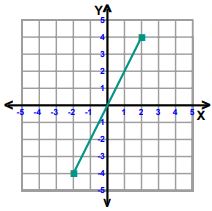
What is the domain in inequality notation?

a)

[ -2 , 2 ]

b)

[ 4 , -4 ]

c)

-2 ≤ x ≤ 2

d)

4 ≥ y ≥ -4

7.
What is the domain?
a)
x = 2
b)
−∞ < x < ∞
c)
y = 2
d)
none of these
8.

What is the RANGE of this graph?

a)

-7<x<5

b)

-7≤y<5

c)

-3<x<1

d)

-3≤y<1

9.

When finding the domains of even root functions algebraically , we must

a)

only need to set the radicand equal to zero

b)

try as many numbers as we can

c)

set the radicand less than zero

d)

set the radicand greater than or equal to zero.

10.

 f(x)=1x5f\left(x\right)=\frac{1}{x-5}  Find the domain of

a)

 (,5)(5,)\left(-\infty,5\right)\left(5,\infty\right)  

b)

 [5,)\left[5,\infty\right)  

c)

 (,5]\left(-\infty,5\right]  

d)

 (,)\left(-\infty,\infty\right)  

11.

Write the domain of  f(x)=xx216f\left(x\right)=\frac{x}{x^2-16}  

a)

 (,0)(4,)\left(-\infty,0\right)\left(4,\infty\right)  

b)

 [4,)\left[4,\infty\right)  

c)

 (,0)(0,4]\left(-\infty,0\right)\left(0,4\right]  

d)

 (,4)(4,4)(4,)\left(-\infty,-4\right)\left(-4,4\right)\left(4,\infty\right)  

12.

Find the domain of  g(x)=2x4g\left(x\right)=\sqrt{2x-4}  

a)

 (,2)(2,)\left(-\infty,2\right)\left(2,\infty\right)  

b)

 [2,)\left[2,\infty\right)  

c)

 (,2]\left(-\infty,2\right]  

d)

 (,12)(12,)\left(-\infty,\frac{1}{2}\right)\left(\frac{1}{2},\infty\right)  

13.

Find the domain of  h(x)=x4x5h\left(x\right)=\frac{\sqrt{x-4}}{x-5}  

a)

 (,5]\left(-\infty,5\right]  

b)

 (,5)(5,)\left(-\infty,5\right)\left(5,\infty\right)  

c)

 (,4)(4,)\left(-\infty,4\right)\left(4,\infty\right)  

d)

 [4,5)(5,)\left[4,5\right)\left(5,\infty\right)  

14.

State the domain:

a)

(-oo, -4) U (-4, oo)

b)

[-4, oo)

c)

(-oo, -4]

d)

(-oo, oo)

15.
What is f when x equals 0?
a)
-5
b)
0
c)
1/2
d)
1
16.
Using the pictured graph, what is f(-3)? 
a)
-3
b)
-1
c)
1
d)
3
17.
On the graph, which portion of the piecewise function is represented in red?
a)
x
b)
0.5x + 2.5       
c)
-1
d)
0.5x + 2
18.
Which piecewise function corresponds to this graph? (Take your time)
a)
f(x) = { x  if x < 4;   -x+1  if x ≥ 4
b)
f(x) = { x  if x ≤ 4;  -x+1  if x > 4
c)
f(x) = { -x+1  if x < 4;  x  if x ≥ 4
d)
f(x) = { -x+1  if x ≤ 4;  x if x > 4
19.

Match the graph with the correct equation.

a)
b)
c)
d)
20.

A house painter charges $12 per hour for the first 40 hours he works, $18 for the ten hours after that, and $24 for all hours after that.


How much does he earn for a 70 hour week?

a)

$1020

b)

$1140

c)

$840

d)

He works for free!

21.
What is f when x equals 0?
a)
-5
b)
0
c)
1/2
d)
1
22.

Find the excluded value(s).

a)

v = 5

b)

v = 10

c)

v = -25

d)

v = -5

23.

 Complete the description of the transformation. g(x)=x1+9g\left(x\right)=\left|x-1\right|+9 

a)

up by 9 unit and right by 1 units

b)

down by 1 unit and right by 9 units

c)

up by 9 unit and left by 1 units

d)

down by 1 unit and left by 9 units

24.

What is the equation for g(x)?

a)

g(x)=x3g\left(x\right)=\left|x-3\right|

b)

g(x)=x+3g\left(x\right)=\left|x+3\right|

c)

g(x)=x3g\left(x\right)=\left|x\right|-3

d)

g(x)=x+3g\left(x\right)=\left|x\right|+3

25.

What is the new equation?

a)

g(x)=4xg\left(x\right)=4\left|x\right|

b)

g(x)=4xg\left(x\right)=-4\left|x\right|

c)

g(x)=14xg\left(x\right)=\frac{1}{4}\left|x\right|

d)

g(x)=14xg\left(x\right)=-\frac{1}{4}\left|x\right|

26.

If the blue is f(x)=x2, then the red must be

a)

g(x)=x2 - 5

b)

g(x)=x2 + 5

c)

g(x)=(x - 5)2

d)

g(x)=(x + 5)2

27.
f(x) = 5x2 + 2
a)
Stretch of 5
Up 2
b)
Shrink of 5
Up 2
c)
Stretch of 5
Down 2
d)
Shrink of 5
Down 2
28.


 f(x) = x+2;      g(x) = x2f\left(x\right)\ =\ x+2;\ \ \ \ \ \ g\left(x\right)\ =\ x-2   Find (f+g)(x)Find\ \left(f+g\right)\left(x\right)  

a)

 x2x^2  

b)

 2x2x  

c)

 44  

d)

 x2+4-x^2+4  

29.


 f(x) = x+2;      g(x) = x2f\left(x\right)\ =\ x+2;\ \ \ \ \ \ g\left(x\right)\ =\ x-2   Find (fg)(x)Find\ \left(f-g\right)\left(x\right)  

a)

 x2x^2  

b)

 2x2x  

c)

 44  

d)

 x2+4-x^2+4  

30.

Find (fg)(x) f(x)=x+1 and g(x)=x21f\left(x\right)=x+1\ and\ g\left(x\right)=x^2-1  

a)

 x3+x2x1x^3+x^2-x-1  

b)

 x3x2x1x^3-x^2-x-1  

c)

 x3+x2+x+1x^3+x^2+x+1  

d)

 x3x2+x1x^3-x^2+x-1  

31.

Find (fg)(x) and its domain. f(x)=2+1x and g(x)=1xf\left(x\right)=2+\frac{1}{x}\ and\ g\left(x\right)=\frac{1}{x}  

a)

 2x+1x2; D:(,0)(0,)\frac{2x+1}{x^2};\ D:\left(-\infty,0\right)\cup\left(0,\infty\right)  

b)

 x22x+1; D:(,0)(0,)\frac{x^2}{2x+1};\ D:\left(-\infty,0\right)\cup\left(0,\infty\right)  

c)

 2x+1x2; D:(,)\frac{2x+1}{x^2};\ D:\left(-\infty,\infty\right)  

d)

 x22x+1; D:(,)\frac{x^2}{2x+1};\ D:\left(-\infty,\infty\right)  

32.
The inverse has been reflected over which line?
a)
y = x
b)
y =1
c)
y = 0
d)
y = x + 1
33.
Are the following inverses of each other?
a)
True
b)
False
34.
Find the inverse of f(x) = -4x - 12
a)
f-1(x) = 4x - 3
b)
f-1(x) = -1/4x - 3
c)
f-1(x) = 1/4x + 3
d)
f-1(x) = -4x - 3
35.

 g(x)=7x5+7g\left(x\right)=-7x^5+7  Find the inverse of the function.

a)

 g1(x)=5x77g^{-1}\left(x\right)=^5\sqrt{\frac{x-7}{7}}  

b)

 g1(x)=5x77g^{-1}\left(x\right)=-^5\sqrt{\frac{x-7}{7}}  

c)

 g1(x)=5x77g^{-1}\left(x\right)=^5\sqrt{-\frac{x-7}{7}}  

d)

 g1(x)=5x77g^{-1}\left(x\right)=-^5\sqrt{\frac{x-7}{7}}  

36.
What are the zeros of the function?
a)
4,1
b)
3,1,-2,-5
c)
-3, -1, 2, 5
d)
-2,4
37.
Find all the real zeros of the function 
f(x) = 2x3 - 19x2 + 38x + 24 given that x-4 is a factor.
a)
x = 1/2, -6
b)
x = -1/2, 6
c)
x = 4, -1/2, 6
d)
x = -4, 1/2, -6
38.
Find the roots of 0=x3-4x2+2x-8
a)
±2,4
b)
±2i,4
c)
±i√2,4
d)
±√2,4
39.
Find all rational zeros, one zero has been given.
f(x) = x3-5x2-2x+24;   -2
a)
-2,1,0
b)
-2,-3,-4
c)
4,3,-2
d)
0,0,0
40.
Factor: 8x3 - 1
a)
(2x - 1)(4x2 + 2x + 1)
b)
(2x + 1)(4x2 - 2x + 1)
c)
(2x - 1)(4x2 - 2x - 1)
d)
(2x + 1)(4x2 +2x + 1)
41.

Which of the following would be the correct factored form with roots 2, 5i, and 6?

a)

(x-6)(x-2)(x+5i)(x-5i)

b)

(x+6)(x+2)(x+5i)

c)

(x-6)(x-2)(x-5i)

d)

(x+6)(x+2)(x-5i)

42.
Write a polynomial function of least degree with the given zeros.
a)
A
b)
B
c)
C
d)
D
43.
Let f(x) = 4x2 -33x -27.  Is k = 9 a zero of the function?
a)
yes
b)
no
44.
Use synthetic division:
(2x3 - 5x - 7) ÷ (x - 2)
a)
2x3 - 4x2 + 3x - 13
b)
2x3 + 4x2 +3x - 1
c)
2x2 - 4x + 3 - 13/x-2
d)
2x2 + 4x + 3 - 1/x-2
45.

Find the zeros of the polynomial given one factor. Use synthetic division.

a)

X= 3,4,5

b)

x=-3,-4,-5

c)

x=-3,4,5

d)

x= 3, -4, -5

46.
What is the vertical asymptote? 
a)
x = 2
b)
y = 2
c)
x = 1
d)
y = 1
47.

Is there a hole or a vertical asymptote?

a)

A hole when x = 2

b)

A vertical asymptote at x = 2

c)

there is no hole or vertical asymptote
48.
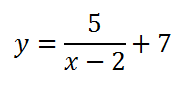
What is the horizontal asymptote? 
a)
x = 2
b)
x = 7
c)
y = 2
d)
y = 7
49.
Convert 150⁰ to radians
a)
5π/6
b)
3π/4
c)
7π/6
d)
2π/3
50.
What is 7π/4 radians in degrees?
a)
300
b)
135
c)
315
d)
45
51.
What is the exact coordinates of  3π/4 on the unit circle?
a)
(−√2∕2, √2∕2)
b)
(−√2∕2, −√2∕2)
c)
(−√3∕2, −√2∕2)
d)
(√2∕2, −√2∕2)
52.

What quadrant is -2π/3 in?

a)

I

b)

II

c)

III

d)

IV

53.
a)
b)
c)
d)
54.

tanθ = 

a)

1/cosθ

b)

1/sinθ

c)

cosθ/sinθ

d)

sinθ/cosθ

55.
cscθ=
a)
1/cosθ
b)
1/sinθ
c)
1/tanθ
d)
1/secθ
56.

 1+tan2x=1+\tan^2x=  

a)

 csc2x\csc^2x  

b)

 cot2x\cot^2x  

c)

 sin2x\sin^2x  

d)

 sec2x\sec^2x  

57.

Simplify

 tanxcscxcosx\tan x\csc x\cos x  

a)

1/cos x

b)

1

c)

cot x

d)

-1

58.

Simplify

  csc x(cosx+sinx)\csc\ x\left(\cos x+\sin x\right)  

a)

csc x

b)

tan x + 1

c)

cot x

d)

cot x + 1

59.

Simplify  (cscx+1)(cscx1)\left(\csc x+1\right)\left(\csc x-1\right)  

a)

 csc2x+1\csc^2x+1  

b)

 tan2x\tan^2x  

c)

 cot2x\cot^2x  

d)

 2cscx2\csc x  

60.
The __________ represents half the distance between the max and min of a sine or cosine graph. 
a)
Period
b)
Frequency
c)
Extreme Values
d)
Amplitude
61.
Phase shift means ...
a)
An up or down movement
b)
A left or right movement
c)
Height of graph
d)
...set Phasers to stun
62.
The period of a sine or cosine graph can be found by ....
a)
It's always 2π
b)
2π/B
c)
B(2π)
d)
2π+B
63.
What is the amplitude of this function?
a)
2
b)
2π
c)
-2
d)
1
64.
Write the equation for a sine function with an amplitude of 6 and a period of π/4.
a)
y=6sin(8x)
b)
y=6sin8(x-1)
c)
y=6sin1/4x
d)
y=6sinx
65.
Which equation?
a)
y= -cos(2x)
b)
y= cos(2x)
c)
y= (1/2)cosx
d)
y= (-1/2)cosx
66.

Describe the shift: cos(x-(π/4))

a)

Up π

b)

Down (π/4)

c)

Left (π/4)

d)

Right (π/4)

67.
What is the period?
a)
π/4
b)
π/2
c)
3π/4
d)
π
68.
Convert the polar coordinates to rectangular form
a)
(1, 1)
b)
(1, -1) 
c)
(-1, 0)
d)
(-1, -1)
69.
Which equation represents the polar graph?
a)
r = sin θ
b)
r = sin 4θ
c)
r = 4 sin θ
d)
r = 4 cos θ
70.
Which point represents the polar coordinate
(-4, -2π/3)
a)
B
b)
F
c)
D
d)
A
71.
Find the polar coordinates of the rectangular point. (0,3)
a)
(3,π)
b)
(3,0)
c)
(3,π/2)
d)
(3,-3π/2)
72.
Identify the common difference. 
10, 20, 30, 40, ...
a)
5
b)
10
c)
15
d)
20
73.

Is the sequence arithmetic?

17, 9, 1, -7, ...

a)

Yes

b)

No

74.
Given the sequence:
 25, 21, 17, 13,...
Write the explicit equation that models the sequence.
a)
an = 4n + 29
b)
an = -4n + 25
c)
an = -4n + 29
d)
an = 4n + 25
75.

Find a20 in the arithmetic sequence: (Hint: Find explicit formula first)

5, 12, 19, 26...

a)

145

b)

144

c)

142

d)

138

76.
a)

0

b)

2

c)

3

d)

4

77.
What is the limit?
a)
Infinity
b)
20
c)
DNE
d)
12
78.
a)
0
b)
3
c)
4
d)
DNE
79.
a)
0/0
b)
1/2
c)
1/4
d)
-1/4
80.
a)
0/0
b)
DNE
c)
-1/4
d)
1/4