wayground logo

Free Printable Worksheets

Font size

S
M
L
XL
Worksheets

ED1 webxam

Total questions: 173

Worksheet time: 2hrs 19mins

Name
Class
Date
1.
A book that an Engineer will formaly document in a chronological order the work used to design, brainstorm, and document progress and innovation in their projects
a)
Engineering Notebook
b)
Design Record
c)
rural dictionary
d)
research
2.
brand new product, system, method or process that is created by study and experimentation
a)
Invention
b)
Engineering Notebook
c)
as seen on TV
d)
innovation
3.
updated, re-done product, method or system that has already been invented
a)
Innovation
b)
Invention
c)
Engineering Notebook
d)
update
4.
A group technique for solving problems, generating ideas, stiimulating creative thinking (etc.) by spotaneous participation in discussion
a)
Brainstorm
b)
Innovation
c)
Invention
d)
Engineering Notebook
5.
1) A limit to a design process. It may be such things as appearance, funding, space, materials, or human capability 2) limitation or restriction
a)
Constraint
b)
Brainstorm
c)
Innovation
d)
Invention
6.
A written plan that identifies a problem to be solved, its criteria, and its constraints. Used to encourage thinking of all aspects of a problem before attempting a solution
a)
Design Brief
b)
Constraint
c)
Brainstorm
d)
Innovation
7.
Part of a design brief that challenges the designer, describes what a design solution should do without describing the problem, Also identifies the degree to which the solution must be executed
a)
Design Statement
b)
Design Brief
c)
Constraint
d)
Brainstorm
8.
Full scale working model used to test a design concept by making actual observations and necessary adjustaments
a)
Prototype
b)
Design Statement
c)
Design Brief
d)
Constraint
9.
The systematic Study of materials and sources in order to establish facts and reach new conclusions
a)
Research
b)
Prototype
c)
Design Statement
d)
Design Brief
10.
Representation of light and shade on a sketch or map
a)
Shading
b)
Research
c)
Prototype
d)
Design Statement
11.
A line which defines the center of arcs, circles, or symmetrical parts
a)
Center Line
b)
Shading
c)
Research
d)
Prototype
12.
Line which represents where a dimension starts and stop
a)
Extension Line
b)
Center Line
c)
Shading
d)
Research
13.
A line which represents distance
a)
Dimension Line
b)
Extension Line
c)
Center Line
d)
Shading
14.
A heavy solid line used on a drawing to represent the outline of an object
a)
Object Line
b)
Dimension Line
c)
Extension Line
d)
Center Line
15.
Line lightly drawn to guide drawings other lines and shapes
a)
Construction Line
b)
Object Line
c)
Dimension Line
d)
Extension Line
16.
A line type that represents an edge that is not directly visible
a)
Hidden Line
b)
Construction Line
c)
Object Line
d)
Dimension Line
17.
Line which indicates dimensions of arcs, circles, and detail
a)
Leader Line
b)
Hidden Line
c)
Construction Line
d)
Object Line
18.
A method of representing 3D objects on a plane having only length and breadth. Also refered to as Right Angle Projection
a)
Orthographic Projection
b)
Leader Line
c)
Hidden Line
d)
Construction Line
19.
Oblique pictorial where depth is represented as half the scale compared to the height and width scale
a)
Cabinet Pictorial
b)
Orthographic Projection
c)
Leader Line
d)
Hidden Line
20.
Oblique pictorial where height, width, and depth are represented at full scale
a)
Cavalier Pictorial
b)
Cabinet Pictorial
c)
Orthographic Projection
d)
Leader Line
21.
A sketch that shows an object's height, width, and depth in a single view
a)
Pictorial Sketch
b)
Cavalier Pictorial
c)
Cabinet Pictorial
d)
Orthographic Projection
22.
a form of pictorial sketch in which all three drawing axes form equal angles of 120 degrees with the plane of projection
a)
Isometric Sketch
b)
Pictorial Sketch
c)
Cavalier Pictorial
d)
Cabinet Pictorial
23.
A form of pictorial in which an object is represented as a true width and height, but the depth can be any size and drawn at any angle
a)
Oblique Sketch
b)
Isometric Sketch
c)
Pictorial Sketch
d)
Cavalier Pictorial
24.
A drawing which contains views of an object projected onto two or more orthographic planes
a)
Multi-View Drawing
b)
Oblique Sketch
c)
Isometric Sketch
d)
Pictorial Sketch
25.
Drawings that convey all of the information needed to manufacture and assemble a design
a)
Working Drawing
b)
Multi-View Drawing
c)
Oblique Sketch
d)
Isometric Sketch
26.
A drawing that is used to show the material, size, and shape of a product for manufacturing puroposes
a)
Technical Working Drawing
b)
Working Drawing
c)
Multi-View Drawing
d)
Oblique Sketch
27.
Three Spatial Dimensions
a)
Width, Height, Depth
b)
Technical Working Drawing
c)
Working Drawing
d)
Multi-View Drawing
28.
degree of closeness of measurements to the actual or accepted value
a)
Accuracy
b)
Width, Height, Depth
c)
Technical Working Drawing
d)
Working Drawing
29.
Degree to which repeated measurements show the same result
a)
Precision
b)
Accuracy
c)
Width, Height, Depth
d)
Technical Working Drawing
30.
Collection of methods for planning experiments, obtaining data, organizing, summarizing, and presenting, analyzing, interpreting, and drawing conclusions based on data
a)
Statistics
b)
Precision
c)
Accuracy
d)
Width, Height, Depth
31.
A graph of vertical bars representing the frequency distribution of a set of data
a)
Histogram`
b)
Statistics
c)
Precision
d)
Accuracy
32.
Value that occurs most frequently in a given data set
a)
Mode
b)
Histogram`
c)
Statistics
d)
Precision
33.
the difference between the largest and smallest values that occur in a set of data
a)
Range
b)
Mode
c)
Histogram`
d)
Statistics
34.
A measuring instrument having two adjustable jaws typically used to measure distance or thickness
a)
Calipers
b)
Range
c)
Mode
d)
Histogram`
35.
to add explanatory notes to a drawing
a)
Annotate
b)
Calipers
c)
Range
d)
Mode
36.
A part or element of a larger whole
a)
Component
b)
Annotate
c)
Calipers
d)
Range
37.
A visual mathematical, or 3D representation in detail of an object or design, often smaller than the original
a)
Model
b)
Component
c)
Annotate
d)
Calipers
38.
A physical representation of an object. Prototypes and appearance models are examples of this
a)
Physical model
b)
Model
c)
Component
d)
Annotate
39.
An enlarged or reduced representation of an object that is usually intended for study purposes
a)
Scale Models
b)
Physical model
c)
Model
d)
Component
40.
A type of 3D CAD modeling that represents the volume of an object, not just its lines and surfaces
a)
Solid Modeling
b)
Scale Models
c)
Physical model
d)
Model
41.
The process of choosing and using appropriate mathematics and statics to analyze empirical situations, to understand them better, and to improve decisions
a)
Mathematical Modeling
b)
Solid Modeling
c)
Scale Models
d)
Physical model
42.
Constant, non-numerical relationships between the parts of a geometric figure. Examples include parallelism, perpendicularity, and concentricity
a)
Geometric Constraints
b)
Mathematical Modeling
c)
Solid Modeling
d)
Scale Models
43.
Triangle that contains only angles that are less than 90 degrees
a)
Acute Triangle
b)
Geometric Constraints
c)
Mathematical Modeling
d)
Solid Modeling
44.
A triangle with one angle that is greater than 90 degrees
a)
Obtuse triangle
b)
Acute Triangle
c)
Geometric Constraints
d)
Mathematical Modeling
45.
A triangle with a 90 degree angle
a)
Right Triangle
b)
Obtuse triangle
c)
Acute Triangle
d)
Geometric Constraints
46.
3D point defining the geometric center of a solid
a)
Centroid
b)
Right Triangle
c)
Obtuse triangle
d)
Acute Triangle
47.
A straight or curved line that intersects a circle or arc at one point only
a)
Tangent
b)
Centroid
c)
Right Triangle
d)
Obtuse triangle
48.
A triangle located around a polygon such as a circle. To draw a figure around another, touching it at pints but not cutting it
a)
Circumscribe
b)
Tangent
c)
Centroid
d)
Right Triangle
49.
The lines of intersection created from three mutually perpendicular planes, with three planes' point of intersection at the centroid of the part
a)
Principal Axes
b)
Circumscribe
c)
Tangent
d)
Centroid
50.
The measure of mass density is a measure of mass per volume
a)
Density
b)
Principal Axes
c)
Circumscribe
d)
Tangent
51.
The amount of 3D space occupied by an object or enclosed within a container
a)
volume
b)
Density
c)
Principal Axes
d)
Circumscribe
52.
A curve formed at the interior intersection between two or more surfaces
a)
Fillet
b)
volume
c)
Density
d)
Principal Axes
53.
The correspondence in sizes, shape, and relative position of parts on opposite sides of a median line or about a central axis. Also referred to as formal balance
a)
Symmetry
b)
Fillet
c)
volume
d)
Density
54.
Symmetry in which both halves of a composition are not identical. Also referred to as informal balance
a)
Asymmetry
b)
Symmetry
c)
Fillet
d)
volume
55.
Symmetry about a central axis
a)
Radial Symmetry
b)
Asymmetry
c)
Symmetry
d)
Fillet
56.
A condition in which different elements are equal or in the correct proportions. Three types: Symmetry, asymmetry, and radial
a)
Balance
b)
Radial Symmetry
c)
Asymmetry
d)
Symmetry
57.
1. Having the 3D dimensions of length width and depth. 2. Solid 3. The organization, placement, or relationship of basic elements, as volumes or voids in sculpture, so as to produce a coherent image
a)
Form
b)
Balance
c)
Radial Symmetry
d)
Asymmetry
58.
Property possessed by an object of producing different sensations on the eye as a result of the way it reflects or emits light
a)
Color
b)
Form
c)
Balance
d)
Radial Symmetry
59.
The feel, appearance, or consistency of a surface, substance or fabric
a)
Texture
b)
Color
c)
Form
d)
Balance
60.
Repeated decorative design
a)
Pattern
b)
Texture
c)
Color
d)
Form
61.
2D contour that characterizes an object or area, in contrast to 3D form
a)
Shape
b)
Pattern
c)
Texture
d)
Color
62.
The process of taking something apart and analyzing its workings in detail
a)
Reverse Engineering
b)
Shape
c)
Pattern
d)
Texture
63.
Used when constraining 2 parts, side by side however you do not want them completely flush
a)
Offset
b)
Reverse Engineering
c)
Shape
d)
Pattern
64.
Two surfaces constrained side by side, or two edges side by side
a)
Flush Constraint
b)
Offset
c)
Reverse Engineering
d)
Shape
65.
Assembling parts together before inserting them into a larger more complicated assembly
a)
Subassembly
b)
Flush Constraint
c)
Offset
d)
Reverse Engineering
66.
A method for dimensioning angled surfaces to specify the TWO location distances of the angle
a)
Coordinate method
b)
Subassembly
c)
Flush Constraint
d)
Offset
67.
A method for dimensioning angled surfaces to specify ONE location for distance and the angle
a)
Angular Method
b)
Coordinate method
c)
Subassembly
d)
Flush Constraint
68.
Tool used to compare design solutions against one another
a)
Decision Matrix
b)
Angular Method
c)
Coordinate method
d)
Subassembly
69.
Type of expository writing used to convey information to a particular audience for a particular technical or business purposes.
a)
Technical Writing
b)
Decision Matrix
c)
Angular Method
d)
Coordinate method
70.
Communicate technical information and conclusions about projects to customers, managers, legal authority figures and other engineers
a)
Technical Reports
b)
Technical Writing
c)
Decision Matrix
d)
Angular Method
71.
Dimensioning in which all dimensions are placed from a datum and not from feature to feature
a)
Baseline Dimensioning System
b)
Technical Reports
c)
Technical Writing
d)
Decision Matrix
72.
A dimensioning system where each dimension originates from a common surface, plane, or axis
a)
Datum Dimensioning
b)
Baseline Dimensioning System
c)
Technical Reports
d)
Technical Writing
73.
Also known as point-to-point dimensioning where dimensions are established from one point to the next
a)
Chain Dimensioning
b)
Datum Dimensioning
c)
Baseline Dimensioning System
d)
Technical Reports
74.
A tolerance in which variation is permitted in both directions from the specified dimension
a)
Unidirectional Dimension
b)
Chain Dimensioning
c)
Datum Dimensioning
d)
Baseline Dimensioning System
75.
A system of dimensioning which requires all numerals, figures and notes to be aligned with the dimension lines so that they may be read from the bottom (For horizontal dimensions_ and from the right side (for vertical dimensions)
a)
Aligned Dimension
b)
Unidirectional Dimension
c)
Chain Dimensioning
d)
Datum Dimensioning
76.
The largest and smallest possible boundaries to which a feature may be made as related to the tolerance of the dimension
a)
Limit Dimensions
b)
Aligned Dimension
c)
Unidirectional Dimension
d)
Chain Dimensioning
77.
A dimension that defines the relationship of features of an object
a)
Location Dimension
b)
Limit Dimensions
c)
Aligned Dimension
d)
Unidirectional Dimension
78.
A dimension, usually without a tolerance, used for information purpose only. A reference is a repeat of a given dimension or established from other values shown on a drawing. Reference dimensions are enclosed in ( parentheses ) on the drawing
a)
Reference Dimension
b)
Location Dimension
c)
Limit Dimensions
d)
Aligned Dimension
79.
The acceptable amount of dimensional variation that will still allow an object to function properly
a)
Tolerance
b)
Reference Dimension
c)
Location Dimension
d)
Limit Dimensions
80.
A tolerance in which variation is permitted in both directions from the specified dimension
a)
Bilateral Tolerance
b)
Tolerance
c)
Reference Dimension
d)
Location Dimension
81.
The tightest possible fit between two mating parts
a)
Allowance
b)
Bilateral Tolerance
c)
Tolerance
d)
Reference Dimension
82.
Limits the size of mating parts so that a clearance always results when mating parts are assembled
a)
Clearance Fit
b)
Allowance
c)
Bilateral Tolerance
d)
Tolerance
83.
The amount of overlap that one part has with another when assembled
a)
Interference
b)
Clearance Fit
c)
Allowance
d)
Bilateral Tolerance
84.
The designation of the size established for a commercial product
a)
Nominal Size
b)
Interference
c)
Clearance Fit
d)
Allowance
85.
The US federal agency with a mission to protect human health and the environment
a)
Environmental Protection Agency (EPA)
b)
Nominal Size
c)
Interference
d)
Clearance Fit
86.
The study of workplace equipment design or how to arrange and design devices, machines or workspace so that people and things interact safely and most efficiently
a)
Ergonomics
b)
Environmental Protection Agency (EPA)
c)
Nominal Size
d)
Interference
87.
The moral principles governing or influencing conduct
a)
Ethics
b)
Ergonomics
c)
Environmental Protection Agency (EPA)
d)
Nominal Size
88.
A government organization whose mission is to assure the safety and health of America's workers by setting and enforcing standards; providing training, outreach, and education; establish partnerships; and encouraging continual improvement in workspace safety and health
a)
Occupations Safety and Health Administrations (OSHA)
b)
Ethics
c)
Ergonomics
d)
Environmental Protection Agency (EPA)
89.
Principles of right action, binding upon the members of a group and serving to guide, control, or regulate proper and acceptable behavior
a)
Norms
b)
Occupations Safety and Health Administrations (OSHA)
c)
Ethics
d)
Ergonomics
90.

Current in a series circuit_________

a)
is the same at all points
b)
is zero at all points
c)
varies at different points
d)
is highest at the beginning
91.

If you connected two 1.5V cells in series what do you have?

a)
3V
b)
2V
c)
4.5V
d)
1.5V
92.

What is grounding?

a)

Grounding is the transfer of excess charge through a conductor to Earth

b)
Grounding is the technique of enhancing electrical current flow through air.
c)
Grounding refers to the process of insulating electrical systems from the earth.
d)
Grounding is a method of increasing electrical resistance.
93.

Turbine

a)


large wheel that rotates when pushed by steam, wind, or water and provides mechanical energy to a generator

b)

compressor that diminishes the space required for a gas

c)

Fan that lowers the temperature of steam so it can be be experienced without burning anyone

94.

What is the rate at which energy is converted; measured in watts (W) ?

a)
Resistance
b)
Current
c)
Power
d)
Voltage
95.

What is term for when a hacker uses a computer to guess every possible authentication?

a)
Brute force attack
b)
Phishing attack
c)
SQL injection
d)
Denial of Service attack
96.

What is IDE?

a)
Integrated Design Environment
b)
Interactive Development Engine
c)
Integrated Debugging Environment
d)
Integrated Development Environment
97.

What type of engineering creates technology to advance food, biological, irrigation, and machinery systems?

a)
Agricultural Engineering
b)
Environmental Engineering
c)
Civil Engineering
d)
Mechanical Engineering
98.

What term means that something can be maintained without harming the environment or using up natural resources?

a)
polluting
b)
sustainable
c)
depletable
d)
renewable
99.

Which of the following describes a process in engineering in which products are deconstructed and reconstructed to see how they work?

a)
Reverse engineering
b)
Forward engineering
c)
Product analysis
d)
System optimization
100.

The design and construction of an aircraft carrier would fall under which category?

a)
Civil engineering and architecture
b)
Aerospace manufacturing and design
c)

Systems design

d)
Marine biology and oceanography
101.

What is the degree of closeness of measurements of a quantity to the actual (or accepted) value?

a)
Reliability
b)
Precision
c)
Consistency
d)
Accuracy
102.

What is the act or process of using an intermediary to effect an agreement or reconciliation?

a)
Arbitration
b)
Negotiation
c)
Conciliation
d)
Mediation
103.

What is the hearing and determination of a dispute or the settling of differences between parties by a person or persons chosen or agreed to by them?

a)
Mediation
b)
Arbitration
c)
Litigation
d)
Negotiation
104.

What is a written plan that identifies a problem to be solved, its criteria, and its constraints? It encourages thinking of all aspects of a problem before attempting a solution.

a)

Design Brief

b)
Research report
c)
Project proposal
d)
Solution outline
105.

What is the standardization of lines used on technical drawings by line weight and style?

a)

line customs

b)

line conventions

c)

line corporations

d)

unimportant in understanding drawings

106.

What is the smallest size limit of an external feature and the largest size limit of an internal feature?

a)

Least Material Condition (LMC)

b)

Largest Material Condition (LMC)

c)

Material Minimal Condition (MMC)

d)

Ergonomics

107.

What is the study of workplace equipment design or how to arrange and design devices, machines, or workspace so that people and things interact safely and efficiently?

a)
Safety Engineering
b)
Anthropometry
c)
Industrial Design
d)
Ergonomics
108.

What is the professional engineering organization that is known for setting codes and standards for mechanical devices and engineers in the United States?

a)
American Society of Mechanical Engineers (ASME)
b)
National Society of Professional Engineers (NSPE)
c)
American Institute of Mechanical Engineers (AIME)
d)
Society of Automotive Engineers (SAE)
109.

What is a non-governmental global organization whose principal activity is the development of technical standards through consensus?

a)
World Trade Organization (WTO)
b)
International Monetary Fund (IMF)
c)
United Nations (UN)
d)
International Organization for Standardization (ISO)
110.

What is a time and activity bar chart that is used for planning, managing, and controlling major programs that have a distinct beginning and end?

a)
Gantt chart
b)
Flowchart
c)
Network diagram
d)
Pie chart
111.

What is the largest size limit of an external feature and the smallest size limit of an internal feature?

a)

Maximum Material Condition (MMC)

b)

Minimum Material Condition (MMC)

c)

Martian Material Condition (MMC)

112.

What is a primary direction in a coordinate system?

a)

axis

b)

slope

c)

plane

d)

line

113.

What term describes ways an object can move? In assemblies, an object floating free in space with no constraints to another object can be moved along three axes of translation and around three axes of rotation. Such a body is said to have six of these.

a)

Six degrees of freedom

b)

Three degrees of rotation

c)

Five degrees of revolutions

d)

Four degrees of transformation

114.

What term describes the additional strength gained by a group of individual members when they are working together?

a)
collaboration
b)
synergy
c)
competition
d)
isolation
115.

What is the Weld Symbol?

a)

Tee

b)

Lap

c)

Groove

d)

Fillet

116.

What measurement is shown in the image?

a)

1"

b)

1 - 3/4"

c)

1-7/8"

d)

2"

117.

A group of engineers designed and constructed a flying car prototype. Their goal is for the car to enable people to safely fly to and from work instead of getting stuck in traffic jams. How will the engineers determine that this prototype meets their design requirements?

a)

Have a test pilot attempt to fly it from one location to another.

b)

Drive in the car at highway speeds on an interstate at nighttime.

c)

See if the car can start.

d)

Drive it slowly on the highway.

118.

What is the purpose of building a prototype?

a)

To determine the design constraints for the product.

b)

To make sure the product is in compliance with the government.

c)

To test the product and make sure it is the best solution to the problem.

d)

To determine the design criteria for the product.

119.

The statement that explains the primary purpose of the organization and why the organization exists is the ______.

a)

budget

b)

strategic plan

c)

mission statement

d)

operational plan

120.

SMART Goals are

a)

Specific, Manageable, Attainable , Realistic, Time Bound

b)

Specific, Measureable, Attainable, Righteous, Time Bound

c)

Specific, Measurable, Attainable, Realistic, Time Bound

d)

None of the above

121.
What is the process of identifying and fixing errors in code called?
a)
A. Debugging
b)
B. Testing
c)
C. Refactoring
d)
D. Deployment
122.

How does a hydraulic brake system work in vehicles?

a)

By using the color of a fluid to generate mechanical force and motion.

b)

By using the smell of a fluid to generate mechanical force and motion.

c)

By using the pressure of a fluid to generate mechanical force and motion.

d)

By using the temperature of a fluid to generate mechanical force and motion.

123.

What is the difference between kinetic and potential energy?

a)

Kinetic energy is the energy of motion, while potential energy is the energy stored due to an object's position or state.

b)

Kinetic energy is the energy stored due to an object's position or state, while potential energy is the energy of motion.

c)

Both kinetic and potential energy are the energy of motion.

d)

Both kinetic and potential energy are the energy stored due to an object's position or state.

124.

How does a pulley system provide mechanical advantage?

a)

By allowing a larger force to move a smaller load over a shorter distance.

b)

Pulleys have no role in mechanical advantage.

c)

By allowing a smaller force to move a larger load over a greater distance.

d)

Pulleys only work in specific temperature conditions to provide mechanical advantage.

125.

What is the function of a capacitor in an electrical circuit?

a)

To block the flow of current in the circuit.

b)

To store electrical energy in the circuit.

c)

To generate heat in the circuit.

d)

To increase the flow of current in the circuit.

126.

How does a hydraulic system differ from a pneumatic system?

a)

Hydraulic systems use compressed air, while pneumatic systems use pressurized fluid.

b)

Hydraulic systems use pressurized fluid, while pneumatic systems use compressed air.

c)

Both hydraulic and pneumatic systems use compressed air.

d)

Both hydraulic and pneumatic systems use pressurized fluid.

127.

What is the principle of conservation of energy?

a)

Energy can be created but not destroyed.

b)

Energy can be destroyed but not created.

c)

Energy can neither be created nor destroyed, but it can be transferred from one form to another.

d)

Energy can be both created and destroyed.

128.

Describe the role of levers in mechanical advantage.

a)

They provide mechanical advantage by allowing a larger force to move a smaller load over a shorter distance.

b)

Levers have no role in mechanical advantage.

c)

They provide mechanical advantage by allowing a smaller force to move a larger load over a greater distance.

d)

Levers only work in specific temperature conditions to provide mechanical advantage.

129.

Mark all that apply

Describe the accuracy and precision of the image

a)

good accuracy

b)

poor accuracy

c)

good precision

d)

poor precision

130.

It is a measure of how close a set of measurements or data come to each other

a)

Accuracy

b)

Precision

c)

Error

d)

Extrapolation

131.

Which Student is the most Precise?

a)

Student A

b)

Student B

c)

Student C

132.

Which student had the more accurate results?

a)

Student A

b)

Student B

c)

Student C

d)

Cannot be determined

133.
The steps in the reverse-engineering process are:
a)
 Documentation, Observation, Prediction, Disassemble, Analyze, Test,
b)
Analyze, Documentation, Observation, Prediction, Disassemble, Test,
c)
 Prediction, Observation, Disassemble, Analyze, Test, Documentation
d)
Test, Documentation, Observation, Prediction, Disassemble, Analyze,
134.

A building has a walkway that falls and kills and injures many people. What would be the reason to reverse engineering the walkway?

a)

Documentation

b)

Discovery

c)

Investigation

d)

Maintenance

135.
CAD: a precision-drawing software program that
speeds up the design process by making it easier to create and modify digital drawings.
a)
Computer Added Documents
b)
Computer-Aided Design 
c)
Controller And Designer
d)
Computer Assisted Documents
136.
CAM; the operation of a machine controlled by a host
computer.
a)
Computer-aided manufacturing
b)
Computer-aided mining
c)
Computer-aided milling
d)
Controller-aided manufacturing
137.
The process of doing something again and again, usually to improve it.
a)
Brainstorming
b)
Probability
c)
Variable
d)
Iterations
138.

The standards that help engineers measure how well their design does its job.

a)

criteria

b)

engineer

c)

prototype

d)

failing forward

139.
A limit imposed on a design solution.
a)
Constraint
b)
Specification
c)
Risk/Benefit Trade-Off
140.

Which type of Civil engineering sub-field is concentrated on the stability, strength and rigidity of built structures?

a)

Transportation Engineering

b)

Coastal Engineering

c)

Structural Engineering

d)

Geotechnical Engineering

141.
Engineers shall perform services only in the areas of their ___________.
a)
control
b)
calculation
c)
competence
d)
creation
142.
The engineer’s creed was developed to state the engineering philosophy of service in a _________ way.
a)
humorous
b)
complex
c)
brief
d)
philosophical
143.
Engineers must perform under a standard of professional behavior that requires adherence to the highest principles of ethical ____________.
a)
thought
b)
judgment
c)
failure
d)
conduct
144.
The services provided by engineers must be dedicated to the protection of the _____________________.
a)
public health, safety and welfare
b)
public satisfaction, convenience and prosperity
c)
public understanding, appreciation and reciprocity
d)
public attention, engagement and participation
145.
Engineering is an important and learned profession. As members of this profession, engineers are expected to exhibit the highest standards of __________________.
a)
competence and expertise
b)
honesty and integrity
c)
compassion and consideration
d)
confidentiality and sensitivity
146.
A conflict of interest is
a)
a general disagreement between two or more individuals.
b)
when an employee spends company time working on a personal project
c)
a conflict between an employee and his/her manager.
d)
a conflict between an individual’s personal interests and his/her professional obligations.
147.
What does NSPE stand for?
a)
National Society of Pipeline Engineers
b)
National Society of Petroleum Engineers
c)
National Society of Professional Engineers
d)
Northern States Power Enterprise
148.
Ethics refers to the study of the ______________ that we all have to make in our lives.
a)
financial choices
b)
moral choices
c)
professional choices
d)
personal choices
149.
Engineers shall not reveal facts, data or information without the prior consent of the client or employer except as authorized or required by law or the Code of Ethics.
a)
true
b)
false
150.
The process of creating models using geometric definitions that can be changed at any time to change the nature of the model is known as _________ modeling.
a)
orthographic
b)
paragraphic
c)
parametric
d)
orthometric
151.
What item is NOT on a parts list?
a)
Material
b)
Cost
c)
Item Number
d)
Quantity
152.
What are the part indicators called on this image?
a)
Nodes
b)
Balloons
c)
Bubbles
d)
Encircled Labels
153.

Design systems for producing goods.

a)

Goods Engineers

b)

Product Engineers

c)

Validation Engineers

d)

Industrial Engineers

154.

Look for ways to prevent accidents in the workplace.

a)

Work Engineers

b)

Safety Engineers

c)

Software Engineers

d)

Validation Engineers

155.

Is the Design Process truly linear?

a)

Yes, we always go from step to step

b)

Yes, we just follow the flowchart

c)

No, we constantly should evaluate and reflect at every step

d)

No, its more circular since we start over a lot

156.

What type of movement does this image show?

a)

Rotary

b)

Linear

c)

Reciprocating

d)

Oscillating

157.

What type of movement does this image show?

a)

Rotary

b)

Linear

c)

Reciprocating

d)

Oscillating

158.

What type of movement does this image show?

a)

Rotary

b)

Linear

c)

Reciprocating

d)

Oscillating

159.

What type of movement does this image show?

a)

Rotary

b)

Linear

c)

Reciprocating

d)

Oscillating

160.

What does this gear set up produce?

a)

Torque

b)

Speed

161.

What does this gear set up produce?

a)

Torque

b)

Speed

162.

Speed and torque have an inverse relationship. This means...

a)

When one increases the other decreases

b)

Both increase

c)

Both decrease

163.
What is the equation used to calculate pressure?
a)
pressure= force/mass
b)
pressure =mass/volume
c)
pressure=area/force
d)
pressure=force/area
164.

If temperature increases and the pressure is constant, the volume ___________

a)
Increases
b)
Decreases
c)
Stays the same
d)
Is variable
165.
What size resistor would produce a 3 Amp current flow with a 12 Volt battery
a)
1 Ohm
b)
3 Ohms
c)
4 Ohms
d)
12 Ohms
166.

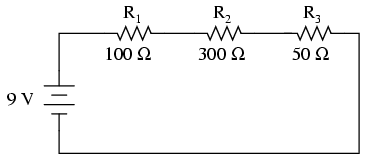
What type of circuit is this?

a)

Series

b)

Parallel

c)

Simple

167.
The total resistance in this circuit is 
a)
100 ohms
b)
450 ohms
c)
400 ohms
d)
30 ohms
168.

What are the three axes used in isometric sketching?

a)

x-axis, y-axis, z-axis

b)

a-axis

c)

b-axis

d)

c-axis

169.

A condition where there are no net external forces acting upon a particle or rigid body and the body remains at rest or continues at a constant velocity.

a)

Imbalance

b)

Force

c)

Absolute Zero

d)

Static Equilibrium

170.

A force that produces or tends to produce rotation or torsion.

a)

Torque

b)

Tension

c)

Push

d)

Pull

171.

The production of electricity in conductors with the use of magnets.

a)

Electromagnetic Induction

b)

Magnetism

c)

Electromagnetic Conduction

d)

Flux Capacitor

172.

A resource that cannot be replaced once used.

a)

Renewable Energy

b)

Nonrenewable Energy

c)

Solar Energy

d)

Geothermal Energy

173.

Degree of disorder or lack of predictability within a system's energy

a)

randomness

b)

chaos

c)

alignment

d)

entropy