
 Worksheets
(CHM) Mid Year 21-22
Total questions: 69
Worksheet time: 1hrs 13mins
Convert 360 s to ms
3,600 ms
36,000 ms
0.36000 ms
360,000 ms
Convert 4800 mg to kg
48 kg
0.0048 kg
0.048 kg
4.8 kg
The metric system is based or scaled on units of:
ten
100
1000
inches

Does this image show results that are accurate and/or precise?
Accurate, but not precise
Precise, but not accurate
Both precise and accurate
Neither precise nor accurate
Which of the following has 5 significant figures?
0.000 5 cm
0.000 05 cm
10 005 cm
1 005 550 cm
Properties that depend on the identity of substance.
Mass
Hardness
Extensive
Intensive
Properties that DO depend on the amount of matter present.
Mass
Hardness
Extensive
Intensive
An _______________ is made up of one or more of the same kind of atom chemically combined.
atom
element
molecule
compound
A ______________ mixture is one that does not have a uniform composition.
heterogeneous
homogenous
pure substance
A _________________ mixture is one where the substances are evenly spread throughout.
heterogeneous
homogeneous
pure substance
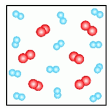

What technique is being carried out in the picture?
crystallization
sublimation
chromatography
sedimentation
J.J. Thomson discovered the electron using
gold foil and alpha particles.
oil drops.
a cathode ray tube.
emission spectra of a hydrogen atom.
Which of these experiments supported the idea of electrons?


Which of these experiments supported the idea of a small nucleus?
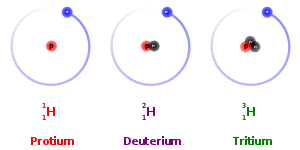
Different isotopes have...
different mass numbers
different protons
different electrons
different atomic numbers

This image is an illustration of
photoelectric effect
Dalton's atomic theory
Bohr model
Quantum mechanical model

The figure shows _____________
atomic emission spectrum
atomic absorption spectrum
atomic solution spectrum
photoelectric effect
Calculate the energy of a gamma ray photon whose frequency is 5.02 x 10²⁰/s?
E=hv h = 6.63 x 10⁻³⁴ J*s
4.73 x 1072 J
2.07 x 10 6 J
3.33 x 10⁻¹³ J
1.21 x 10 35 J
What is the energy of light whose wavelength is 4.06 x 10⁻¹¹ m?
c=λv c = 3.00 x 10⁸ m/s
E=hv h = 6.63 x 10⁻³⁴ J*s
2.69 x 10-44 J
4.90 x 10⁻¹⁵ J
3.06 x 10 4 J
5.04 x 10⁻¹⁷ J
The principle quantum number, n, represents the:
spin value
suborbital value
energy level
magnetic value
Photoelectric effect provides the evidence for the ______ nature of radiation.
dual
wave
particle
electromagnetic
Light is emitted when electrons
move from one atom to another.
collide with one another, releasing energy.
move from a lower energy level to a higher energy level.
move from a higher energy level to a lower energy level.

1s22s22p63s23p64s23d10


What is the electron configuration of potassium (K)?
1s22s22p63s1
1s22s22p63s23p64s1
1s22s22p63s23p3
1s22s22p63s23p1
According to the Aufbau principle _____.
an orbital may be occupied by only two electrons
electrons enter orbitals of highest energy first
electrons enter orbitals of lowest energy first
electrons in the same orbital must have opposite spins

Which electron configuration correctly represents the ground state of bromine?
1s2 2s2 2p6 3s2 3p6 4s2 4d10 4p5
1s2 2s2 2p6 3s2 3p6 4s2 3d10 4p5
1s2 2s2 2p6 3s2 3p6 4s2 3d9 4p6
1s2 2s2 2p6 3s2 3p6 4s2 4d9 4p6
Identify the correct the electron dot diagram for lithium


How would you draw a Lewis dot diagram for Magnesium?


K ionizes to a charge of _________.
+1
+2
-1
-2

Mg ionizes to a charge of ______.
+1
+2
-1
-2
Which types of elements form cations?
metals
nonmetals
metalloids
noble gases
Which types of elements form anions?
metals
nonmetals
metalloids
noble gases
Name the following ionic compound: MgSO4
magnesium sulfoxide
magnesium sulfide
magnesium sulfate
magnesium oxide
The formula of calcium phosphate is
What is the correct formula for Ammonium phosphate?
NH4PO4
NH43PO4
(NH4)3PO4
NH4(PO4)3
What is the correct formula for the polyatomic ion called sulfate?
SO32–
HSO4–
SO42–
CH3COO–
Fe2CO2
FeCO4
SnO2
PbS2
lead sulfide
lead sulfur
lead(II) sulfide
lead(IV) sulfide
Name Fe(NO3)3
Iron(III) Nitrate
Iron(III) Nitrite
Iron Nitrite(III)
Iron Nitrate
Iron Oxynitride
Which of these are considered properties of metals? (choose ALL that apply)
brittleness
low melting point
luster (shininess)
malleability
ductility
Why are metals malleable? (They can bend without breaking.)
Metals are very smooth.
Metals have a sea of electrons.
The sea of electrons form a strong metallic bond.
Even though the metal ions repel each other, the electron sea holds all the atoms in place.
Why are metals good conductors of electricity?
The electric current can easily travel along the surface of the metal because it is smooth.
A negative charge can easily push the sea of electrons in one direction, making a current.
Metals attract electricity.
Metals are malleable.
Which is the correct molecular structure for carbon dioxide?


Which Lewis Dot Model drawing correctly shows an O2 molecule?


What is the correct Lewis structure for H2CO3?


Which is a correct Lewis structure for HNO3?



