
 Worksheets
Structure of Atom
Total questions: 15
Worksheet time: 9mins

This is an example of which model of the atom?
Rutherford's Model
Plum Pudding Model
Atomic Model
Bohr's Model
What experiment did J.J. Thomson run to develop his model of the atom?
Gold-Foil Experiment
Definite Proportion Experiment
Cathode-Ray Tube Experiment
No experimentation was done
What did the cathode-ray tube experiment prove?
Atoms could be broken into smaller parts
Atoms caused the changes in matter
Atoms join to create compounds
The center of an atom has a nucleus
What are electrons?
an atom’s central regions, which is made up of protons and neutrons
subatomic particles that have negative charges
subatomic particles that have neutral charges
subatomic particles that have positive charges
When did J.J. Thomson run his cathode-ray tube experiment?
1801
460 BCE
1897
1810
Which particle is responsible for creating ions?
Protons
Neutrons
Electrons
A balloon is rubbed on someone's head. If the balloon now has a negative charge it must have-
gained protons
gained electrons
lost protons
lose electrons

The golden leaves of the electroscope above repel each other when a charge is present. What can be said about the charge of the leaves?
One is positive, the other is negative
Both are positive
Both are negative
Only that they have like charges
JJ Thomson found that the cathode ray tubes were ________________ because they were attracted to the positive plate of an external electric field.

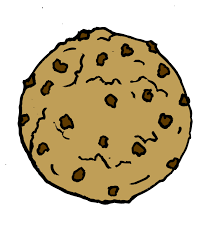
In the atomic model nicknamed the "plum pudding" model, what do the plums represent?
the nucleus
the atom
the electrons
the positive material
Which scientist is responsible for first stating that all the atoms of a particular element are identical but are different from the atoms of all other elements?
Dalton
Thomson
Aristotle
Democritus
Proust
Who discovered the proton?
Chadwick
Goldstein
Rutherford
Thomson
Anode rays/ positive rays were discovered by a German scientist in 1886 in a discharge tube; The name of the scientist and the cathode used was:
Eugene Goldstein, a solid disc placed opposite to anode
William Crooke, a perforated disc placed opposite to anode
Eugene Goldstein, a perforated disc placed opposite to anode
William Crooke, a solid disc placed opposite to anode

