
 Worksheets
Unit 3 Population & Migration
Total questions: 193
Worksheet time: 2hrs 7mins
Which of the following is the term for people moving into a new country and causing a population increase?
Immigration
Emigration
Urbanization
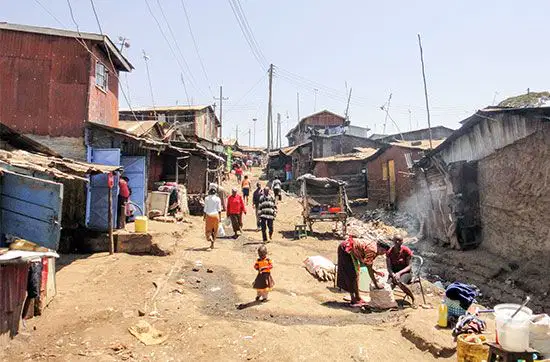
What word describes a poor country with an economy based on farming?
standard of living
dependent population
less developed nation
more developed nation
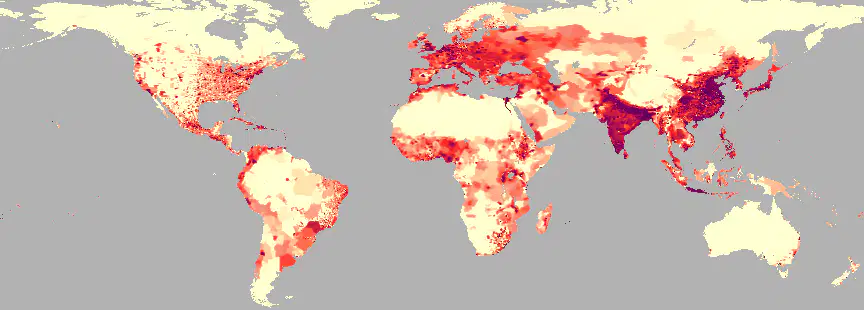
This map is a population density map of the planet. What spatial pattern in represented in this map?
population density is greater in the northern part of Africa
population density is equal in all regions of the planet
natural and physical characteristics of a region influence where people live
people are evenly distributed across the planet

What word describes the very young and very old people in a population who depend on others for things like food, shelter, money, etc.?
more developed nation
dependent population
less developed nation
independent population
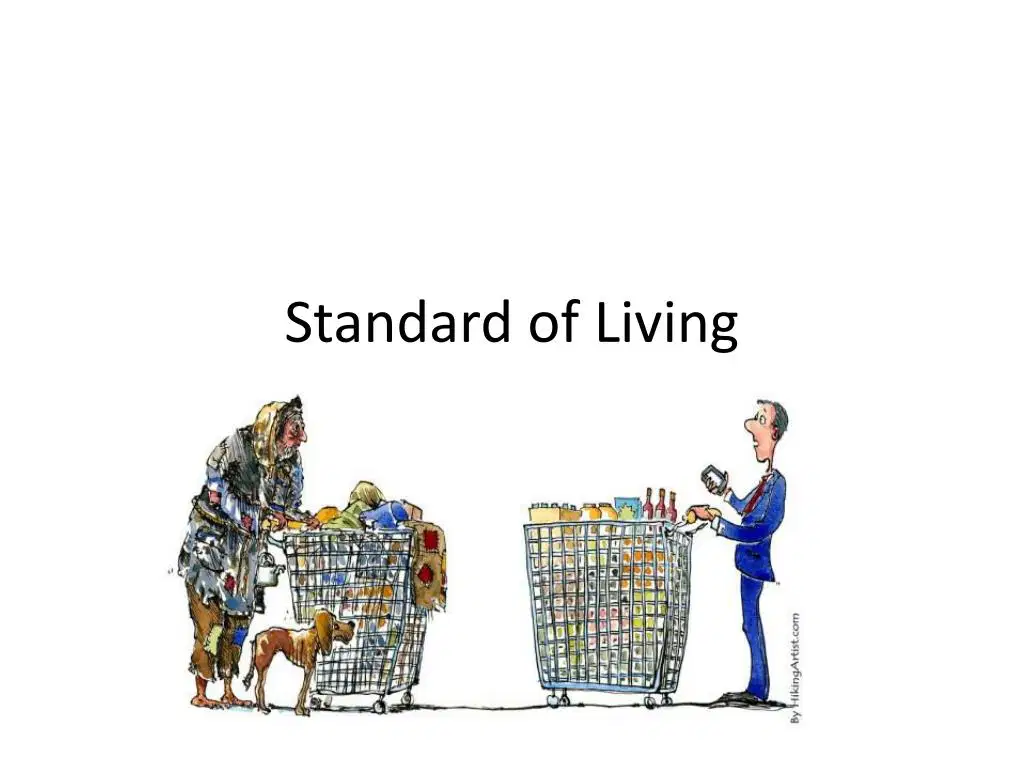
What word describes the level of money and things available to a person, group, or society?
standard of living
dependent population
more developed nation
less developed nation
What word describes a pyramid shaped diagram that shows the age and gender of a population?
population map
standard of living
population pyramid
pyramid graph

What word describes a country with a well developed economy?
more developed nation
less developed nation
independent population
dependent population

Is this country Developed or Developing?
Developed
Developing

How would you describe the population of this country?
They are experiencing rapid population growth
They are experiencing stable population growth
They are experiencing negative population growth

How would you describe the population of this country?
They are experiencing stable population growth
They are experiencing rapid population growth
They are experiencing negative population growth

Which of the following is an example of a pull factor?
War
Drought
Freedom

For somewhere to be considered a "megacity" how many citizens must live there?
Over 10 million
Over 50 million
Over 100 million
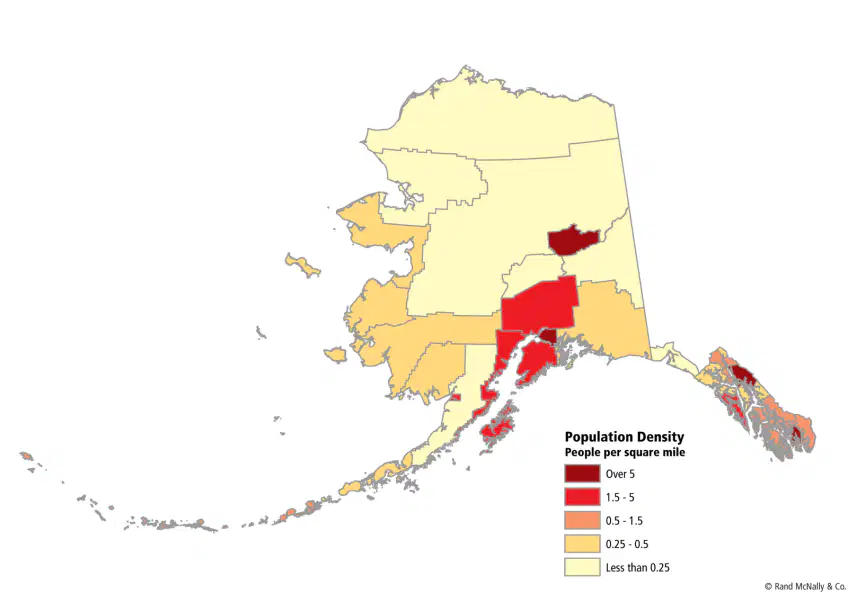
This is a population density map if the Alaska. What spatial pattern is represented in the map?
People are evenly distributed across Alaska
Natural features/landforms influence where people live
Population density is equal everywhere in Alaska
Population density is great in north Alaska

Which is not a push factor?
Peace
Crime
Loss of job
War

Which is not a pull factor?
Good schools
Job opportunities
Peace
Crime

Population divided by Area =
population density
population growth

Birth rates tend to be higher in
less developed countries
developed countries
industrialized countries

Social scientists who study changes in population, migration, and population patterns are called...
archeologists
demographers
geographers
cartographers

Population is evenly distributed across the world.
true
false

Why is it important to consider the dependent population above the age of 65 when thinking about the future?
These people will need jobs in the future.
These people will need increased medical services and perhaps homes to live in
These people will have children in the future.
So governments can think about growth rate.

The study of population patterns is called...
geography
migration
population study
demography

The natural features or unique characteristics of a region often influence where people choose to live.
true
false

The movement of groups of people is influenced by......
push and pull factors
birth rate
death rate
demography
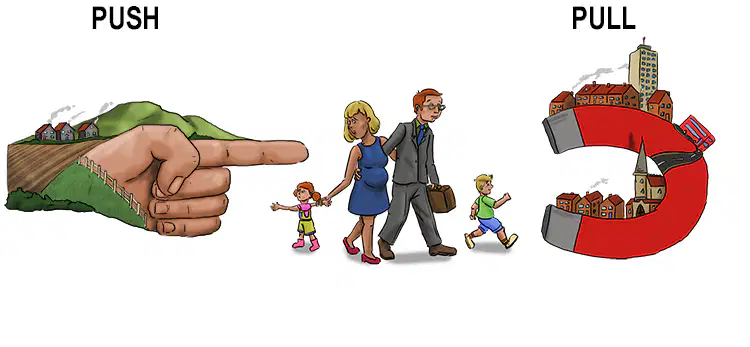
Push factors for migration include.....
war/conflict
crime/lack of job opportunities
poor performing school district
weather/climate
all of the above

When someone leaves their home/original country to take up residence or live in another country, that is called (best answer)......
immigration
emigration
migration
urbanization

When groups of people are forced to leave their country to escape war/conflict, persecution, repeated natural disasters, they are called...
homeless
refugees
immigrants
displaced

The dark purple area of north eastern Africa in densely populated. Why is this?
Water resouces have no effect on population distribution.
This area is surrounded by the Nile River and therefore people can use water to irrigate crops .
Areas with fewer natural resources have high population densities.
Urban areas have less growth than rural areas.

When you move from one country to another, you are an _________.
immigrant
foreign
obstacle
athlete

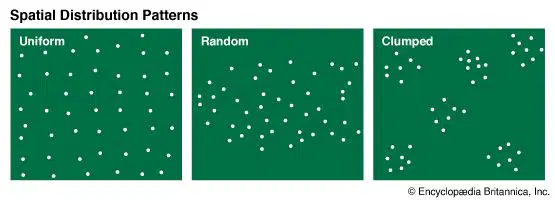
People are evenly distributed across the planet.
true
false

Do natural features influence where people live on the planet?
true
false

Why is it important for demographers to know how many people below the age of 15 are in a country? Choose the BEST answer.
these people are dependents
the birth rate is highest in developing countries
these are the people that will grow up and have children
these are the people who can work

What type of population growth is represented in the diagram?
rapid
slow
negative
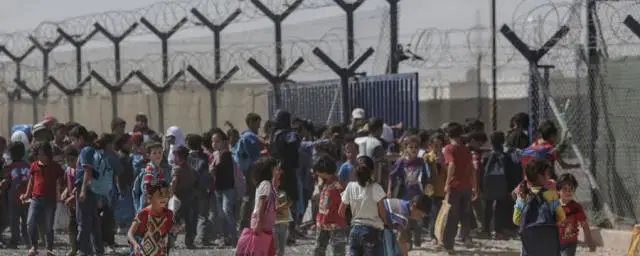
Thousands of refugees leave Syria becuase of bombings. What is this an example of?
Pull factors due to business
Pull factors due to religion
Push factors because of conflict
Push factors due to hunger

What type of population growth is represented in the figure?
steady
rapid
negative
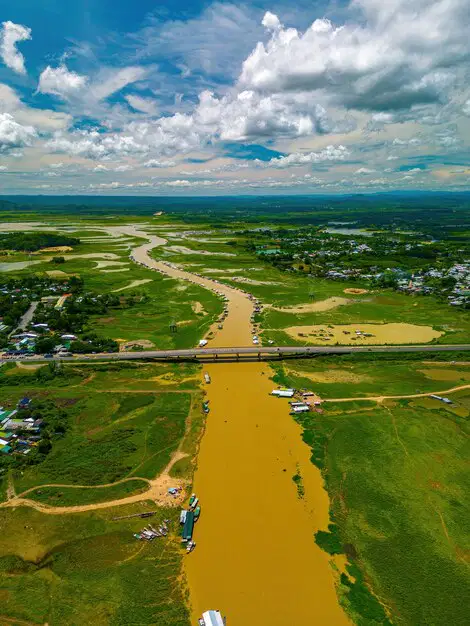
When an area is empty with very few people per km², it is said to be...
Isolated
Densely populated
Sparsely populated
Minimally populated

What type of population growth is represented in the population pyramid?
slow/stable
negative
rapid
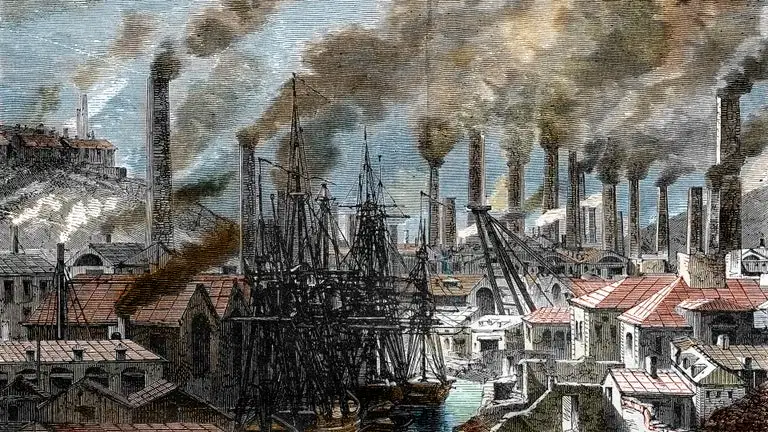
What historical event changed the population distribution of the planet at an accelerated pace which therefore increased urbanization?
Industrial Revolution
Agricultural Revolution
American Revolution
French Revolution
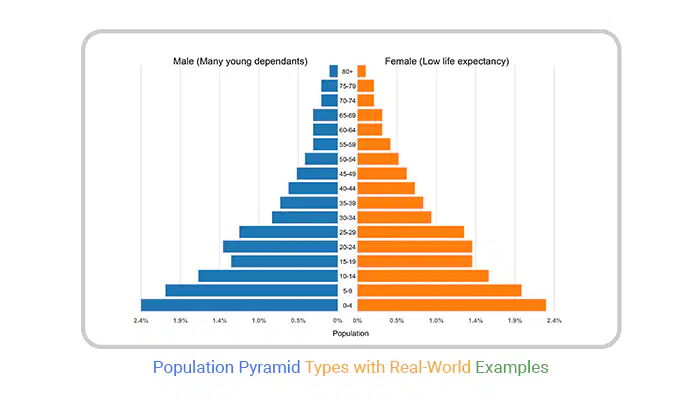
Why is it important for a government to consider the people who are under the age of 15?
These children will grow up and have children.
The dependent children under will needs lots of health care soon.
The infant mortality rate will decrease.

Looking at the population pyramid, is this country developed or developing?
developed
developing

What is one reason why people would NOT move to urban areas?
Factors such as better education
Factors like war
Factors like better transportation
Factors like a new job
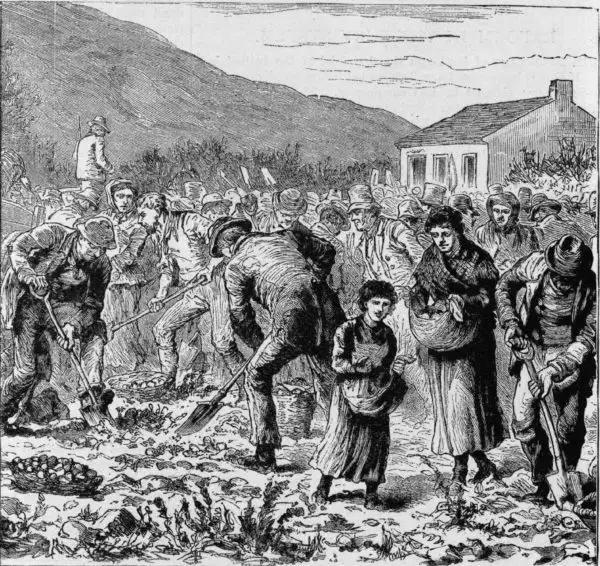
The Potato Famine of Ireland is an example of ....
Push factors due to religion.
Push factors due to lack of food.
Pull factors due to economic opportunities.
Pull factors due to business opportunites.

Urbanization provides opportunitues for people , yet at the same time, causes challenges. Which of the below choices are challenges? Choose two.
jobs
crime
better education
lack of resources

Why is population distribution UNEVEN around the world?

What trend do you notice about megacities?
Most megacities are in Africa.
Megacities will slow down their growth and size.
Megacities will grow larger as the population increases.
Megacities are in a declining population growth cycle.

Net migration is.......
number of births - number of deaths
the birth rate minus the death rate expressed as a percentage
the net effect of immigration and
emigration on an area’s population in a
given time period
the movement of
people

The area around this river has a dense population. Why is the population so dense in this area?
Cities have less growth than rural areas.
Irrigation makes an area more desirable.
Areas with fewer resources have high population densities.
People need food to live so they tend to live where there are farming opportunties.

Why do developed countries have a high net migration?
(a)
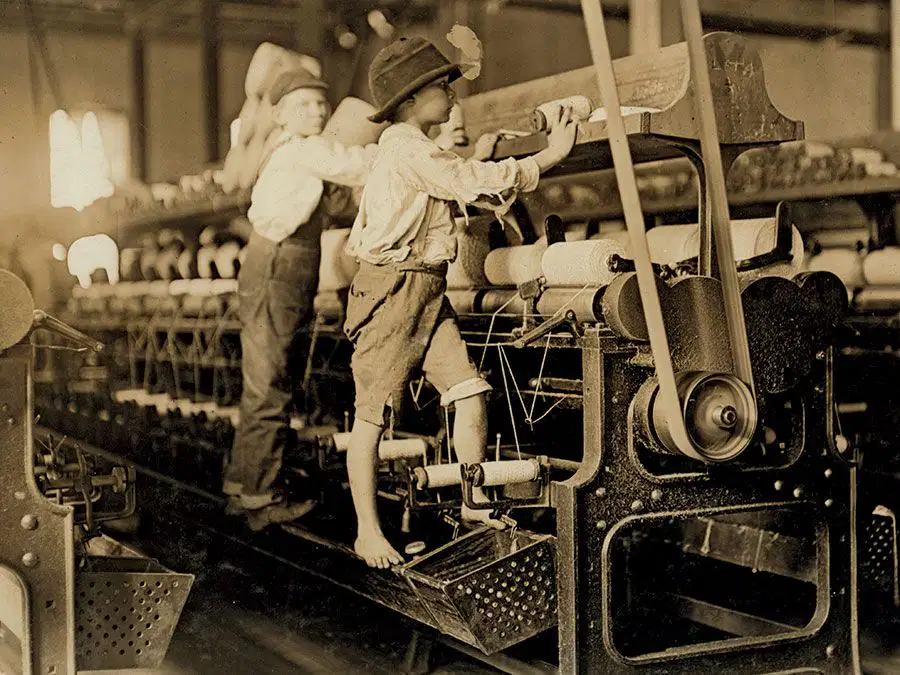
What was the Industrial Revolution?
people migrated out of Africa all over the planet b/c of lack of food, space, and/or climate
people stopped making things by hand and started making them by machine
an era of time in the 1700's
engineering skyrocketed
How many populate a megacity?
1,000,000
1,000,000,000
100,000,000
10.000,000

When an area is crowded with many people per km², it is said to be...
Isolated
Densely populated
Sparsely populated
Minimally populated
Which historical event increased urbanization and changed the state of the enviroment?
agricultural revolution
industrial revolution
WW2
The Great Irish Potato Famine

Why do devloped countries have a higher net migration?
people want to live where there is a consistent supply of food
people want to live in countries with schools and medical facilities and jobs
poeple want to live where it is safe and there are no wars
all of the above
40% of the world's population live...
...within 100km of the coast
...live in Asia
...live in the Americas
...in the northern hemisphere

Which continent is more densely populated, Africa or Europe?
Africa
Europe
Asia
South America

How many continents have at least one city with 16 million or more people?
one
two
three
four

Why does this population pyramid look so odd?
The country has a stable population growth.
The UAE had way more girls than boys.
The UAE had a war and many soldiers passed away.
The UAE had immigrants come into the country to work.

Which region of the United States has fewer people per square mile, the Northeast or the Southwest?
Northeast
Southwest
North
West

Negative factors of a place can lead to a ..... population
sparse
dense
densely
sparsely

Toyko is a megacity. Which of the following are opportunities of migrating to an urban area? Choose 2.
air pollution
jobs
better education
less resources
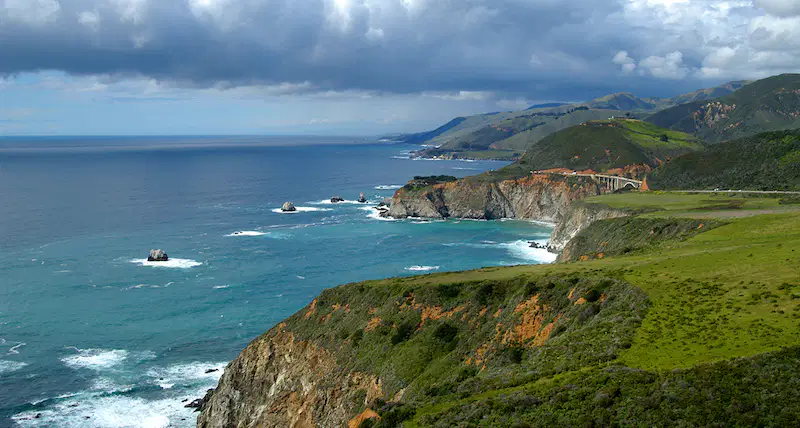
From the following options choose the positive factors that describe a dense population.....
Pleasant climate
Poor soils
Very hot
Open grassland

From the following words choose the negative factors for a sparse population (you can choose more than one)
Gentle slopes
Dense forest
Lowland
Few raw materials

According to the picture, how does this place look ????
Densely populated
Sparsely populated


The distribution of population around the world is (a) ,.
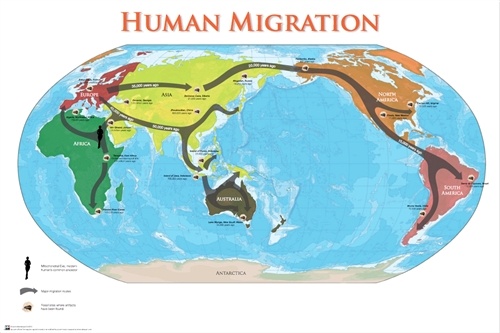
How are people spread out on the earth's surface?
evenly
unevenly
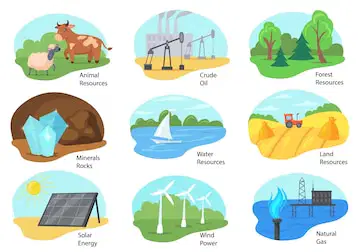
What resources do people compete for in a country (check all that apply)?
food
housing
jobs
land
water

What means you're moving from country to country? (Choose the best answer)


Concerning the locations of megacities....
Are they....
located inalnd?
having negative population growth?
all in temperate zones?
having good resrouces and access to coastlines?


Which country has the least number of immigrants according to the table?
United States
Ukraine
India
Spain

To go from one country, region, or place to another.
Migration
Settlement
Persecution
Universal
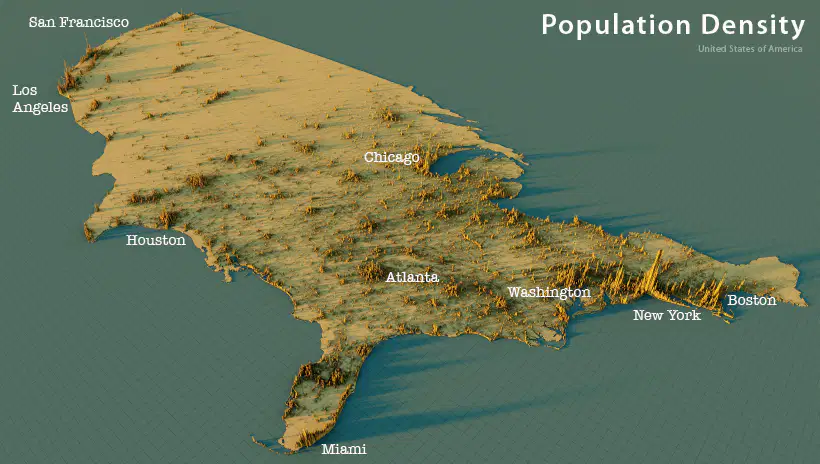
Look at this map and compare the population density of different cities.
Atlanta, Georgia is equally as dense as New York.
New York is the densely populated and Minot, North Dakota is sparsely populated.
The whole state of Florida is densely populated.
76.
Answer the questions below after watching the video
How will urban cities need to change in the future? Choose 2.
Make sure there is enough sanitation
Make sure there is not enough food.
Make sure there is enough educational services
Make sure to damage the land.

According to the map, which area of Africa has the highest population growth?
Western Africa
Southern Africa
Northern and eastern Africa
Central and southern Africa

Why do developed countries have higher net migrations?

Using this population density graph, compare Singapore to Japan.
Singapore is more sparsely populated than Japan.
Singapore is more densely populated than Japan.
The net effect of immigration and emigration on an areas population in a given time period is called...
migration
net migration

Based on the photo, were these refugee migrating due to push or pull factors?

Define geography.
The natural features of the land's surface.
The pattern of weather conditions in a certain area over a long period of time.
Includes all living and nonliving things that affect life in an area.
The study of the earth's physical and cultural features.
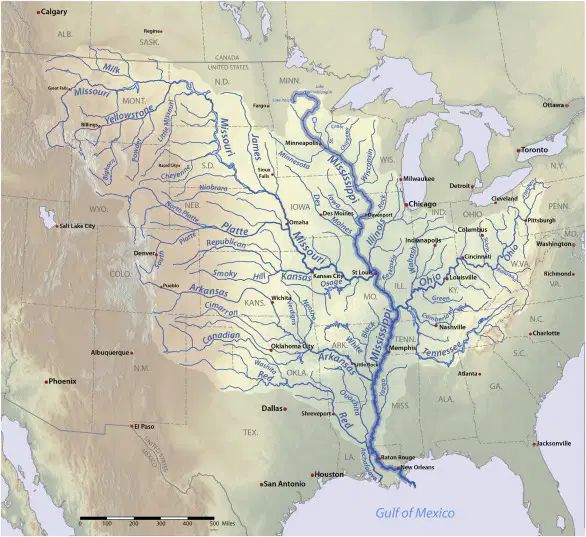
Population density tends to be high around the Mississippi River. Why is this?
People want less farming opportunites.
People want to live by rivers to grow food and use the natural resource.
Areas with few natural resources have high densities.
Everyone wants to live off the grid.
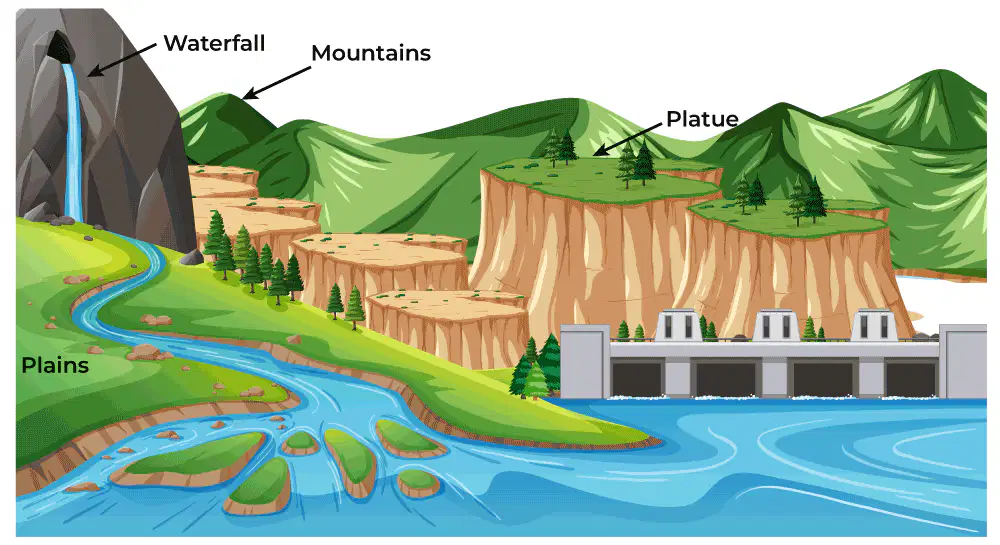
Define landforms.
The natural features of the land's surface.
The pattern of weather conditions in a certain area over a long period of time.
Includes all living and nonliving things that affect life in an area.
The study of earth's physical and cultural features.

The study of Earth, its people, places, and environments
Geology
Geography
Geneaology
Anthropology

What spatial pattern is represented on this map?
Political boundaries
People are evenly distributed across the USA
Natural features or characteristics of a region influence where people live
Population density is greater on the west coast

The average weather of a place over a period of time.
Climate
Region
Seasons

A natural feature found on land
Landscape
Environment
Resources
Landforms
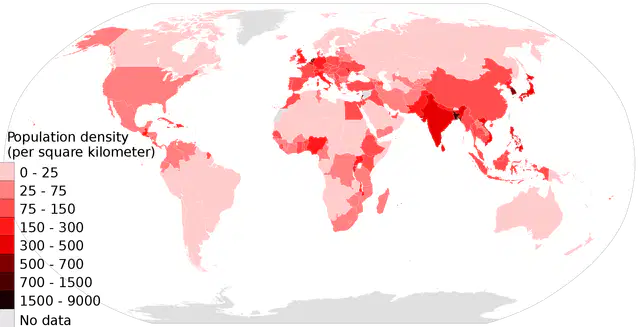
Why is population distribution uneven all over the world?
Population distribution is due to natural hazards.
Population distribution is influenced by climate, geography, history, being close to water, and jobs.

Refugees leave thier country for what reasons??
natural disaster(s)
famine
war
all of the above

Lines on a globe that run North to South; also called meridians.
Latitude
Longitude

Starting point for measuring Longitude; starting point is 0 degrees.
Equator
Prime Meridian

The net effect of immigration and emigration on a population is called.....
demography
immigration
emigration
net migration

Why do developed countries have a higher net migration?

Humans are most likely to live near....
Mountains
Deserts
Bodies of Water
Snow
Population Distribution:
the number of people who live in cities
the number of people who live in the countryside
explains how people got from one place to another
the number of people in a specific area

Which is the BEST explanation for the geographic location of the these ancient Egyptian cities and towns?
They were all located along the Nile for military defense purposes.
They were all located along the Nile for better trade with the Romans.
They were all located along the Nile because of irrigation, trade, and transportation.
They were all located along the Nile to limit contact with and to stay away from other nations.

What is the BEST explanation for the population density in the red circled area?
The region is home to trade, industry, and adequate precipitation.
The region is dominated by a desert climate.
The region has suffered civil wars and invasions.
The region was once the central focus of the trans-Atlantic slave trade.
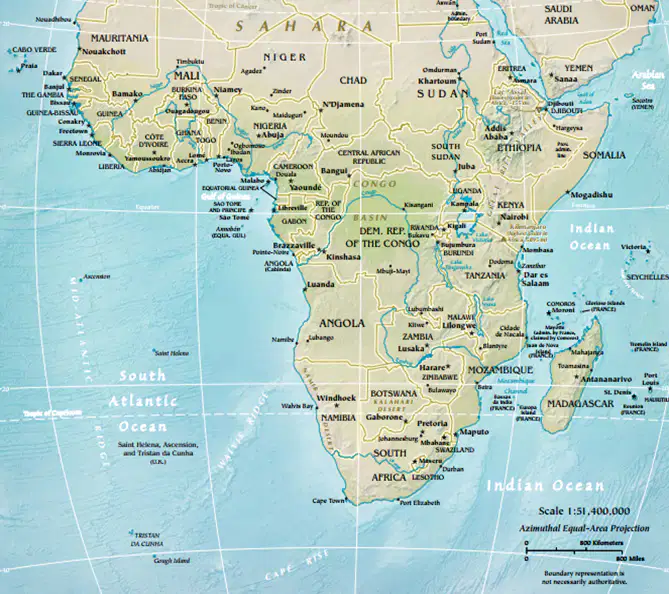
Why are the majority of Sub-Saharan African cities located along major rivers and the coast?
they grew up because of internal tribal wars
they needed access to bodies of water for trade
the interior is filled with desert and mountains
the exterior is filled with desert and mountains

Why is it important to know the percent of people that are below the ago of 15?
Knowing the percent of people below the age of 15 helps in understanding how many people will soon have their own children
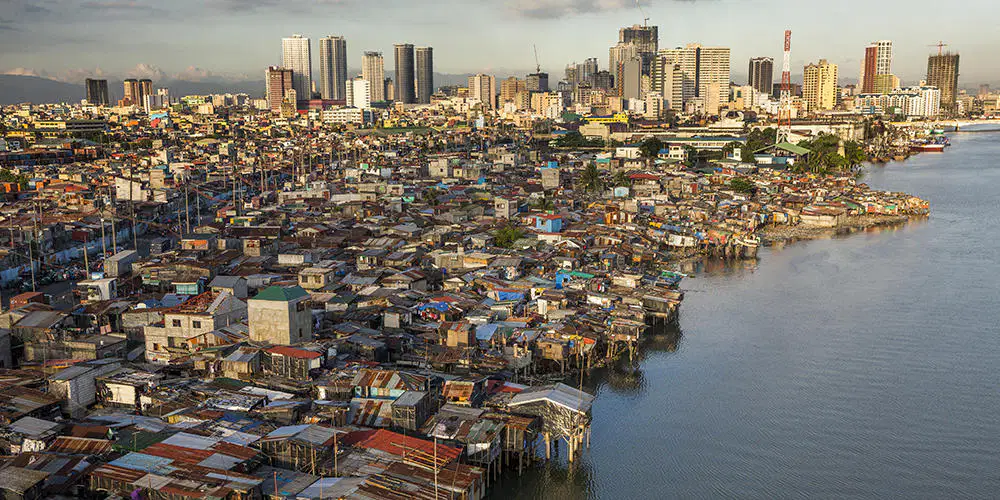
The movement of people from rural to urban areas
migration
population
country living
urbanization
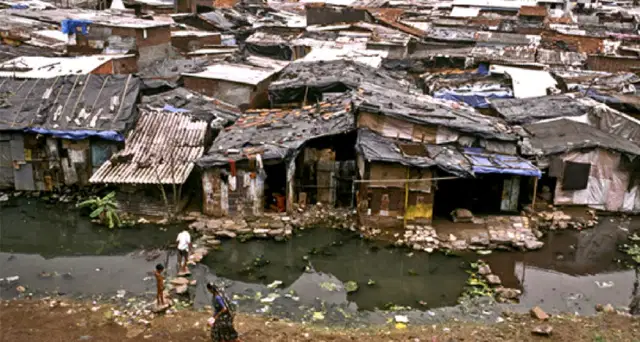
What were the negative pushes on urbanizations
Increased mobility
Overcrowding
New communication devices
Increased Population
Poverty
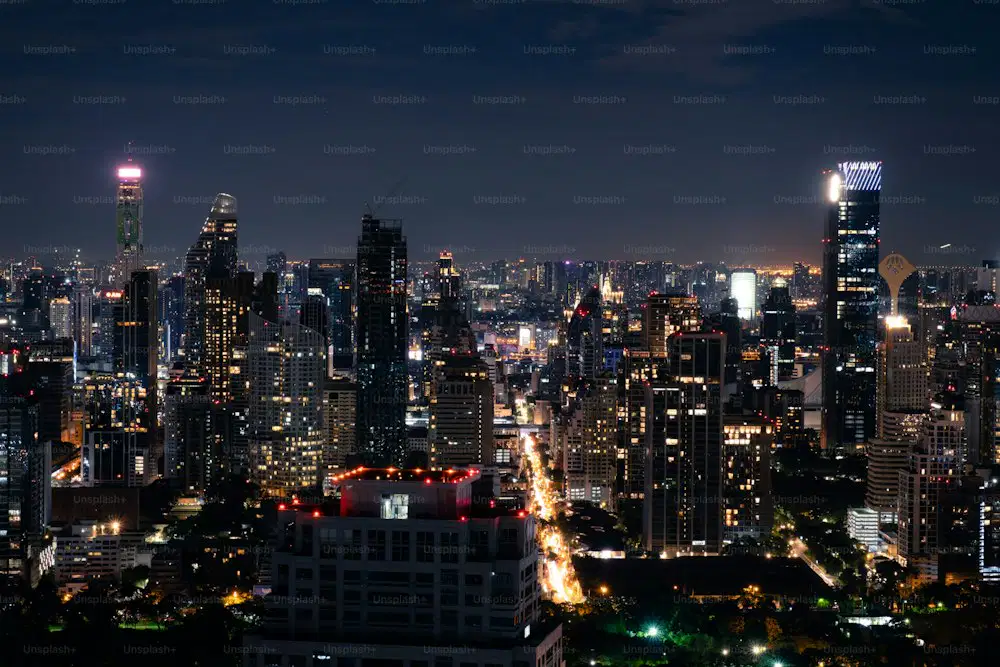
True or False
A Megacity has more than 10 million people
False
True
Which of the following phases of human history was characterized by the growth of cities and factories, and new inventions?
Agricultural revolution
Industrial revolution
French revolution
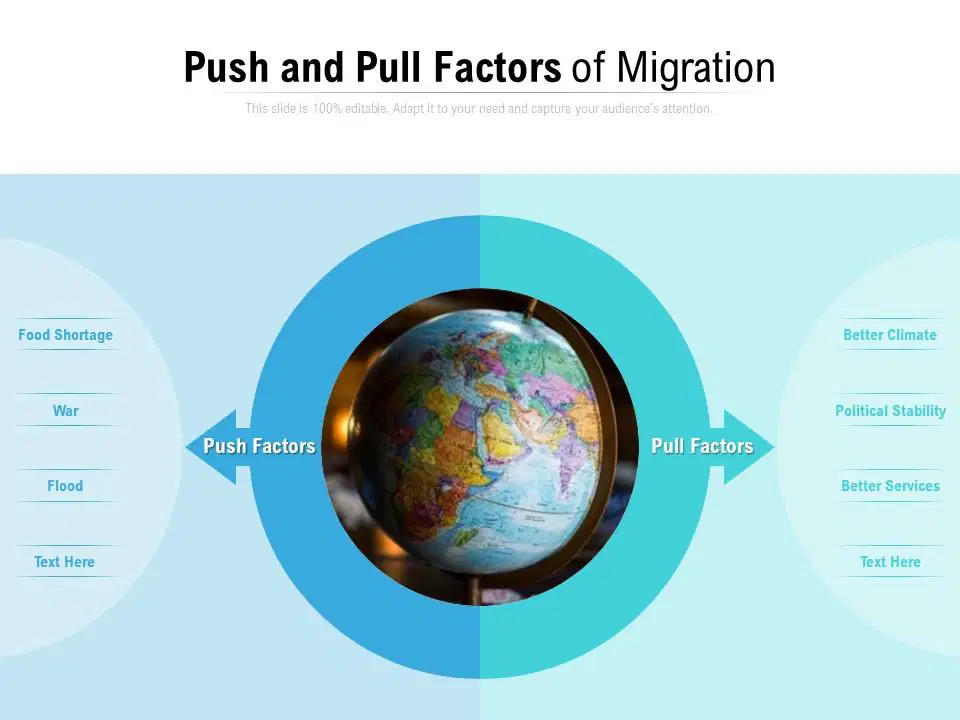
Which of the following is an example of a Pull Factor?
War
Drought
Freedom
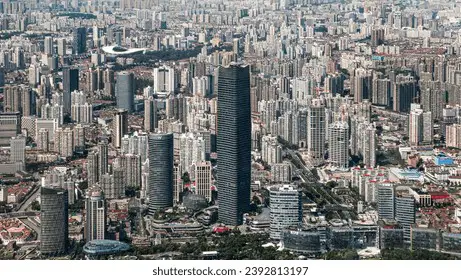
For somewhere to be considered a "megacity" how many citizens must live there?
Over 10 million
Over 50 million
Over 100 million

What is the most commonly believed theory to explain how humans migrated into North and South America?
Atlantic coastal theory
Pacific coastal theory
Land bridge theory

An area that is crowded with densely packed buildings
Urban
Suburban
Rural
Downtown

Immigration is....
Leaving your home country
Moving into a new country

A small town or farming area with little population
Urban
Suburban
Rural
How people are spread out on earth
Population pyramids
Population
Population density
Population distribution
The difference (as in a math difference) between the births and deaths
Population increase
Natural increase
Immigration
Family planning

Strong government, stable economy, good healthcare
Developed country
In transition country
Developing country

Using this population density graph, compare the population of Alpine and El Dorado. (These are NOT real countries!)
Alpine is sparsely populated and so is El Dorado.
Alpine is densely populated while El Dorado is sparsely populated.
Alpine is sparsely populated and El Dorado is densely populated.
Alpine and is densely populated and so is El Dorado.
A city with more than 10 million people
Urban area
Downtown
Megacity

The world is becoming more
urban
suburban
rural
If Ms. Engel moved from the U.S. to Japan, the AMERICANS would refer to her as:
If Mrs. Larson migrated from the U.S. to Germany, the GERMANS would refer to her as:

The largest flow of migrants is from more developed to less developed countries.
True
False
What is it called when people leave a country to become a permanent or semi-permanent resident in another country?
Immigration
Wandering
Migrant
Emigration
International migration is likely to increase in the 21st century.
True
False
What is an "emigrant"?
Someone who is LEAVING a country.
Someone who is going IN to a new country.
Calculating net migrations
Birth rates minus death rates
The net effect of immigration and emigration on an areas population in a given time is called....
Population
Emigration
Immigration
Net migration
What is an "immigrant"?
Someone who is LEAVING a country.
Someone who is going IN to a new country.
Calculating net migrations
Birth rates minus death rates
Which type of country has more net migration?
Developed
Developing
Less developed
How is net migration calculated?
Births minus deaths
Immigrant rate minus emigrant rate
Birth rates minus death rates
Total population density
What is the name for the difference between birth and death rate?
Migration
Population
Growth
Natural Increase
One reason more than 81% of the Earth's population lives in Asia, Europe, and North America
These continents have large deserts.
These continents have sources of fresh water.
These continents have little rainfall.
These continents are covered by rain forests.
Population distribution is uneven because people want to live in areas that have
rich resources
dry grasslands
extreme climates
thick rain forests
To explain the reasons for immigration, demographers use
compasses
the "push-pull" theory
birthrates and death rates
life expectancies

What helps you understand the information on the map?
key
legend
symbols
all answers are correct

The patterns on the map relate to the areas what?
rural area
life expectancy
population distribution
population density

Name two countries that have areas with population densities of under one person per square mile
Myanmar, and Nepal
Afghanistan, and Pakistan
Bangladesh, and Sri Lanka
United States, and Canada
Which of the following describes a pull factor affecting migration to some of the more developed countries?
Loss of factory jobs
Severe famine
The rise of an authoritarian regime
Universal health care
Religious persecution
A refugee is
A person who leaves their country, state or region because they fear for their personal safety.
A member of a band
Someone who moves from one part of their country to another.
Why do people leave their countries and become refugees?
war
natural disaster
climate change
persecution or oppression
A country can decide whether to take in refugees or not take them in.
True
False
While some people feel refugees and migrants are a burden on the country that takes them in, others see such benefits as
filling important jobs others don't want to do
bringing fresh new ideas to their new country
work for free
What challenges do refugees face in camps?
Crowded living conditions
Shortages of food and water
Lack of access to education
All of the above
What is the purpose of refugee camps?
To provide food and shelter
To protect refugees
To provide medical care
All of the above

Which country in the continent of Europe has the most negative population growth?
The southern area of Europe.
The western area of Europe.
The northern area of Europe.
The eastern area of Europe.



wealth


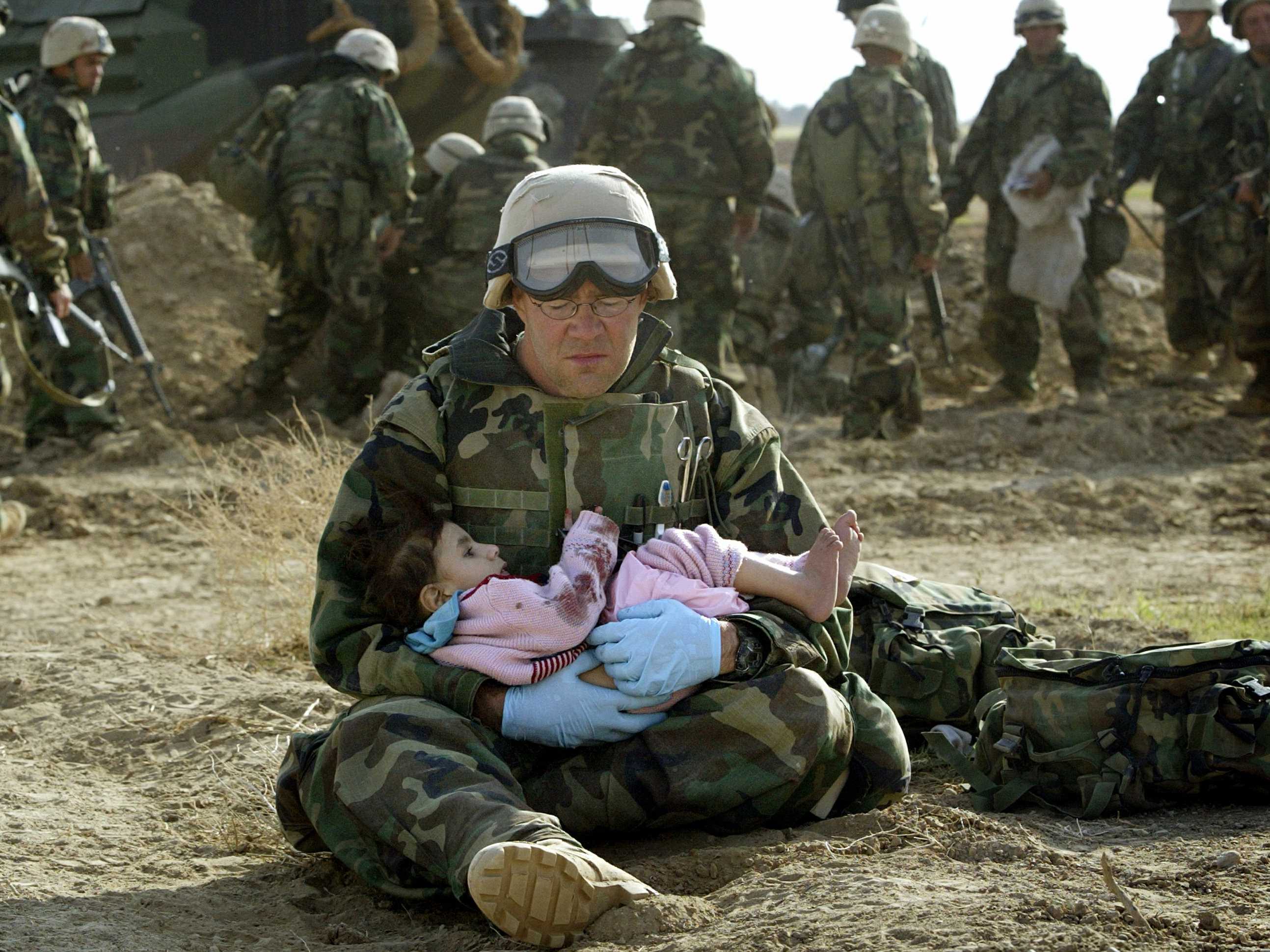
War is a .....
pull factor
push factor


Immigration is
returning to your home after an extended vacation
leaving your home for an extended vacation
permanently moving to another country
belief that native-born Americans are superior to others
Hope for a new life and new opportunities
Push
Pull
In 1846 the Potato Famine left many people in Ireland without food.
Push
Pull
Many Jewish people left Russia in 1882 because of hatred toward them.
Push
Pull
To escape poverty and disease
Push
Pull
“We must flee our country because of the fighting and persecution.”
Push
Pull
Freedom of Religion
Push
Pull

Poor living conditions with limited access to sanitation and electricity.
Negative consequence
Positive effect

Better paying jobs
positive effect
negative consequence

Water pollution from poor sewage disposal
Positive effect
Negative consequence
Longer life expectancy due to better health care and access to hospitals
Positive impact of urbanization
Negative effect of urbanization

Cities absorbing more sunlight, and the temperature increases.
Negative impact
Positive impact
Which of the following was NOT an effect of Urbanization?
Contaminated drinking water
Overcrowded living situations
More sewage and waste that the cities could not handle
Children could not go to school
Immigration
Jobs
Railroads
Farming
True or False
A Megacity has more than 10 million people
False
True
What do people of today have that Ancient people did not have? (Differences)
Better Schools
Crime
More Space
Education
Jobs
Canada geese fly south in fall to find food. In spring they fly back up north to have their young. What type of behavior is this?
defense
hibernation
courtship
migration
What is the primary reason for urbanization in developing countries?
Industrial growth and job opportunities
Better healthcare facilities
Increased agricultural opportunities
Lower cost of living
Which factor is most likely to lead to a decrease in birth rates in a country?
Improved education for women
Higher infant mortality rates
Increased agricultural productivity
More rural living conditions
What is a common characteristic of countries with high population densities?
Abundant natural resources
Limited access to technology
High levels of urbanization
Low literacy rates
What location would have the highest population density?
Which continent has the highest population? (a)

