Wayground logo

Free Printable Worksheets

Font size

S
M
L
XL
Worksheets

Nuclear Energy

Total questions: 26

Worksheet time: 25mins

Name
Class
Date
1.
Nuclear power plants rely on which of the following reactions to generate energy?
a)
Fusion
b)
Half-life
c)
Fission
d)
Fusion or fission
2.
Where does fusion occur naturally?
a)
Underwater
b)
All around us
c)
In the radioactive waste
d)
On the sun
3.
This is an example of...
a)
Fission  reaction
b)
Fusion reaction
c)
Decomposition reaction
d)
Combustion
4.
Which of the following best describes the process of nuclear fission? 
a)
Splitting an atom's nucleus apart 
b)
Separating an atom's electrons from its nucleus 
c)
Fusing two atomic nuclei together 
d)
Splitting an atom's electrons in half 
5.
Nuclear power uses ____ for fuel.
a)
steel
b)
coal
c)
uranium
d)
hydrogen
6.
Takes two small nuclei and combines them into a larger nucleus
a)
fission
b)
fusion
7.
The splitting of a nucleus into smaller nuclei is
a)
fusion
b)
fission
c)
half-life
d)
gamma radiation
8.
What is an advantage  of nuclear energy?
a)
radioactive waste
b)
no air pollution
c)
we will never run out
d)
it is the safest way to make energy
9.
All of the following are problems of nuclear energy except ---
a)
storage of radioactive fuel
b)
pollution
c)
security concerns
d)
natural disasters (tsunamis, earthquakes, etc.)
10.
Which type of power plant is this?
a)
Coal Power Plant
b)
Nuclear Power Plant
c)
Solar Power Plant
d)
Hydroelectric Power Plant
11.
What are the two main elements (gases) that make up the Sun? 
a)
Carbon and Helium
b)
Iron and Hydrogen
c)
Hydrogen and Helium
d)
Carbon and Hydrogen 
12.
What was the name of the area in 1986 in which there was a nuclear explosion at a power plant?
a)
Chernobyl
b)
Fukushima
c)
New York City
d)
Three Mile Island
13.

What country is Chernobyl in?

a)

Ukraine

b)

Russia

c)

France

d)

Australia

14.

After a nuclear explosion, stuff travels for miles and is harmful to people's health. What is this stuff called?

a)

Nuclear wind

b)

Induction

c)

Radiation

d)

Nuclear toxin

15.
What is a chain reaction?
a)
When electrons travel are emitted causing electricity
b)
When a nuclear fission reaction occurs, the protons emitted can strike other nuclei in the sample, and cause them to split
c)
When a nuclear fission reaction occurs, the neutrons emitted can strike other nuclei in the sample, and cause them to split
d)
When a nuclear fission reaction occurs, the electrons emitted can strike other nuclei in the sample, and cause them to split
16.

Which nuclear process if shown in the picture?

a)

fission chain reaction

b)

fusion reaction

c)

combustion

d)

radioactive decay

17.

What is the major drawback to fission power?

a)

Radioactive Waste

b)

CO2 Emissions

c)

SO2 Emissions

d)

Low energy output

18.

Which particles are found in the nucleus of an atom?

a)

proton

b)

electron

c)

neutron

19.

Which is faster, a critical process or a supercritical process?

a)

critical

b)

supercritical

c)

the speeds are equal

20.

Which of the following pairs would be called isotopes?

a)

uranium-235 and plutonium-239

b)

hydrogen-1 and helium-4

c)

uranium-235 and uranium-238

d)

sulfur-32 and phosphorus-32

21.
What is an isotope? 
a)
A charged atom
b)
An atom with different amounts of neutrons
c)
An atom with different amounts of protons
d)
A neutral atom
22.
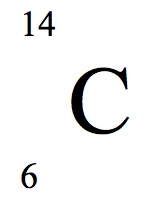
The photo above shows the isotopic notation for which isotope?
a)
Carbon 12
b)
Carbon 13
c)
Carbon 14
d)
Carbon 15
23.
Different isotopes have...
a)
different masses
b)
different atomic numbers
c)
different electrons
d)
different protons
24.
How many neutrons does a Sodium 24 isotope have?
a)
12
b)
13
c)
14
d)
15
25.
How many neutrons does an Oxygen-19 isotope have?
a)
19
b)
8
c)
11
d)
10
26.
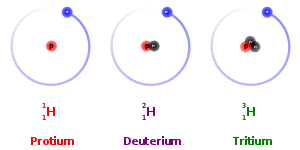
What is the atomic mass of the pictured isotope?
a)
2
b)
4
c)
6
d)
Hehehehe