Wayground logo

Free Printable Worksheets

Font size

S
M
L
XL
Worksheets

COL Review

Total questions: 21

Worksheet time: 28mins

Name
Class
Date
1.
What is the most basic unit of life?
a)
cell
b)
tissue
c)
organ
d)
organ system
2.

Maintaining a stable internal

environment is called

a)

homeostasis

b)

equilibrium

c)

balance

d)

evenness

3.

When you step out into the cold, your body shivers in order to keep its temperature at 98.6F. Which characteristic of life does this represent?

a)

All living things use energy

b)

All living things contain cells

c)

All living things maintain homeostasis

d)

All living things grow

4.

A baby song bird hatches from its egg with both parent songbirds watching. Which characteristic of life does this represent?

a)

All living things reproduce

b)

All living things maintain homeostasis

c)

All living things use energy

d)

All living things grow

5.

A camel has eyelashes that work to keep the dust and sand out of its eyes. Which characteristic of life does this represent?

a)

All living things adapt to their environment

b)

All living things grow

c)

All living things have cells

d)

All living things use energy

6.
A worm turns away from light is an example of a worm
a)
reproducing
b)
doing cellular respiration
c)
having cells
d)
responding to its environment
7.

Which of the following is an example of homeostasis?

a)

adapting to your environment

b)

maintaining an appropriate respiration rate

c)

the sum of all of your chemical reactions

d)

being composed of more than one cell

8.

Which of the following is a response?

a)

a flashlight shined into the eye

b)

a rubber band popping your hand

c)

your pupils constricting when exposed to bright light

d)

blood glucose levels drop significantly

9.

Over three years, Tim's height has increased from 5'4" to 5'11". Which characteristic of life does this represent?

a)

All living things contain cells

b)

All living things maintain homeostasis

c)

All living things use energy

d)

All living things grow

10.
When a baby kitten becomes an adult cat, this is an example of...
a)
energy metabolism
b)
growth and development
c)
response to stimuli
d)
having cells
11.
How can you tell this plant is a living thing?
a)
It doesn't move.
b)
It is made up of different parts.
c)
It responds to a change in its environment.
d)
It needs shelter.
12.
Before a soccer game Charlie always eats a big dinner. Which characteristic of life does this face best describe? 
a)
living things use energy
b)
living things reproduce
c)
living things grow and develop
d)
living things are based on a universal genetic code
13.
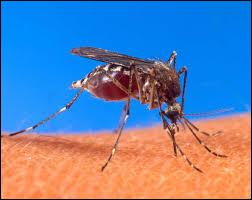
Mosquito  belongs to what kingdom?
a)
Animal Kingdom
b)
Plant Kingdom
c)
Fungi Kingdom
d)
Protista Kingdom
14.
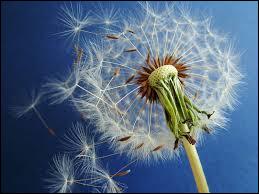
Dandelion, What kingdom does it belongs to?
a)
Plant Kingdom
b)
Animal Kingdom
c)
Fungi Kingdom
d)
Protista Kingdom
15.
Organisms in this smallest taxonomic group share many characteristics.
a)
domain
b)
kingdom
c)
species
d)
class
16.
Which organisms are most closely related?
a)
Equus caballas (Horse) & Equus burchellii (Zebra)
b)
Cyanea artica (Jellyfish) &
Ctenodiscus crispatus (Mud Starfish)
c)
Naja naja (cobra) & Glycine max (soya bean)
d)
Ophiocomina nigra (black brittle star) & Brassica nigra (black mustard)
17.
The science of describing, classifying, and naming living things is called:
a)
Geology
b)
Biology
c)
Taxonomy
d)
Chemistry
18.
The 8 levels of classification, broadest to most specific.
a)
Domain, Genus, Family, Order, Class, Phylum, Kingdom, Species
b)
Domain, Species, Kingdom, Genus, Phylum, Family, Class, Order
c)
Domain, Kingdom, Phylum, Class, Order, Family, Genus, Species
d)
Order, Kingdom, Species, Domain, Phylum, Family, Class, Genus
19.

Which 2 organisms would be able to reproduce and produce fertile offspring?

a)

2 organisms in the same class

b)

2 organisms in the same family

c)

2 organisms in the same genus

d)

2 organisms in the same species

20.
What is this?
Panthera tigris
a)
genus and species
b)
genus
c)
species
d)
phylum
21.

The scientific name given to an organism is based on binominal nomenclature.

a)

True

b)

False