wayground logo

Free Printable Worksheets

NEW

Font size

S
M
L
XL
Worksheets

8th Grade - Topic 2 - Chemical Reactions

Total questions: 27

Worksheet time: 50mins

Name
Class
Date
1.
Which is the name of the kind of solid substance formed in this figure?  
a)

gas

b)
precipitate
c)

catalyst

d)

color change

2.
An element plus additional element reacts to form one product is an example of which type of chemical reaction? 
a)
combustion
b)
decomposition 
c)
synthesis 
d)
single replacement
3.
Provides evidence that a chemical reaction has occurred. 
a)

dissolving sugar in water

b)
melting
c)
formation of a gas
d)
bending
4.

A substance that is formed as the result of a chemical reaction is a __________________

a)

Product

b)

Reactant

c)

Precipitate

d)

Chemical

5.

Which of the following is an example of a chemical change?

a)

water freezes to form ice

b)

sugar dissolves in water

c)

gasoline burns in a car engine

d)

a piece of metal expands when it is heated

6.
What does the Law of Conservation of Mass state?
a)
Matter cannot be gained or lost in a chemical reaction.
b)
Matter can only be lost in a chemical reaction.
c)
Matter can only be gained in a chemical reaction.
d)
Matter can be gained and lost in a chemical reaction. 
7.
a chemical reaction that releases energy by light or heat
a)
Endothermic Reaction
b)
Exothermic Reaction
c)
Diffusion
d)
Fission
8.
A catalyst works by
a)
changing the order of the reaction
b)
increasing the temperature
c)
lowering the activation energy
d)
making the activated complex
9.

the products have more energy than the reactants at the end of the reaction

a)

Endothermic

b)

Exotermic

c)

Exothermic

d)

Entrothermic

10.
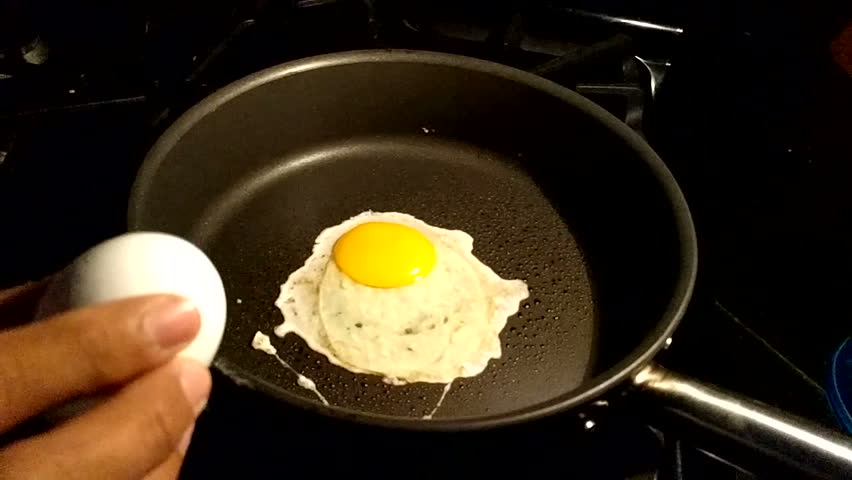
Baking bread and cooking an egg are examples of....?
a)
Endothermic processes
b)
Exothermic processess
c)
None of these 
11.
What is a solvent?
a)
The substance that does the dissolving in a solution.
b)
The substance that is being dissolved in a solution.
c)
The mixing of different substances.
d)
The process in which neutral molecules lose or gain electrons
12.

CLOUDS IN THE SKY that scatter light

a)

Suspension

b)

Colloid

c)

Solution

13.

What kind of mixture is shown in the picture?

a)

Homogeneous

b)

Heterogeneous

14.
In a chemical equation, is it true that -
a)
the reactant side and product side can have different numbers of atoms for each element
b)
there can be different elements on the reactant side and the product side
c)
an element or compound must be accompanied by a phase change
d)
the coefficients indicate the number of molecules of each reactant used and the number of molecules of each product made
15.
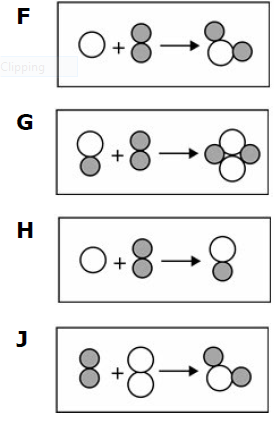
Which of the following models best demonstrates a balanced chemical equation?
a)
F
b)
G
c)
H
d)
J
16.
The reactants are on the left side of the chemical equation.
a)
True
b)
False
17.

How many atoms in all are in a molecule of serotonin?

C10H12N2O

a)
22
b)
24
c)
25
d)
4
18.
Which of the following equations demonstrates an actual chemical reaction that forms a new substance? (HINT: it must follow the Law of Conservation of Mass)
a)
A
b)
B
c)
C
d)
D
19.
Is this balanced?
2HgO → 2Hg + O2
a)
Yes
b)
No
20.
If a chemical reaction is EXOTHERMIC, the temperature would....
a)
Stay the same
b)
Increase
c)
Decrease
21.
Is photosynthesis an exothermic or endothermic reaction?
a)
Endothermic
b)
Exothermic
22.

Hydrochloric acid reacts faster with powdered zinc than with an equal mass of zinc strips because the greater surface area of the powdered zinc

a)

decreases the frequency of particle collisions

b)

decreases the activation energy of the reaction

c)

increases the frequency of particle collisions

d)

increases the activation energy of the reaction

23.

Water is the universal ____.

a)

solute

b)

solvent

c)

solution

24.
Which of the following is not a compound?
a)
HCl
b)
Cl
c)
NaCl
d)
CO2
25.
When materials combine to form a mixture, they
a)
A. keep their original properties.
b)
B. react to form a new substance with new properties.
c)
C. combine in a specific ratio.
d)
D. always change their physical state.
26.
You can make a solution more concentrated by adding more __________.
a)
solute
b)
solvent
c)
water
27.
At approximately what temperature does the solubility of sodium chloride, NaCl, match the solubility of potassium dichromate, K2Cr2O7?
a)
60 ºC
b)
30 ºC
c)
50 ºC
d)
83 ºC