
Font size
 Worksheets
#53b - Diffusion and Osmosis
Total questions: 13
Worksheet time: 7mins
How do the particles move in diffusion?
From a region of low concentration to a region of high concentration
From a region of high concentration to a region of low concentration
From a region of low concentration to a region of low concentration
From a region of high concentration to a region of high concentration
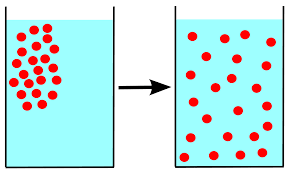
The picture below is an example of _________________.
osmosis
isotonic
diffusion
active transport
How long does diffusion last?
Until the concentration of particles in the system is equal
Until a region in the system has a smaller concentration of particles than the other
Until a region in the system has a greater concentration of particles than the other
Until the particles disappear from the system

All organisms are made of
organs
tissues
cells
Our cells get rid of carbon dioxide multiple times a minute. Which body process takes in oxygen and puts out carbon dioxide?


You can learn a lot from a GIF.
ATP energy is a product of cellular respiration. This GIF doesn't show that (boo! 😒 ). Check the other products (things that are made) during cellular respiration. There are two:
oxygen
carbon dioxide
glucose (sugar)
water
sunlight
Which organelle converts energy found in food into a form that cells can use?
Mitochondria
Ribosomes
Nucleus
Nucleolus
Where do plants get the energy for photosynthesis to take place?
nutrients in the soil
the sun
chlorophyll
bee pollination

