
 Worksheets
TR, Woodrow Wilson, and Progressivism
Total questions: 40
Worksheet time: 19mins

Theodore Roosevelt was Vice President for which President?
William Howard Taft
William McKinley
Grover Cleveland
John Hay
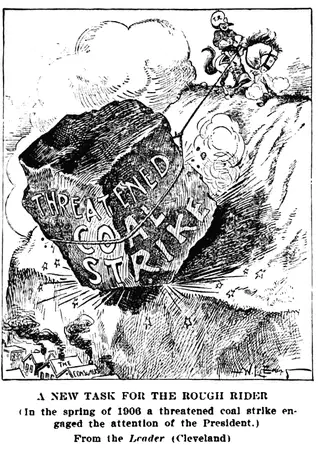
Which event set a precedent for federal intervention in labor disputes on the side of labor?
Homestead Strike
Pure Food and Drug Act
Pullman Strike
United Mine Worker Strike in Pennsylvania

The Federal Reserve system was created in 1913 in order to:
Provide a stable national banking system
Regulate the amount of currency in the U.S.
Give Americans the chance to be rich
Both provide a stable national banking system and regulate the amount of currency

1. Which of the following was a nickname for the Progressive Party in 1912?
Workingman’s Party
Grand Old Party
Bull Moose Party
Whig Party

One of the targets of the Food and Drug Act was:
Standard Oil
American Tobacco
Swift Meats
Carnegie Steel

The Clayton Anti-Trust act was significant because it:
legalized the tactics that unions could use in labor conflicts
gave unions legal standing
strengthened the Sherman Anti-Trust Act
All of these are correct

What political party was Roosevelt part of during his two terms as president?
Republican
Democrat
Bull Moose
Socialist

What ailment plagued Teddy Roosevelt as a child?
Cancer
Asthma
Diabetes
Polio

Shortly after his mother and wife died,
Roosevelt moved to his ranch in the Dakotas for two years.
Rosevelt went big game hunting in Africa
Roosevelt moved to New York.
Roosevelt moved into the White House.

What item or place was named after Teddy Roosevelt?
Ted talks
Yellowstone National park
Teddy Bear
Rose bush

His first presidential platform was the "Square Deal"
Wilson
Debs
Taft
Roosevelt
Which of the following won the election of 1912 because of a split within the Republican Party?
William McKinley
Theodore Roosevelt
William Howard Taft
Woodrow Wilson
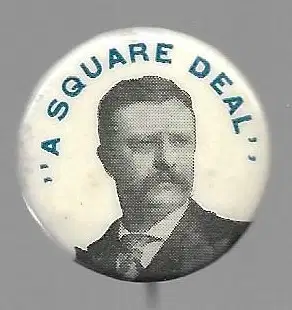
What was the Square Deal?
Taft's promise to favor laborers in different trade agreements and to attack corporations
Roosevelt's promise to the American people to to be fair to all; it was comprised of controlling corporations, protecting consumers, and conservationism
Wilson's program of American conservation that promised to conserve America's wilderness
Roosevelt's agreement with foreign countries that he would prevent countries in the Eastern Hemisphere from getting involved in their affairs
Which of the following best explains what happened in the election of 1912?
It is rare for an American political party to retain control of the executive branch for three consecutive terms. The American people wanted change and voted in a new political party.
William Jennings Bryan and Woodrow Wilson both ran for president as Democrats and split the Democratic vote, allowing for a third party candidate to be elected president for the first time in American history
William Howard Taft and Theodore Roosevelt, a former Republican, split the "Republican" vote, allowing for the Democrat, Woodrow Wilson, to be elected president
Eugene V. Debs was elected president as Wilson, Taft, and Roosevelt all split the Republican vote
Progressives want to use the power of the (a) to fix perceived problems.

Which tariff substantially lowered taxes on imports for the first time since the Civil War?
Payne-Aldrich tariff
Morrill tariff
Hawley-Smoot tariff
Underwood tariff

This amendment created an income tax:
16
17
18
20

Wilson did something that no President since Jefferson had done. He
called a special session of Congress
spoke personally in front of Congress
asked for a declaration of war
told Americans about a world war
The Square Deal by ____________________________ helped protect the food and drug industries as well as the environment.
Franklin D. Roosevelt
Woodrow Wilson
Theodore Roosevelt
Upton Sinclair
The goal of the National Parks Service was to-
provide the American people with a source of entertainment
develop a tourism industry from national parks to benefit the nation’s economy
search for underground oil and minerals to generate revenue on federal property
preserve the natural landscape of our nation
Which phrase describes a major goal of the Federal Reserve Act of 1913?
To provide stability for the national economy by creating a central banking system
To raise money for wartime needs by selling government bonds
To give incentives for U.S. entrepreneurs by offering low-interest loans
To encourage competition in U.S. industry by breaking up corporate trusts
What did Roosevelt emphasize to project American power?
The Army
The Air Force
The Navy
The Marines
What is the significance of the time period 1901-1909 in the document?
It marks the era of Dollar Diplomacy
It marks the era of Big Stick Diplomacy
It marks the era of Moral Diplomacy
It marks the era of Isolationist Diplomacy
What did the Roosevelt Corollary assert about the U.S.?
Right to cultural exchange
Right to economic dominance
Right to intervene in Latin American countries
Right to educational reform.

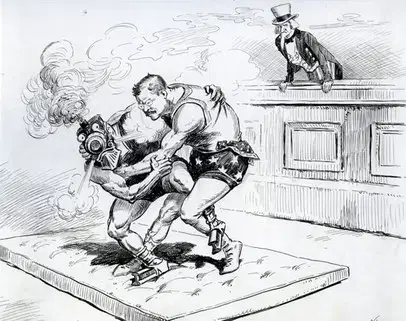
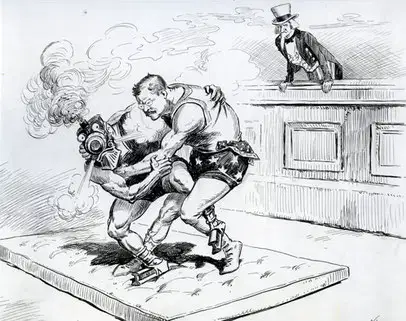
In the cartoon above, President Theodore Roosevelt is depicted doing which of the following?
Standing guard to protect big business
Enforcing the Sherman Anti-Trust Act
Leading a government take-over of large industries
Putting an end to industries that might harm the environment


Theodore Roosevelt's policy of backing up diplomatic relations with military force
Moral Diplomacy
Dollar Diplomacy
Open Door Policy
Big Stick Diplomacy

An artificial waterway built to provide a shortcut between the Atlantic and Pacific Oceans, opened in in 1914
Roosevelt Corollary
Panama Canal
Yellow Journalism
Open Door Policy
The _____________________ is characterized by the growth of industries and large businesses who used unfair practices.
Gilded Age
Progressive Era
Early American Era
Great Depression
President Theodore Roosevelt saw himself as a president that would-
lead America to become the wealthiest nation in the history of the world
unite the country politically to accomplish our goal of global influence
spread democratic ideal to foreign countries
help pass laws that favored the average American
Roosevelt and congress wanted to be protected from eating unsanitary food and therefore passed the -
Pure Food and Drug Act
Meat Consumption Act
Farmers of America Act
Produce Act
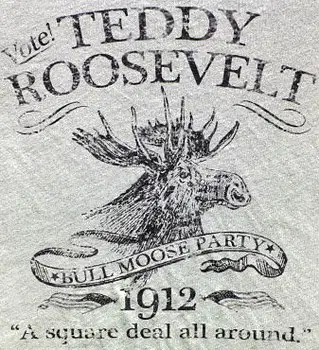
Why did Theodore Roosevelt run for president as a member of the Bull Moose Party?
He was tired of the old political system under the Democrats and Republicans
There was a limit to how many times you could be president under a certain political party
He wasn’t satisfied with the work of William Taft as president
The Bull Moose Party paid Roosevelt two million dollars to be their presidential nominee
Theodore Roosevelt increased the power of the Interstate Commerce Commission to regulate railroads.


Roosevelt supported the new Food and Drug Act to protect the public’s health.
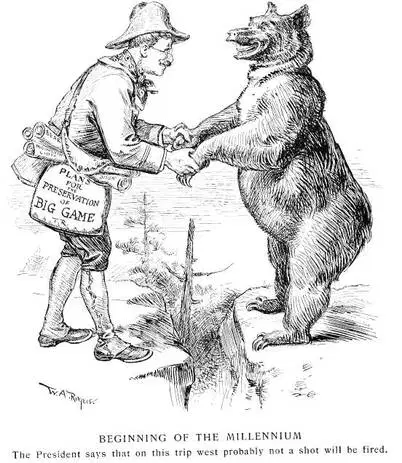

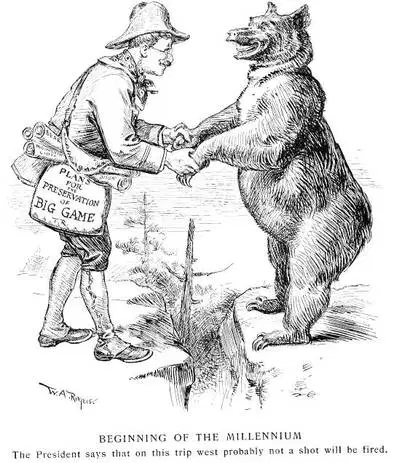
Roosevelt set aside millions of acres of national forests and parks to protect the nation’s resources.

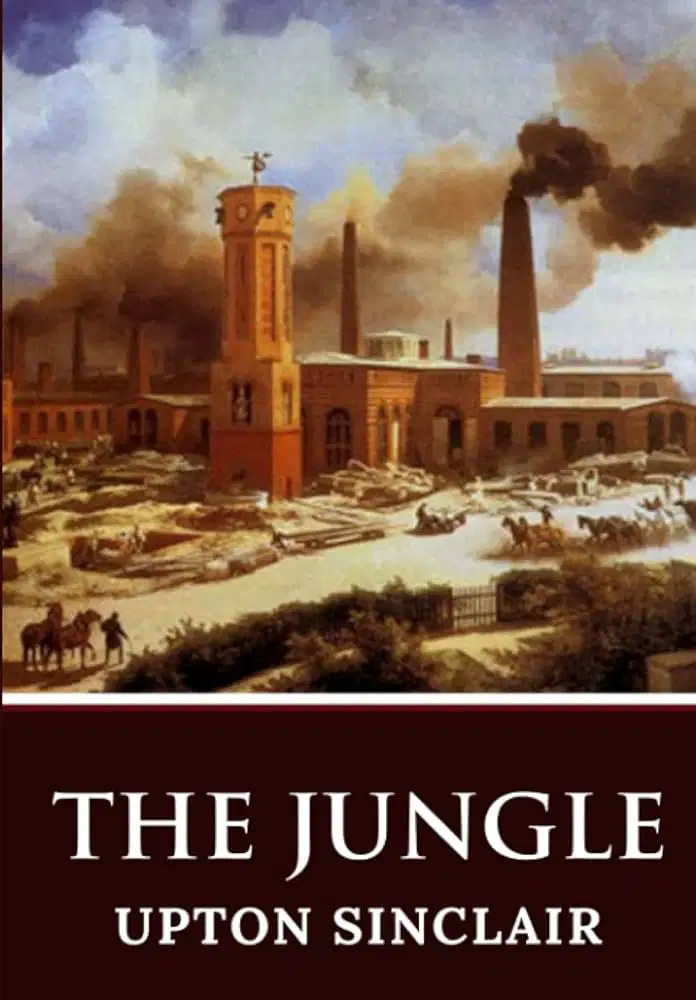
How did the publication of Upton Sinclair’s The Jungle contribute to a change in the relationship between government and business?
Federal troops were mobilized to break strikes by labor unions.
Government regulations requiring the inspection of food products were implemented.
Congress created a regulatory agency to audit railroads.
Laws were enacted that banned private companies from discriminating when hiring.
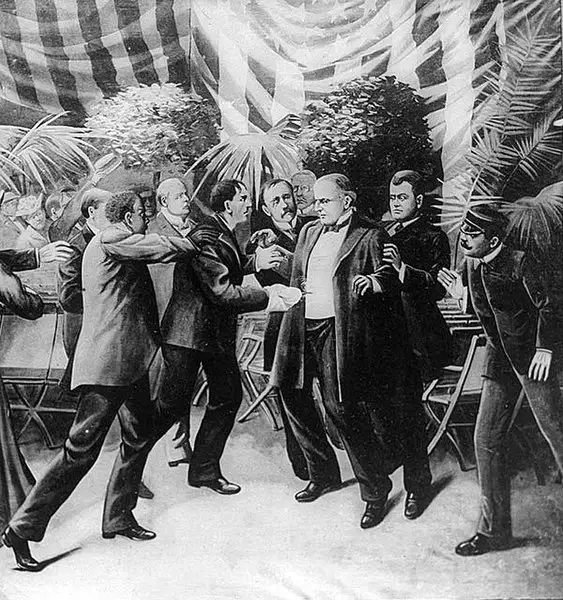
Who assasinated William McKinley, causing Theodore Roosevelt to become President?
John Wilkes Booth
Lee Harvey Oswald
Charles Guiteau
Leon Czolgosz

In what city did McKinley's assassination take place?
Detroit, Michigan
Buffalo, NY
Milwaukee, WI
Washington, D.C.

