
 Worksheets
2.7 Heat Exchangers
Total questions: 12
Worksheet time: 7mins
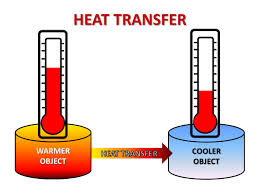
Heat exchanger is an equipment used to transfer heat from the hot fluid to cold fluid.
True
False
A _________ exchanger usually consists of a cylindrical shell containing a heating or cooling fluid.
plate-and-shell
shell-and-tube
In almost all heating applications, the control valve of a heat exchanger should have a fail-closed action so that the process does not overheat if the valve fails.
true
false
What is often included in a heat exchanger as a way to ensure that the condensate is clean and can be reused?
a steam trap
a condensate strainer
a safety valve
a thermostat
Steam at a pressure of 0.0 psig (14.7 psia) has a temperature of ____ degrees F.
100
212
248
298
A heat exchanger is used to transfer heat from a ____.
higher pressure fluid to a lower pressure fluid
lower pressure fluid to a higher pressure fluid
hotter fluid to a colder fluid
colder fluid to a hotter fluid
What is the auxiliary device commonly used with boilers to transfer heat from a hotter fluid to a cooler fluid?
heat exchanger
blowdown tank
blowdown attemperator
steam trap
Which of the following is a common type of heat exchanger used to heat the air in a building space?
radiator
furnace
air duct
boiler
One of the most common types of heat exchangers in industrial applications is a _____ heat exchanger.
waste energy
pillow plate
shell-and-tube
plate-and-tube

This figure represents what type of heat exchanger?
Double pipe
Plate and frame
Shell and tube
Compact

Four metal blocks were arranged as shown in the illustration.
Heat will move in which of the following ways?
Sample 3 to Sample 4
Sample 4 to Sample 1
Sample 2 to Sample 3
Sample 2 to Sample 1

