
NEW
Font size
 Worksheets
Finals Review
Total questions: 50
Worksheet time: 28mins
The Selective Service Act allowed President Wilson to do which of the following?
Select which countries to support during the war
Draft soldiers
Provide Services to low-income families
Community Service Initiative
Why did European leaders reject President Wilson’s 14 Point plan for Peace
It was too harsh on Germany
It was unnecessary to have a League of Nations
It should guarantee world peace
It did not punish Germany enough
Many senators who opposed United States membership in the League of Nations argued that joining the League would:
lead to future military conflicts in Europe.
reduce freedom of the seas.
end the country’s free-trade policy.
endanger the nation’s military preparedness.
Which of the following contributed to the literal upward and outward growth of the cities?
Settlement houses and telephones
Philanthropy and benevolent societies
Skyscrapers and Mass Transit
Airplanes and cars
A term used to describe an attempt to absorb one culture into another culture in an effort to unify the country.
Melting Pot
Nativism
Salad Bowl
Xenophobia
This person made his money in the steel industry and was a philanthropist.
Cornelius Vanderbilt
Thomas Edison
John D. Rockefeller
Andrew Carnegie
One factor that furthered industrialization in the United States between 1865 and 1900 was the
development of the airplane
building of the Transcontinental RR
mass production of automobiles
widespread use of steamboats
Why was a monopoly not good for society?
Eliminated competition, raised prices
Monopolies reduced prices
It was good for society
economic competition was promoted
Roosevelt’s trust-busting policies were aimed at doing what?
Reduce competition
Save the nation’s banks
Eliminate Monopolies
End strikes by labor unions
The term muckraker was used in the early 1900s to describe writers who:
supported limits on government regulation
exposed abuses in American society
wanted the United States to ban all immigration
promoted racial integration efforts
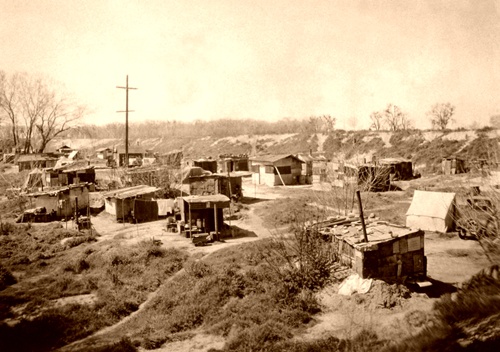
What was President Herbert Hoover's response to the Great Depression?
He believed "rugged individualism" would solve the economy
He created mass welfare
He increased infrastructure to create jobs
He violated his policy of laissez-faire

Young women in the 1920s who declared their independence from traditional values were known as __________________________.
Fads
Actresses
Flappers
Beyonce

Nativism influenced the outcome of which 1920s court case?
Brown v. Board of Education
Roe v. Wade
Sacco and Vanzetti
Plessy v. Ferguson
What did the 19th amendment do?
Freed slaves
Ended Prohibition
Gave women the right to vote
Banned the sale of consumption of alcohol
Who was the President during World War 1?
Abraham Lincoln
Woodrow Wilson
Teddy Roosevelt
Franklin Roosevelt
9) WWI began when Austria-Hungary declared war on Serbia one month after:
Serbia tried to take more of Austria-Hungary's land.
Serbia burned their flag.
Archduke Ferdinand and his wife were killed.
The Lusitania was sunk.
What was the Zimmermann Note?
The German policy of attacking all ships entering or leaving Britain
Wilson's speech concerning why the U.S should enter WWI
A proposal by Germany that Mexico attack the US in return for territory
a note left behind by a Serbian Nationalist in Austria-Hungary
What was the name of the new style of warfare during World War I?
tank warfare
plane warfare
train warfare
trench warfare
Which treaty ended World War I?
The Treaty of Paris
The Treaty of Versailles
The Armistice of Versailles
The Treaty of World Powers


People who OPPOSED imperialism said that annexing the Philippines would:
Help the U.S. Military
Bring Democracy to the Philippines
Discourage U.S. industry
Violate the United States Core Democratic Values outlined in the Constitution
In 1898, President McKinley asked Congress to declare war on Spain:
To protect U.S. investments in Cuba
To avenge the sinking of the USS Maine
To help Cuba win its independence from Spain
All Choices listed
What trial represented nativism in the United States?
Scopes Trial
Sacco & Vanzetti
Brown v. Board
Plessy v. Ferguson
. In the United States, the Red Scare of 1919 was a period of
severe economic depression
widespread support for groups promoting international anarchy
great growth in art, literature, and music
fear of communism.
First man to fly solo over the Atlantic was:
A. Mitchell Palmer
Langston Hughes
Charles Lindbergh
Babe Ruth
The Great Depression was caused by all of the following, EXCEPT:
worldwide economic depression
debt/credit
overproduction of durable goods
equal distribution of wealth
What does buying a stock on margin mean
purchasing the stock outside the regular stock exchange.
buying the stock for someone else.
paying less than market price for a stock
buying stock on credit.
An upward trend of stock prices is called:
a bear market
bull market
margin buying
speculation
What was the bonus army?
Part of the Selective Service to protect President Hoover.
Soldiers who got paid bonus money for bravery in battles.
Soldiers who were drafted but never fought.
WWI Veterans who marched on Washington DC trying to collect money promised to them.
The first settlement house in Chicago, the Hull House, was founded by:
Florence Kelly
Francis Willard
Jane Addams
Mary Harris Jones
The early 1900s was nicknamed the “Gilded Age: because:
Historians believed that corruption no longer existed
Civil service reform began
Poverty was wiped out in the United States
Corruption lurked beneath the prosperous “golden” surface of society
Progressives supported the secret ballot reform because they wanted to:
Save money
Limit the power of politicians, political bosses and corruption
Making vote counting easier
Abuse the rights of immigrants
Oppositions to foreign countries in China led to the:
Big Stick Diplomacy
Open Door Policy
Teller Amendment
Boxer Rebellion

