wayground logo

Free Printable Worksheets

NEW

Font size

S
M
L
XL
Worksheets

Review quiz

Total questions: 65

Worksheet time: 1hrs 9mins

Name
Class
Date
1.

Cell wall and cell membrane are synonymous (they mean the same thing)

a)

True

b)

False

2.

Chloroplast is unique to which type of cell

a)

Animal

b)

Plant

c)

Fish

d)

Woolly Mammoth

3.
A new organism is produced from one parent organism.
a)
Sexual Reproduction
b)
Asexual Reproduction
4.
Mitosis is a type of ________________ reproduction.
a)
Sexual
b)
Asexual
5.
Results of cell division or mitosis include all of the following EXCEPT?
a)
growth
b)
repair damaged cells
c)
replace damaged cells
d)
dead cells
6.
How many daughter cells are produced in mitosis?
a)
1
b)
2
c)
4
d)
6
7.
Sexual reproduction requires _____ parents and asexual reproduction requires ___ parents
a)
1,1
b)
2,2
c)
2,1
d)
1,2 
8.

California blackworms, also known as mudworms, are able to break apart. Each body section that broke apart is able to become an identical new worm. What type of reproduction does this example represent?

a)

Sexual reproduction

b)

Asexual reproduction

9.

What are the "X" shaped things in the drawing.

a)

PMATs

b)

Chromosomes

c)

Ribosomes

d)

Telophase

10.

During what phase of Mitosis do the chromosomes line up in the Middle

a)

Metaphase

b)

Prophase

c)

Telophase

d)

Anaphase

11.

In which phase of Mitosis do the Chromosomes pull Apart

a)

Metaphase

b)

Prophase

c)

Anaphase

d)

Telophase

12.

What is the purpose of Mitosis?

a)

Growth of an organism and Repair of damaged tissue

b)

To help the body get rid of extra cells

c)

To increase the amount of classwork you have to do

d)

To get rid of the nucleus

13.
Cells spend 90% of their time in this stage of the cell cycle. This is the reason you would see most cells in this stage if viewed under a microscope.
a)
Prophase
b)
Metaphase
c)
Anaphase
d)
Interphase
14.
What do the cells look like at the end of mitosis?
a)
different from original cell
b)
similar to the original cell
c)
identical to the original cell
d)
none of these
15.
Before cells can divide, what must be copied?
a)
mitochondria
b)
cytoplasm
c)
DNA
d)
Cell Wall
16.

In which phase of Mitosis do the Chromosomes pull Apart

a)

Metaphase

b)

Prophase

c)

Anaphase

d)

Telophase

17.
What phase of mitosis is pictured?
a)
Metaphase
b)
Telophase
c)
Prophase
d)
Anaphase
18.
Which phase comes NEXT?
a)
prophase
b)
metaphase
c)
anaphase
d)
telophase
19.
Identify the stage of mitosis. 
a)
interphase
b)
prophase
c)
anaphase
d)
cytokinesis
20.

What phase of Mitosis is the picture showing?

a)

Interphase

b)

Prophase

c)

Telophase

d)

Metaphase

21.
What organelle controls and regulates cellular activity?
a)
Ribosome
b)
Nucleus
c)
Mitochondria
d)
Lysosome 
22.
The major function of ribosomes is to
a)
Make fats
b)
Synthesize protein
c)
Digest protein
d)
Make sugars
23.
The ____________ packages and processes material before it exports out of the cell.
a)
Vacuoles
b)
mitochondria
c)
Golgi apparatus 
d)
nucleus 
24.
What am I?       I'm a real "powerhouse". I break down glucose to make ATP.  
a)
Cell membrane 
b)
ribosome
c)
mitochondria
d)
lysosome
25.
which of the following transports material within the cell?
a)
Golgi apparatus 
b)
Endoplasmic reticulum
c)
cell wall 
d)
ribosomes
26.
What is the function of vacuoles?  
a)
make protein
b)
store genetic information
c)
storage of salt, H2O, food, and waste
d)
transports material outside the cell
27.

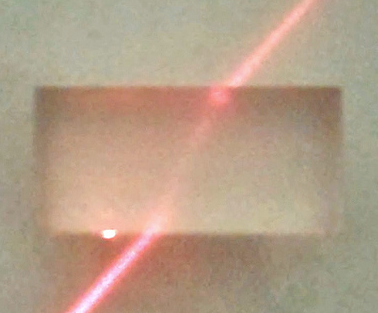
this is an example of

a)

refraction

b)

diffraction

c)

infraction

d)

reflection

28.

what type of mirror is this

a)

concave

b)

convex

c)

translucent

d)

plano

29.

what type of mirror is this

a)

concave

b)

convex

c)

translucent

d)

plano

30.

do we really see things upside down

a)

yes

b)

no, it's a myth

31.

The branch of physics that deals with light and vision is called

a)

Prisms

b)

Optics

c)

Wavelength

32.

what is the cause of the phenomenon?

a)

Summation of light

b)

Dispersion of light

c)

Scattering of light

d)

Reflection of light

33.

Light refracted __________ normal when move from less dense to more dense mediums.

a)

towards

b)

away from

34.

Total internal reflection only occurs when light tries to travels from a medium with a _____ index to ____ index

a)

lower to higher

b)

higher to lower

c)

same to same

35.

When light travels from a higher index (water) to a lower index (air), light will bend...

a)

toward the normal

b)

away from the normal

36.

The angle of incidence is equal to the angle of reflection

a)

Law of Reflection

b)

Law of Light

c)

Incidence Ray

d)

The Normal

37.
The line that passes through the center of a curved mirror is called
a)
focal point
b)
center of curvature 
c)
principle axis
d)
light ray
38.
The point in the middle way between a curved mirror and the center of curvature is the
a)
principle point
b)
focal point
c)
center of curvature
d)
principle axis
39.
All rays that are parallel to the principle axis in a concave mirror reflects 
a)
Towards the focal point
b)
Away from the focal point
c)
Towards the center of curvature
d)
Away from the center of curvature
40.

What electromagnetic wave . has . the shortest wavelengths and the highest frequencies?

a)

Gamma Rays

b)

Ultraviolet Rays

c)

Radio Waves

d)

X Rays

41.

The human eye is only capable of seeing which electromagnetic wave?

a)

Infrared Light

b)

Ultraviolet Light

c)

Visible Light

d)

All of the above

42.

What electromagnetic wave do humans emit as heat energy?

a)

infrared light

b)

ultraviolet light

c)

visible light

d)

microwaves

43.
What is the tiny, massive central part of the atom?
a)
Neutron
b)
Electron
c)
Proton
d)
Nucleus
44.
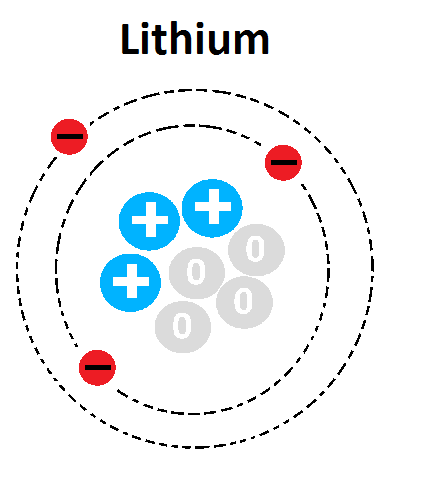
What element is represented in this Bohr Model? 
a)
Carbon
b)
Hydrogen
c)
Aluminum
d)
Lithium
45.
How many electrons does potassium K contain? 
a)
19
b)
39
c)
20
d)
40
46.
What is the mass number of this atom?
a)
1
b)
3
c)
4
d)
7
47.
What group does this element belong to?
a)
Group 1: Alkali metals
b)
Group 18: Noble Gases
c)
Group 2: Alkaline-Earth Metals
d)
Group 17: Halogens
48.
Carbon-12 has 6 protons and 6 neutrons. How many electrons will orbit the nucleus?
a)
12
b)
6
c)
3
d)
18
49.
What's a valence electron?
a)
electrons in the second energy level
b)
electrons in the outermost energy level
c)
the atomic number
d)
electrons in the first level
50.
What is the atomic number of this atom?
a)
2
b)
4
c)
6
d)
none of the above
51.
How many valence electrons?
a)
2
b)
3
c)
5
d)
10
52.

Will a chlorine atom gain or lose electrons?

a)

gain

b)

lose

53.

How does oxygen become an oxide ion?

a)

it loses 2 electrons

b)

it gains 2 electrons

54.

How does magnesium become an magnesium ion?

a)

it loses 2 electrons

b)

it gains 2 electrons

55.

What is the name of the following compound: NaCl

a)

sodium chloride

b)

sodium (I) chloride

c)

sodium chlorine

d)

sodium (I) chlorine

56.

What is the name of the following compound: CuBr2

a)

copper bromine

b)

copper bromide

c)

copper (I) bromide

d)

copper (II) bromide

57.

What is the name of the following compound: K2SO4

a)

potassium sulfur

b)

potassium sulfate

c)

potassium (I) sulfate

d)

potassium (II) sulfide

58.

What is the name of the following compound: Mn2O3

a)

manganese oxide

b)

manganese (II) oxide

c)

manganese (III) oxide

d)

magnesium oxide

59.

What is the what charge of manganese in the compound: Mn2O3

a)

+1

b)

+2

c)

+3

d)

-3

60.
How do covalent bonds form?
a)
Donating & receiving valence e- between atoms.
b)
Opposite slight charges attract each other between compounds.
c)
Scientists are still not sure how they form.
d)
Sharing valence e- between atoms.
61.
What two types of atoms make a covalent bond?
a)
2 Nonmetals
b)
1 Nonmetal and 1 Metal
c)
2 Metals
d)
2 Noble Gases
62.
What is the correct name for C4H6?
a)
Carbon Hexahydride
b)
Pentacarbon Pentahydride
c)
Hexacarbon Tetrahydride
d)
Tetracarbon Hexahydride
63.
What is the correct name for NO?
a)
Mononitrogen Monoxide
b)
Nitrogen Monoxide
c)
Mononitrogen Dioxide
d)
Nitrogen Oxide
64.
What is Sulfur Trichloride?
a)
SCl3
b)
SiCl3
c)
SCl4
d)
Si3Cl
65.
Bromine monofluoride
a)
Br1F1
b)
BrF
c)
Br2F
d)
BrF2