wayground logo

Free Printable Worksheets

NEW

Font size

S
M
L
XL
Worksheets

Chemistry quiz

Total questions: 50

Worksheet time: 22mins

Name
Class
Date
1.

How many atoms of sodium (Na) are in one molecule of baking soda?

a)

1

b)

2

c)

3

d)

4

2.

Ozone and Oxygen molecules are the same substance because they both are made only of oxygen atoms.

a)

true

b)

false

3.

What is the chemical symbol for carbon?

a)

C

b)

Ca

c)

Cn

d)

Crn

4.

Molecules bonded together make up atoms.

a)

true

b)

false

5.

How many atoms make up one molecule of laughing gas?

a)

1

b)

2

c)

3

d)

4

6.

When we combined vinegar and baking soda and created carbon dioxide what was the product?

a)

vinegar

b)

carbon dioxide and baking soda

c)

carbon dioxide

d)

vinegar and baking soda

7.

In a chemical reaction or change a new substance is not created.

a)

true

b)

false

8.

If there is a rise in temperature during a chemical reaction it is called a _________________ reaction.

a)

endothermic

b)

exothermic

9.

Atoms are mostly made up of...

a)

empty space

b)

electrons

c)

solids and liquids

10.

What did the second man drink?

a)

Arsenic

b)

Hydrogen Peroxide

c)

Helium Oxolate

11.

What is Batman's favorite element?

a)

Na

b)

H

c)

O

d)

Cl

12.

what is an atom

a)

smallest part of the universe

b)

smallest part of a substance

c)

smallest part of anything

d)

smallest part of water

13.

protons

a)

negative charge, nucleus

b)

positive charge, shells

c)

positive charge , nucleus

d)

neutral charge, nucleus

14.

electrons

a)

no charge, nucleus

b)

positive charge, nucleus

c)

negative charge, shells

d)

negative charge, nucleus

15.

mass number

a)

number of protons

b)

number of electrons

c)

number of protons and electrons

d)

number of protons and neutrons

16.

atomic symbol

a)

capital letter

b)

lowercase letter

c)

2 capital letters

d)

2 lowercase leters

17.

lst shell holds

a)

2

b)

8

c)

18

d)

32

18.

2nd shell holds

a)

2

b)

8

c)

18

d)

32

19.

3rd shell holds

a)

2

b)

8

c)

18

d)

32

20.

4th shell holds

a)

2

b)

8

c)

18

d)

32

21.

same number of protons, different number of neutrons

a)

atomic number

b)

mass number

c)

isotope

d)

ion

22.

a charged atom

a)

neutral

b)

isotope

c)

ion

d)

nucleus

23.

neutrons

a)

no charge, shells

b)

positive charge, nucleus

c)

neutral, no charge, nucleus

d)

negative charge, shells

24.

atomic number

a)

number of protons/stands for an element

b)

number of neutrons

c)

number of electrons

d)

number of protons and neutrons

25.
What is a product?
a)
The starting substance
b)
The ending substance
26.
Using the following chemical reaction
Hydrogen + Oxygen --> water
Identify the reactant(s).
a)
Hydrogen and Oxygen
b)
water
27.
Using the following chemical reaction
Hydrogen + Oxygen --> water
Identify the product(s).
a)
Hydrogen and oxygen
b)
water
28.
Angelina mixes 2 substances together in a beaker. The beaker becomes hot and the liquid changes color.
Did a chemical reaction occur?
a)
yes, because the properties changed and a new substance was made.
b)
no, because the properties did not change.
29.
What is a reactant?
a)
The starting substance
b)
The ending substance
30.
Which of the following are NOT signs that a chemical reaction occured?
a)
the properties changed
b)
bubbles of gas formed
c)
color stays the same
d)
smells different
31.
What is a precipitate?
a)
a change in color 
b)
a change in temperature
c)
a solid formed
d)
a gas formed
32.
Alex wants to mix two substances together and to find out if a chemical reaction happens. What should he do?
a)
test the solubility before and after mixing
b)
measure the volume before and after mixing
c)
measure the mass before and after mixing
d)
test the density of the before substance but not the after substances.
33.
a student mixes  apple juice, water, and cinnamon together. Did a chemical reaction occur?
a)
Yes, because the apple juice changed the color of the water.
b)
yes, because the temperature stayed the sam
c)
no, because the properties stayed the same.
d)
yes, because dissolving is always a chemical reaction.
34.
Burning is always a chemical reaction.
a)
True
b)
false
35.
Sandra was burning a vanilla candle. Was there a chemical reaction?
a)
no, because burning is never a chemical reaction.
b)
Yes, because the properties of the wick changed.
c)
yes, because heat was added.
d)
no, because the ash formed was a different substance.
36.
Which of the following is NOT a chemical reaction?
a)
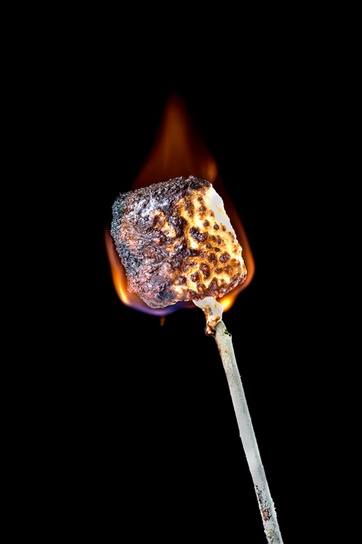
burning a marshmallow in a campfire.
b)
a campfire
c)
acid rain turning a copper roof green.
d)
Dissolving red Koolaid in water.
37.
Which of the following is a chemical reaction?
a)
Burning bread in the toaster.
b)
melting wax in a microwave.
c)
dissolving salt in water
d)
boiling water to make steam.
38.
A chemical change happens when...
a)
a substance is changed at the atomic level 
b)
bonds are broken and formed 
c)
a new substance is made
d)
all of the above! 
39.
A catalyst  
a)
is added to a reaction to make it slow down 
b)
breaks apart and is changed 
c)
provides an energetic short cut to the products 
40.
Chemical Formulas ...
a)
are written in alphabetical order 
b)
represent the destruction or creation of atoms 
c)
represent how atoms are arranged in a chemical reaction 
41.
The compounds or elements present at the end of a reaction 
a)
reactants
b)
catalyst
c)
products
d)
energy 
42.
The compounds and elements that are present at the beginning of a reaction:
a)
reactants
b)
catalyst
c)
products
d)
energy 
43.
Which of the following reactions is a combustion reaction ? 
a)
MgCO3 + O2 → MgO + CO2  
b)
C3H8 + 5O2 → 3CO2 + 4H2O 
c)
6CO2 + 6H2O → C6H12O6 + 6O2 
d)
6CO2 + 6H2O → C6H12O6 + 6O2 
44.
What is the law of Conservation of Mass?
a)
A measure of how much mass is created or destroyed. 
b)
Mass can neither be created nor destroyed during a chemical reaction. 
45.
Explain this graph
a)
A catalyst is used to speed up the reaction rate
b)
The catalyst provides a short cut to the products
c)
The red line shows how the catalyst saves energy 
d)
All of these choices
46.
Which of the following is a decomposition reaction?
a)
MgCo3 --> MgO + CO2 
b)
SO3 + H2O --> H2SO4
c)
2 Mg + O2 --> 2MgO 
47.
What kind of change is a phase change?
a)
Physical - it's still the same substance
b)
chemical - it's made of chemicals 
48.

What does a represent?

a)

Proton

b)

Neutron

c)

Electron

49.

What does b represent?

a)

Proton

b)

Neutron

c)

Electron

50.

What is the atomic mass of this element?

a)

20

b)

60

c)

40

d)

41