
 Worksheets
daltons law of partial pressure
Total questions: 10
Worksheet time: 7mins
Name
Class
Date
1.
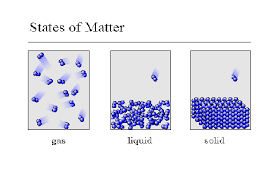
A gas
a)
has a definite shape but no definite volume
b)
has a definite volume but no definite shape
c)
has fast-moving particles
2.
What is condensation?
a)
gas to solid
b)
gas to liquid
c)
liquid to solid
d)
solid to liquid
3.

What does this picture represent?
a)
solid
b)
liquid
c)
gas
d)
plasma
4.
Dalton's Law states...
a)
that at a constant temperature the volume of a confined ideal gas varies inversely with its pressure.
b)
that the total pressure exerted by the mixture of non-reactive gases is equal to the sum of the partial pressures of individual gases
c)
how gases tend to expand when heated
d)
that the density of an ideal gas at constant pressure varies inversely with the absolute temperature of the gas.
5.

Which equation represents Dalton's Law?
a)
e=mc2
b)
PV=nRT
c)
P1/T1=P2/T2
d)
Ptotal=P1, P2, P3...
6.

Dalton's law of...
a)
Partial Pressure
b)
Thermodynamics
c)
Ideal Gas
d)
Physics
7.
Three gases, Ar, N2 and H2 are mixed in a 500L container. Ar has a pressure of 255 torr, N2 has a pressure of 228torr and H2 has pressure of 752torr. What is the total pressure in the container?
a)
483torr
b)
270torr
c)
1235torr
8.
A mixture of hydrogen, nitrogen, and water vapor has a total pressure of 864 mmHg. The partial pressure of hydrogen is 220 mmHg and that of nitrogen is 410 mmHg. What is the partial pressure of water vapor?
a)
234 mmHg
b)
1.37 mmHg
c)
2.64 mmHg
d)
1, 494 mmHg
9.
density
a)
a physical property of matter that describes the number of particles of a substance that fits in a unit of volume
b)
a chemical property of matter that describes the amount of mass a substance has per unit of volume
c)
a physical property of matter that describes the amount of mass a substance has per unit of volume
10.
Which of the following is not true about gases?
a)
They spread out to fill their containers
b)
They have a low density.
c)
The particles move very slowly.
d)
The volume changes with whatever shape the room is.
100 %

