wayground logo

Free Printable Worksheets

Font size

S
M
L
XL
Worksheets

Savvas 8.4 &8.5 Test/Quiz study slides

Total questions: 123

Worksheet time: 3605secs

Name
Class
Date
1.
Ionic compounds are formed when one or more valence electrons are transferred from _____
a)
a nonmetal atom to a metal atom
b)
a nonmetal atom to a nonmetal atom
c)
a metal atom to a nonmetal atom
d)
a metal atom to a metal atom
2.

The chemical bond between a metal and a non-metal will be a _____ bond.

a)

metal

b)

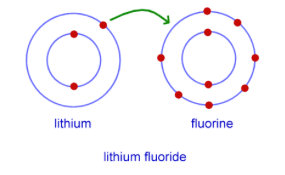
ionic

c)

covalent

d)

polar

3.

The chemical bond between a non-metal and another non-metal will be a ________ bond.

a)

metal

b)

ionic

c)

covalent

d)

polar

4.

Beryllium and sulfur will form a ______ bond

a)

ionic

b)

covalent

c)

metalloid

5.

Sodium and Bromine will make a _____ bond.

a)

ionic

b)

covalent

c)

metallic

6.

Carbon and Oxygen will make a ___________ bond.

a)

ionic

b)

covalent

c)

metallic

7.

Nitrogen and Oxygen will make a ____________ bond

a)

ionic

b)

covalent

c)

metallic

8.

MgO

a)

ionic

b)

covalent

c)

metallic

9.

NaCl

a)

ionic

b)

covalent

c)

metallic

10.

If two fluorine atoms bond they will make a _____ bond.

a)

ionic

b)

covalent

c)

metallic

11.

Hydrogen and Chlorine will from a _________ bond

a)

ionic

b)

covalent

c)

metallic

12.

Which of these element pairs would bond covalently?

a)

Fr and K

b)

Sc and O

c)

F and Cl

d)

He and Pt

13.

A bond between a metal and a nonmetal is called a(n)

a)

covalent bond

b)

ionic bond

c)

metallic bond

d)

transfer bond

14.

A bond between a nonmetal and a nonmetal is called a(n)

a)

covalent bond

b)

ionic bond

c)

metallic bond

d)

transfer bond

15.

What type of bond involves the sharing of electrons between atoms?

a)

covalent bond

b)

ionic bond

c)

metallic bond

d)

transfer bond

16.

Identify the following compound as ionic or covalent: MgO

a)

ionic

b)

covalent

17.

Identify the following compound as ionic or covalent: Na2SO4

a)

ionic

b)

covalent

18.

Identify the following compound as ionic or covalent: CF4

a)

ionic

b)

covalent

19.

Identify the following compound as ionic or covalent: SO2

a)

ionic

b)

covalent

20.

Identify the following compound as ionic or covalent: CO

a)

ionic

b)

covalent

21.

Identify the following compound as ionic or covalent: Ca(OH)2

a)

ionic

b)

covalent

22.

When naming covalent compounds...

a)

You need roman numerals and no prefixes

b)

You do not need roman numerals or prefixes

c)

You need roman numerals and prefixes

d)

You do not need roman numerals but you do need prefixes

23.

This type of bonding can be described as "I give, I get"

a)

ionic

b)

covalent

c)

metallic

24.

This type of bonding can be described as a "cooperation"

a)

ionic

b)

covalent

c)

metallic

25.
What happens when an atom loses an electron?
a)
It becomes Negatively Charged
b)
It remains neutral because the proton also leaves.
c)
It becomes Positively Charged
d)
It stays the same.
26.
When an atom loses an electron, it becomes a:
a)
positive ion
b)
negative ion
c)
neutral ion
d)
neutral atom
27.
Elements in Group 1 lose one electron to form ions with a(n) _________________ charge.
a)
1+
b)
2+
c)
0
d)
1-
28.
Ionic bonds form between metals and ____.
a)
metalloids
b)
metals
c)
nonmetals
29.
What type of bond is this?
a)
ionic
b)
covalent
30.
A charged particle that has gained or lost electrons is called a _____.
a)
molecule
b)
ion
c)
isotope
d)
element
31.
How many electrons are needed in the outer energy levels of an atom to be stable?
a)
2
b)
4
c)
6
d)
8
32.
What is a valence electron?
a)
The sum of neutrons and protons.
b)
The # of electrons in the last shell.
c)
A type of bond.
d)
A popular compound.
33.
Ionic bonds are between...
a)
Metal and Non-metal
b)
Non-metal and Non-metal
c)
Metal and Metal
34.
How are covalent bonds formed?
a)
Sharing of electrons
b)
Transfer of electrons
35.
How are ionic bonds formed?
a)
Transfer of electrons
b)
Sharing of electrons
36.
Where are the metalloids located on the periodic table?
a)
Blue
b)
Red
c)
Green
37.
Where are metals located on the periodic table?
a)
Blue
b)
Green
c)
Red
38.
Where are the nonmetals located on the periodic table? 
a)
Blue
b)
Red
c)
Green
39.
Atoms that gain electrons become...
a)
negatively charged
b)
positively charged
c)
remain neutrally charged
d)
21
40.
Which is the charge that results when oxygen becomes an ion?
a)
+3
b)
+2
c)
-2
d)
-3
41.
LiF
a)
Ionic Bond
b)
Covalent Bond
c)
Both bonds
d)
Neither bond
42.
MgBr2
a)
Ionic Bond
b)
Covalent Bond
c)
Both bonds
d)
Neither bond
43.
Is hydrogen considered a metal or a non-metal?
a)
A metal
b)
Nonmetal
c)
Metalloid
44.
When an atom loses an electron, it becomes a:
a)
positive ion
b)
negative ion
c)
neutral ion
d)
neutral atom
45.

8 electrons

a)

Number of protons

b)

Mass of the atom

c)

Number of total electrons

d)

Number of valence electrons

46.

The chemical bond between a metal and a non-metal will be a _____ bond.

a)

metal

b)

ionic

c)

covalent

d)

polar

47.

The chemical bond between a non-metal and another non-metal will be a ________ bond.

a)

metal

b)

ionic

c)

covalent

d)

polar

48.

In an ionic bond the metal wants to ______ electrons.

a)

lose

b)

gain

c)

share

49.

When a metal loses an electron(s) it becomes a ...

a)

positive ion

b)

negative ion

c)

metalloid

d)

nonmetal

50.

In an ionic bond the non-metal wants to ______ electron(s).

a)

lose

b)

gain

c)

share

51.

When a non-metal gains an electron it becomes a...

a)

positive ion

b)

negative ion

c)

metalloid

d)

metal

52.

In a covalent bond both non-metals _____ electrons.

a)

transfer

b)

share

53.

Beryllium and sulfur will form a ______ bond

a)

ionic

b)

covalent

c)

metalloid

54.

When beryllium loses an electron to sulfur it becomes a...

a)

positive ion

b)

negative ion

55.

When sulfur gains an electron from beryllium it becomes a...

a)

positive ion

b)

negative ion

56.

Sodium and Bromine will make a _____ bond.

a)

ionic

b)

covalent

c)

metallic

57.

When sodium loses an electron to bromine, sodium becomes a...

a)

positive ion

b)

negative ion

58.

When bromine gains an electron for sodium, bromine becomes a ...

a)

positive ion

b)

negative ion

59.

Carbon and Oxygen will make a ___________ bond.

a)

ionic

b)

covalent

c)

metallic

60.

Nitrogen and Oxygen will make a ____________ bond

a)

ionic

b)

covalent

c)

metallic

61.

MgO

a)

ionic

b)

covalent

c)

metallic

62.

NaCl

a)

ionic

b)

covalent

c)

metallic

63.

When sodium loses an electron to chlorine, sodium becomes a .......

a)

positive ion

b)

negative ion

64.

When chlorine gains an electron from sodium, chlorine becomes a ...

a)

positive ion

b)

negative ion

65.

If two fluorine atoms bond they will make a _____ bond.

a)

ionic

b)

covalent

c)

metallic

66.

Hydrogen and Chlorine will from a _________ bond

a)

ionic

b)

covalent

c)

metallic

67.

Holly has an unknown substance in a beaker. She wants to determine the relative pH of the unknown substance. She places a piece of blue litmus paper into the substance, and the litmus paper stays blue.

The substance in the beaker

a)

is a base

b)

is an acid

c)

have neutral pH

d)

doesn't have pH

68.

Which of the following word pairs correctly completes the sentence below?

_______ are corrosive substances characterized as having a strong smell, a sour taste, and a _______.

a)

acid pH less than 7

b)

acid pH greater than 7

c)

base pH less than 7

d)

base pH greater than 7

69.

Litmus paper can be used to determine the _______ of a substance

a)

relative volume

b)

relative pH

c)

temperature

d)

chemical formula

70.

Which of the following statements is correct?

a)

Blue litmus paper turns red when placed in a base.

b)

Red litmus paper turns blue when placed in a base.

c)

Blue litmus paper stays blue when placed in an acid.

d)

Red litmus paper stays red when placed in a base.

71.

The pH of a solution is tested, and it is found to be a basic solution. Of the following choices, what could the pH have been?

a)

3

b)

7

c)

9

d)

5

72.

Human blood has a pH between 7.35 and 7.45. Which of the following best describes human blood?

a)

strongly acidic

b)

slightly acidic

c)

strongly basic

d)

slightly basic

73.

When using pH paper, the pH of a solution can be determined by looking at the _______ of the paper

a)

texture

b)

mass

c)

colour

d)

length

74.

What would be considered the weakest base?

a)

8

b)

7.8

c)

11.6

d)

14

75.

Many cleaning solutions are bases. Which of the following is a property of most bases?

a)

feels slippery

b)

white color

c)

can only be liquid

d)

tastes sour

76.

Pure water has a pH of 7. Pure water _______.

a)

is a base

b)

is a neutral substance

c)

could be either an acid or a base

d)

is an acid

77.

A sour taste is a characteristic of:

a)

acid

b)

base

c)

neutral

d)

pH scale

78.

pH is the measure of the concentration of ______.

a)

Acids

b)

H+ ion

c)

OH- ion

d)

Base

79.

If a solution is basic which ion will be more present?

a)

H+

b)

K+

c)

OH-

d)

H-

80.

Stronger acids have a pH closer to...

a)

7

b)

14

c)

0

d)

9

81.

Weaker bases have a pH closer to...

a)

8

b)

14

c)

0

d)

4

82.

A pH level of 7 indicates

a)

acid

b)

base

c)

neutral

d)

non of the following

83.

The pH scale is a range from:

a)

1-7

b)

1-5

c)

0-14

d)

1-14

84.

Which property is not associated with acids?

a)

Sour taste

b)

strong acids can burn you

c)

turns litmus paper blue

d)

reacts with metals

85.

Which of the following is true about acids and bases?

a)

The lower the pH #, the stronger the acid

b)

the higher the pH #, the stronger the acid

c)

The lower the pH #, the more neutral the acid

d)

The higher the pH #, the weaker the base

86.

You test a solution with pH paper, and the paper turns blue. The solution is ______.

a)

neutral

b)

an acid

c)

a base

d)

an acid & a base

87.
Ammonia has a pH of 12.  Ammonia is __________.
a)
an acid
b)
a base
c)
an element
d)
a metal
88.
Soap is a weak base.  What is true about the taste of bases?
a)
they taste sour
b)
they taste sweet
c)
they taste bitter
d)
they taste salty
89.
Explain what happens when a strong acid and a strong base are poured into the same container.
a)
they form separate layers
b)
they mix physically but not chemically
c)
they break apart into separate elements
d)
they react chemically to form a salt
90.
When dissolved in water, bases produce:
a)
acids
b)
salts
c)
hydrogen ions
d)
hydroxide ions
91.
Which of these solutions is an acid?
a)
Dish Soap: pH of 12
b)
Tomato Soup: pH of 4
c)
Baking Soda: pH of 9
d)
Drain Cleaner: pH of 14
92.
What does the pH scale measure?
a)
the concentration of acids and bases
b)
the malleability of a metal
c)
the temperature of the water in a swimming pool
d)
the amount of phosphorus in a compound
93.
Compounds form when _______________.
a)
atoms of one element bond together
b)
atoms of two or more elements bond together
c)
molecules of one element are mixed together
d)
molecules of two or more elements are mixed together
94.
The pH of vinegar is 2.5.  Vinegar is a _____________.
a)
strong acid
b)
strong base
c)
weak base
d)
weak acid
95.
Which of the following is true about acids and bases?
a)
The lower the pH, the stronger the acid
b)
the higher the pH, the stronger the acid
c)
The lower the pH, the more neutral the acid
d)
The higher the pH, the weaker the base
96.
Which type of ion does a base produce when it is dissolved in water?
a)
oxide
b)
oxygen
c)
hydrogen
d)
hydroxide
97.
Which statement is true when acids and bases are mixed together?
a)
acids become stronger
b)
bases become stronger
c)
there is no change
d)
they neutralize each other
98.
Ranging from 0 to 14, a pH value indicates how acidic or basic a solution is.  Which of these pH values would be a strong acid?
a)
2
b)
6
c)
9
d)
13
99.
What is the pH of water?
a)
0
b)
4
c)
7
d)
14
100.

William collected a rain sample and measured its pH to be 5.6.  What does this mean?

a)
the rain water is a weak base
b)
the rain water is neutral
c)
the rain water is a strong acid
d)
the rain water is a weak acid
101.
What does a pH of 1 indicate about a liquid?
a)
it is a very strong base
b)
it is a weak base 
c)
it is a weak acid
d)
it is a strong acid
102.
Litmus paper can tell you if a solution is acidic, neutral or basic by changing color when placed in a solution.  If you test a base with litmus paper, it will turn ____________.
a)
purple
b)
red
c)
blue
d)
pink
103.
What is the pH of a neutral substance?
a)
0
b)
5
c)
7
d)
10
104.
Which of these pH values would indicate that a solution is a weak base?
a)
4
b)
5.6
c)
8
d)
13
105.
When dissolved in water, acids produce:
a)
bases
b)
salts
c)
hydrogen ions
d)
hydroxide ions
106.
Any substance that produces hydroxide ions in water is known as _____________.
a)
an acid
b)
a hydrogen ion
c)
a base
d)
a neutral
107.
Which one of the following is an example of a base?
a)
orange juice
b)
dish soap
c)
vinegar
d)
lemons
108.
A substance that changes color when mixed with an acid or base is a(n) ___.
a)
indicator
b)
neutralizer
c)
corrosive
d)
electricity
109.
Since some acids seemingly "eat away" certain substances, acids are ____.
a)
bitter
b)
sliipery
c)
corrosive
d)
weak
110.
What color does litmus paper turn in the presence of an acid?
a)
blue
b)
black
c)
green
d)
red
111.
Bases are located where on the pH scale?
a)
any number can be a base
b)
below 7
c)
above 7
d)
number 7 is a base
112.
Bleach and oven cleaner are:
a)
strong acids
b)
weak acids
c)
strong bases
d)
weak bases
113.
Which of the following is NOT a characteristic of an acid?
a)
sour taste
b)
corrosive
c)
it feels slippery
d)
it can burn the skin
114.
A substance that is a 10 on the pH scale would be a(n) ____.
a)
acid
b)
neutral
c)
base
d)
indicator
115.
At what location on the pH scale can you find acids?
a)
number 7 on the pH scale is acidic
b)
below 7
c)
above 7
d)
you can find acids all throughout the scale
116.
The substance that dissolves the solute in a solution is the ____.
a)
solvent
b)
sour
c)
solute
d)
hydrogen ions
117.
Which of the following is neutral?
a)
milk
b)
eggs
c)
gummy worms
d)
pure water
118.

A substance that is 3 on the pH scale would be a(n):

a)

acid

b)

base

c)

neutral

d)

solute

119.

Taste bitter

a)

acids

b)

bases

c)

neutral

d)

pH paper

120.

Taste sour

a)

acids

b)

bases

c)

neutral

d)

pH scale

121.

According to the pH scale, which item is more acidic than lemons?

a)

battery

b)

vinegar

c)

milk

d)

blood

122.

According to the pH scale, which item is a stronger base than soap?

a)

baking soda

b)

ammonia solution

c)

tomato

d)

bleach

123.

Which is the correct set of acid properties?

a)

sour taste, corrosive, change litmus from red to blue

b)

sour taste, corrosive, change litmus from blue to red

c)

sweet taste, slippery, change litmus from blue to red

d)

sour taste, slippery, change litmus from blue to red