
 Worksheets
Quiz - Evolution
Total questions: 20
Worksheet time: 17mins

What did Charles Darwin observe in finch populations of the Galapagos Islands off the coast of South America?
different species on different islands
all species on one of the islands
identical species on all the islands
the same species as North America
What is the term for a feature that allows an organism to better survive in its environment?
variation
adaptation
homologous structure
vestigial structure
What is the process in which humans breed organisms for certain traits, also known as selective breeding?
natural selection
inheritance
artificial selection
descent withOUT modification
inherited
learned

Some organisms that share a common ancestor have features that have similar functions, and similar structures. These are known as

What mechanism of evolution increases genetic variation when animals move from one location to another
genetic drift
sexual selection
bottleneck effect
gene flow


What mechanism of evolution is the study of organisms at the early stages of development and comparing to different species?
DNA studies
embryology
ancestory
paleontology
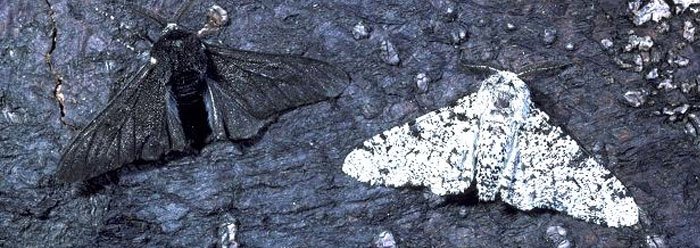

A mechanism of evolution responsible by a random/chance event that changes allele frequency in a population is known as:
Non-random Mating
Natural Selection
Genetic Drift
Overproduction
Evolved from different ancestors, but due to living in similar environments have a similar function, but different structures.
Homologous structures
Analogous structures
Vestigial structures
All of the above
Whales are aquatic mammals that contain a pelvis (hip) bone. Even though it does not aid in its movement, the function must have been used by a common ancestor of the whale. Thus, the pelvis is referred to as a(n)
vestigial structure
analogous structure
homologous structure

Which question were the scientists Miller and Urey trying to answer with this experiment?
Where do cells come from?
How did prokaryotes form cell membranes?
How are biomolecules formed?
What gave rise to the Eukaryotic cell?
Which of the following is NOT part of the mechanisms of natural selection?
Organisms produce more offspring than can survive.
Disease and natural disaster will limit population growth.
Species today descended with modifications from ancestral species.
Organisms with advantages will survive and reproduce.

