
 Worksheets
Chem30s - Review
Total questions: 193
Worksheet time: 6hrs 55mins
What is the mass of one mole of silver?
32.06 g
107.87 g
14.01 g
22.99 g
48.86 g of cobalt is equal to how many moles of cobalt?
2879 moles
8.291 moles
.8291 moles
.829 moles
How many molecules of water are in a 821.3 g sample?
45.58 molecules
8.232 x 1025 molecules
8.909 x 1027 molecules
2.744 x 1025 molecules
What is the mass of 4.98 x 1024 atoms of Zn?
541 g
8.27 g
.122 g
4.59 x 1046 g
How many moles of sodium chloride are in a 321.8 g sample?
18810 moles
3.315 x 1024 moles
5.507 moles
4.767 moles
How many particles of calcium chloride are in a 25.69 g sample?
1.394 x 10²³ particles
2851 particles
.2315 particles
3.845 x 1025 particles
What would be the mass of 9.76 x 10²² particles units of SrCl2?
.1622 g
25.7 g
20.0 g
.3589 g
how many atoms are contained in a 456 g sample of carbon dioxide?
10.34 atoms
6.237 x 1024 atoms
1.871 x 1025atoms
2.079 x 1024 atoms
A sample of AlCl3 contains a total of 4.515 x 1027 atoms of chlorine. What must be the mass of this sample?
2.500 x 10⁵ g
1.000 x 10⁶ g
18.75 g
8.4 x 10⁵ g
Convert 86.235 g of diphosphorus pentaoxide to moles.
12240 moles
1.8747 moles
.608 moles
.607 moles
The energy of movement is ___.
potential energy
kinetic energy
mechanical energy
The more energy that particles have, the ___ they move.
slower
faster
The force of attraction between molecules is ___.
intermolecular forces
bridge forces
chemical bonds

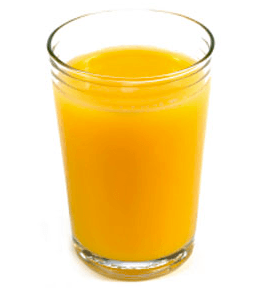
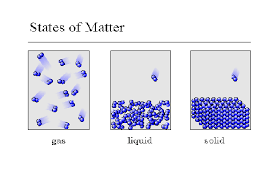
These properties describe a ___.
solid
liquid
gas

These properties describe a ___.
solid
liquid
gas

These properties describe a ___.
solid
liquid
gas
Collisions in which particles transfer all their kinetic energy to other particles are called ___.
elastic
inelastic
Which one of these is NOT an Ideal Gas Assumption?
Gas particles are hard, round spheres.
Gas particles are strongly attracted to one another.
Gas particles do not take up space.
Gas particles collide perfectly elastically.
Liquid particles have more energy than ___ particles.
solid
gas
The particles of ___ generally have the least amount of energy.
solids
liquids
gases


An amorphous solid has a definite melting point.
True
False
Both gases and liquids are fluids.
True
False
A state of matter with a definite volume, but no definite shape is a(n) _______.
liquid
solid
gas
The ____ of a gas is the force of its outward push divided by the area of the walls of its container.
pressure
gravity
surface tension
structure
All solids have a closely packed, fixed arrangement of particles.
True
False
The _______ is a measure of the average speed of the particles in a substance.
temperature
density
volume
mass
What is a crystal?
A pure material that can’t be changed.
Material with a regular,repeating arrangement of atoms.
A foggy like material.

long-range order exists
Crystalline material
Amorphous Material
long-range atomic order is absent
Crystalline material
Amorphous Material
means a three-dimensional array of points coinciding with atom positions
Lattice
Amorphous
Unit Cells
FCC
the basic structural unit or building block of the crystal structure and defines the crystal structure by virtue of its geometry and the atom positions within
Lattice
Amorphous
Unit Cells
FCC
Allotropy is
when more than one crystal structure is found in elemental solids
when metals and nonmetals have more than one crystal structure

Is the following molecule polar or nonpolar?
polar
nonpolar

Is the following molecule polar or nonpolar?
polar
nonpolar
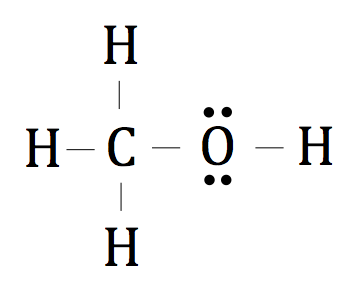
Is the following molecule polar or nonpolar?
polar
nonpolar

Is the following molecule polar or nonpolar?
polar
nonpolar

Is the following molecule polar or nonpolar?
polar
nonpolar

Is the following molecule polar or nonpolar?
polar
nonpolar

Why is the molecule polar?
There is a nonbonding pair on the central atom.
There are different types of elements bonded to the central atom.
There are no nonbonding pairs on the central atom and all of the atoms bonded to the central atom are the same.

Classify the following molecule.
polar
nonpolar
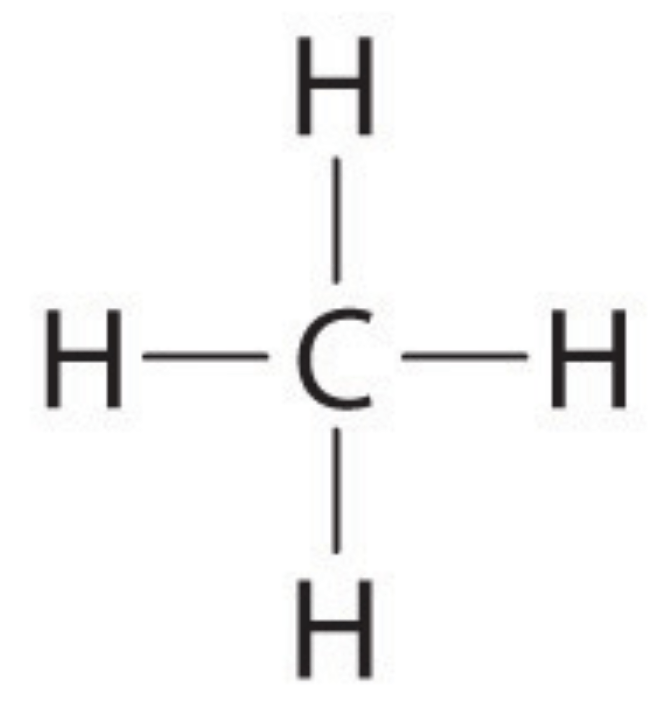
Classify the following molecule.
polar
nonpolar

Classify the following molecule.
polar
nonpolar

Classify the following molecule.
polar
nonpolar
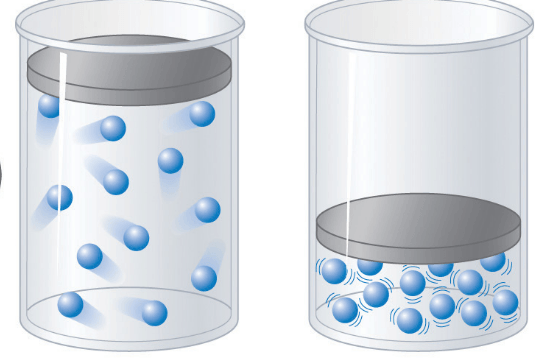
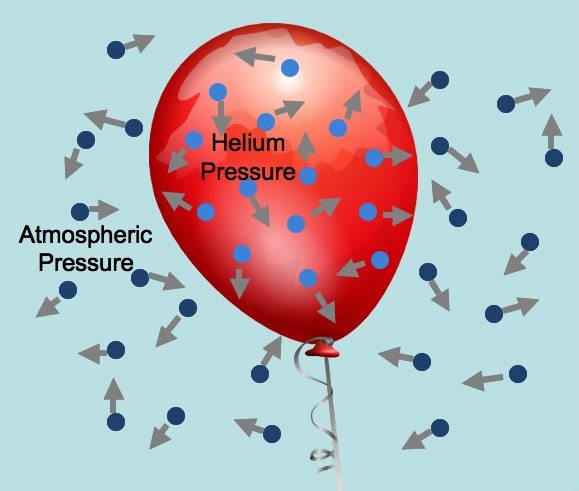
What type of relationship is Charles' Law?
Inverse
Direct
Not enough information


Which law?
Boyle
Charles
Landis
Boykin

Which law?
Charles
Boyle
Diegel
Mitchell


A student inflates a balloon with helium then places it in the freezer. The student should expect
the balloon's volume to increase
the balloon's volume to decrease
the balloon's moles to increase
the balloon's moles to decrease
Three gases are mixed together in a container with a total pressure of 4.8 atm. If two of the gases have pressures of 1.2 atm and 1.5 atm, what is the pressure of the third gas?
2.5 atm
1.8 atm
2.1 atm
1.3 atm
If a hairspray can is heated, what can be expected of the pressure of the gas inside the can?
The pressure will increase
The pressure will decrease
The pressure will remain constant
The pressure will equalize
Unit inter-conversions allow different scales for measuring temperature, pressure or volume to be compared.
Which sets of pressures are equivalent ?
160.94 kPa, 1260 torr, 1.42 atm
145.95 kPa, 912 torr, 1.50 atm
121.56 kPa, 912 torr, 1.20 atm
0 kPa, 1000 torr, 1.40 atm
A real gas does not exhibit ideal gas behaviour because
there are significant attractions between molecules so that the volume of the gas is reduced
the size of the particles are inconsequential and so their volume can be ignored in calculations
the collisions between the gas particles are perfectly elastic and so no energy is gained or lost
only noble gases are ideal gases and all other gases are called real gases
Out of the following which of the three real gases would you expect to act most like an ideal gas ?
Ammonia
Hydrogen
Nitrogen
All of the gases would act like ideal gases
A 0.0900 L syringe has a volume of :
0.0900 mL
9.0 mL
90 mL
900 mL

Which of the following graphs represents pressure versus volume (V) for a real gas at a constant temperature
A
B
C
D

This graph represents which gas law ?
Grahams law
Avogadros law
Boyles Law
Charles Law
Which of the following is a pair of equivalent values ?
-298 K and O o C
298 K ans -273 o C
319 K and 46 o C
319 K and 592 o C
Find the volume occupied by 22.0 g of helium gas at 25.0 o C and 1.18 atm .
123 L
9.57 L
114 L
159 L
A gas sample has an initial volume of 55.2 mL, an initial temperature of 35.0 o C and an initial pressure of 735 mm Hg. The volume is decreased to 48.8 mL and the temperature is increased to 72.5 o C . What is the final pressure ?
933 mm Hg
186 mm Hg
1.72 x 10³ mmHg
84.0 g Kr
Which of the following term does not involve an ideal gas law ?
Pressure
Volume
Temperature
Time
The combined gas law allows us to determine relationships between temperature, pressure and the volume of gases, including those used in a gas balloon. What is the final pressure if 155.0 mL of a gas at 22.0 o C and 374 mmHg is cooled to 0.00 o C and has a final volume of 102.0 mL
526 mm Hg
614 mmHg
73.4 mmHg
39.1 mmHg
Select the dissociation equation for NaCl and show the physical states of all species involved.
NaCl --> Na+ + Cl-
NaCl(s) --> Na+(aq) + Cl-(aq)
NaCl --> Na + Cl
NaCl(s) --> Na(aq) + Cl(aq)
Select the dissociation equation for LiOH and show the physical states of all species involved.
LiOH(aq) --> Li+(s) + OH-(s)
LiOH(s) --> Li+(aq) + OH- (aq)
LiOH(s) --> Li+(aq) + O2(aq) + H2(aq)
LiOH(s) --> Li+(aq) + O22-(aq) + H2+(aq)
Select the dissociation equation for NaOH and show the physical states of all species involved.
NaOH(s) --> Na+(aq) + OH-(aq)
NaOH --> Na+ + OH-
NaOH --> Na + OH
NaOH(s) --> NaO-(aq) + H+(aq)
Select the dissociation equation for KMnO4 and show the physical states of all species involved.
KMnO4(s) --> K+(aq)+ Mn4+(aq) + O4 -(aq)
KMnO4 --> K++ MnO4 -
KMnO4(s) --> K+(aq) + MnO4 -(aq)
KMnO4 --> K++ Mn4+ + O4 -
Select the dissociation equation for AgClO3 and show the physical states of all species involved.
AgClO3(s) --> Ag(aq) + ClO3(aq)
AgClO3(s) -->Ag+(aq) + Cl2 (aq) + O2(aq)
AgClO3(s) -->Ag+(aq) + Cl-(aq) + 3O2-(aq)
AgClO3(s) --> Ag+(aq) + ClO3-(aq)
Select the dissociation equation for PbCrO4 and show the physical states of all species involved.
PbCrO4(s) ↔ Pb2+(aq) + CrO44-(aq)
PbCrO4(s) ↔ Pb2+(aq) + CrO42-(aq)
PbCrO4(s) ↔ Pb+(aq) + CrO4-(aq)
PbCrO4(s) ↔ Pb4+(aq) + CrO44-(aq)
Select the dissociation equation for Fe2O3 and show the physical states of all species involved.
Fe2O3(s) ↔ 2Fe3+(aq) + 3O2-(aq)
Fe2O3(s) ↔ Fe3+(aq) + O2-(aq)
Fe2O3(s) ↔ 2Fe+(aq) + 3O-(aq)
2Fe2O3(s) ↔ 2Fe+(aq) + 3O2-(aq)
Select the dissociation equation for ZnCl2 and show the physical states of all species involved.
ZnCl2(s) --> Zn2+(aq) + Cl-(aq)
ZnCl2(s) --> Zn+(aq) + 2Cl-(aq)
ZnCl2(s) --> Zn2+(aq) + 2Cl-(aq)
ZnCl2(s) --> Zn+(aq) + Cl-(aq)
Select the dissociation equation for Ca(NO3)2 and show the physical states of all species involved.
Ca(NO3)2(s) -->Ca+(aq) + 2NO3- (aq)
Ca(NO3)2(s) -->Ca2+(aq) + 2NO3- (aq)
Ca(NO3)2(s) -->Ca2+(aq) + NO3- (aq)
Ca(NO3)2 -->Ca+ + 2NO3-
How do we define a solute?
Usually a liquid, in which other materials dissolve to form a solution
A substance that is dissolved in a solution
A substance with sulfur in it
When a solution contains a mixture of two substances
amount of solute in a given amount of solvent
concentration
saturated
solution
suspension
As you put in more solute in the solution, the concentration of the solution will...
increase
decrease
stay the same
____________ is the process where particles of a solvent completely surround the particles of a solute.
solvation
immisciblation
dissolution
saturation
Which of these is NOT a factor that affects solvation?
agitation/stirring
increasing temperature
increasing surface area
adding dye
A 'dilute' solution is a solution with a _____ concentration
high or strong
normal
low or weak
Solvation will happen if the attractive forces between the solute and solvent particles are stronger than the individual forces inside the solute and solvent themselves.
True
False
Which of these would be most likely to decrease the rate of solvation?
stirring or shaking
breaking the solute into smaller pieces
lowering the temperature
increasing the temperature
The overall energy change that occurs during the solution formation process is called the
Endothermic change
Exothermic change
Heat of solution
Attractive energy change
What is the most common liquid solvent in Chemistry?
Oil
Water
Hydrochloric Acid
Sodium Chloride
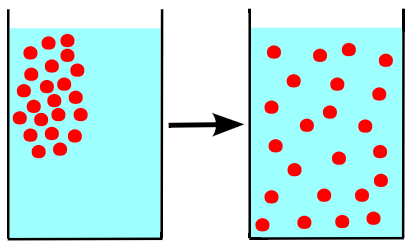
In which cup will the salt dissolve more slowly?
water can't dissolve ...............
sugar
oil
salt
coffe
when a solvent can no longer hold any more solute
saturation
dilute
dissolve
What of these is always soluble?
Nitrates
Phosphates
Carbonates
Hydroxides
Calculate the Molarity in a solution containing 40.0 g of NaCl dissolved in 500.0 ml of H2O.
0.08 M
12.5 M
1.37 M
0.74 M
How many moles of solute are present in 50.0 mL of 0.20M KNO3?
10.0 moles solute
0.05 moles solute
1.00 moles solute
0.01 moles solute
How many mL of stock solution of 2M NaCl do you need to prepare 100 mL of 0.150M NaCl?
7.5 mL
15 mL
1333 mL
200 mL
As we dilute a solution.....
The volume increases and the molarity (M) increases
The volume increases and the molarity (M) decreases
The volume decreases and the molarity (M) increases
The volume decreases and the molarity (M) decreases
If I have 340 mL of a 0.5 M NaBr solution, what will the concentration be if I add 560 mL more water to it?
.188 M
3.78 M
.389 M
1.76 M
How many mL of 10.8M HCl are required to make 100.0 mL of 3.00M acid?
27.8 mL
.278 mL
2.8 mL
278 mL
The amount of solute dissolved in a given amount of solvent.
dilution
concentration
saturated solution
supersaturated mixture
When you dilute a solution, which of these values remains constant?
The molarity (M)
The total moles of solute
The volume (V)
The concentration
How many moles of ammonia are produced when 3 moles of nitrogen react with hydrogen?
Fe2O3(s) + 3H2(g) → 2Fe(s) + 3H2O(l)
How many moles of iron can be made from 6 moles H2?
How many moles of hydrogen are needed to react with 2 moles of nitrogen?
How many moles of water can be produced if 8 moles H2 are used?
Fe2O3(s) + 3H2(g) → 2Fe(s) + 3H2O(l)
How many moles of iron can be made from 6 moles H2?
What is the total number of moles of water needed to make 2.5 moles of C6H12O6?
What is the total number of moles of H2O produced when 12 mole of NH3 is completely consumed?
2AgNO3 + Cu --> Cu(NO3)2 + 2Ag
N2 + 3H2 → 2NH3
What is the mole ratio between N2 and NH3 in the above reaction?
1 moles NH3 / 2 moles N2
2 moles NH3 / 1 moles N2
2 moles N2 / 3 moles NH3
1 moles N2 / 3 moles NH3
Given the reaction: 4Al + 3O2 --> 2Al2O3
How many moles of Aluminum oxide, Al2O3, can you produce if you have 2 moles of Al?
3 mole
2 mole
1 mole
0.5 mole
2 KClO3 → 2 KCl + 3 O2
How many moles of oxygen are produced when 6.7 moles of KClO3 decompose completely?
6.7 mol
1.0 mol
10.1 mol
4.5 mol
2 KClO3 → 2 KCl + 3 O2
How many moles of KCl are used when 6.7 moles of KClO3 decompose completely?
6.7 mol
1.0 mol
10.1 mol
4.5 mol
Using the following equation:
Fe2O3(s) + 3H2(g) → 2Fe(s) + 3H2O(l)
How many moles of water can be made from 6 moles H2?
4 moles water
6 moles water
9 moles water
2 moles water