wayground logo

Free Printable Worksheets

Font size

S
M
L
XL
Worksheets

Earth's Surface

Total questions: 25

Worksheet time: 58mins

Name
Class
Date
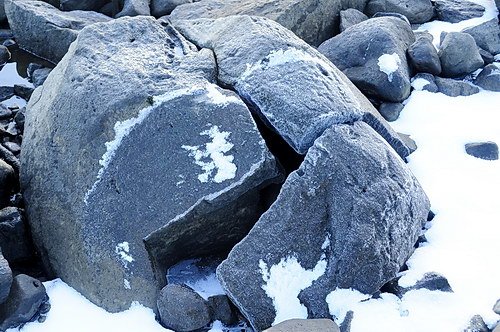
1.
What happens to a rock when it weathers?
a)
It settles out of water that is carrying it.
b)
It creates a valley.
c)
It forms a delta.
d)
It breaks into small pieces.
2.

The process by which rock and soil are moved from one place to another is called-

a)

Chemical weatherin

b)

Erosion

c)

Mechanical weathering

d)

Deosition

3.

A fan-shaped area where a river meets the ocean is called a ____________. This is formed when sediment and rock is deposited at the end of the river.

a)

dune

b)

delta

c)

weathering

d)

sediment

4.
This is the process of dropping sediment in a new location.
a)
Weathering
b)
Erosion
c)
Deposition
5.

How does freezing water cause the weathering of rocks? The freezing water—

a)

keeps the rocks in place.

b)

makes the rocks last longer.

c)

expands cracks and breaks rocks.

d)

causes rocks to fall in landslides.

6.

Over long periods of time, deposition may change the Earth’s surface by _____.

a)

forming new land features.

b)

breaking down large rocks into smaller ones.

c)

washing away beaches.

d)

moving topsoil.

7.

Which of the following is NOT a slow change to Earth's surface?

a)

Weathering

b)

Erosion

c)

Deposition

d)

Landslides

8.
Flood water pounding against a canyon wall and wearing it down
a)
Weathering
b)
Erosion
c)
Deposition
9.

This landform is formed by

a)

water erosion

b)

wind erosion

c)

deposition

d)

glaciers

10.

This landform is formed by

a)

water erosion

b)

weathering

c)

deposition of sediments

d)

glaciers

11.

Glaciers are masses of ice that move slowly on land. Which of these features was most likely formed by a glacier?

a)

A wide valley

b)

A deep ocean

c)

A lava flow

d)

A mountain range

12.

Hills formed by wind blowing, moving and depositing sand.

a)

Valley

b)

Dune

c)

Delta

d)

Canyon

13.
What is sediment?
a)
the process of rocks being broken down and carried away
b)
bits of rock and sand caused by the weathering of rocks
c)
the top layer of the soil
d)
decaying plant or animal material 
14.

Select 3 ways sediment can be moved to a new location: (Select ALL that apply)

a)

Snow

b)

Ice

c)

Water

d)

Wind

15.

Formed by a glacier as it slowly moved forward.

a)

Delta

b)

Canyon

c)

U-Shaped Valley

d)

Sand Dunes

16.

The gas form of fossil fuels is ____.

a)

oil/petroleum

b)

natural gas

c)

coal

d)

heat

17.
How are Sedimentary Rocks formed?
a)
Cooling and Hardening
b)
Heat and Pressure
c)
Compacting and Cementing
d)
Melting
18.
What must be present for Fossil Fuels to form?
a)
Bones and Sediment
b)
Dead Organisms and Layers of Sediment
c)
Dead Organisms, Layers of Sediment, and Heat & Pressure over time
d)
Bones, Layers of Sediment, and Heat & Pressure over time
19.
Which layer formed first?
a)
Rock Layer W
b)
Rock Layer X
c)
Rock Layer Y
d)
Rock Layer Z
20.
While hiking in a forest a girl found a fossil imbedded in a boulder. The fossil is shown.

According to the above information and image, what does the fossil tell us about the nature of the environment in the past?

a)
The area was once covered by water
b)
The area was once much cooler
c)
The area was once a higher elevation
d)
The area will soon be covered by water
21.
Where are most fossils found?
a)
A. In sand dunes
b)
B. In volcanoes
c)
C. In igneous rocks 
d)
D. In sedimentary rocks 
22.
What are the 3 main fossil fuels?
a)
A. Coal, oil, and vegetable oil. 
b)
B. Coal, Oil, and Natural Gas
c)
C. Electricity, Gasoline, Petroleum
d)
D. Coal, Oil, Non-renewable Resources
23.
Some students made a model to show one of the first steps in the formation of sedimentary rock.  The students pour 2 cm of light-colored sand into a clear plastic box.  Then they add 1 cm of gravel.  Finally, they pour 2 cm of dark-colored sand on top of the gravel.  Which characteristic of sedimentary rock does this model best show?
a)
A. Sedimentary rock is made of layers.
b)
B. Sedimentary rock is cemented bits of rock.
c)
C. Sedimentary rock is often limestone.
d)
D. Sedimentary rock is common in Texas.
24.
All of these are related to the formation of oil or natural gas EXCEPT: 
a)
A. Decomposed Animals
b)
B. Decayed Plants
c)
C. Sedimentary Rocks
d)
D. Active Volcanoes
25.
Sedimentary rocks form when broken bits of other rock are deposited and then -
a)
A. buried and squeezed and cemented together. 
b)
B. melted by the heat of the Earth's core
c)
C. completely dissolved in the salt water of the ocean 
d)
D. used by humans as a natural resource