
 Worksheets
ORGANIC COMPOUNDS.
Total questions: 40
Worksheet time: 52mins

The first four alkanes are listed below. In which list are they placed in the correct order, i.e. increasing number of carbon atoms?
methane, ethane, propane, butane
ethane, methane, propane, butane
methane, ethane, butane, propane
methane, propane, ethane, butane
Molecules with the same molecular structure but have different structural formulas are called...
polymers
biomolecules
constitutional polymers
isomers
What is a functional group?
Group of atoms that give specific characteristics to a molecule
Group of molecules that give specific characteristics to an atom
Group of molecules that make up a group of atoms
Group of atoms that give specific characteristics to an element
What is the IUPAC name for CH3CH2CH2CH2CHO ?
A. pentan-1-ol
B. pentanone
C. pentanoic acid
D. pentanal
Which three compounds form part of a homologous series?
A. C2H2, C2H4, C2H6
B. CH3OH, C2H5OH, C3H7OH
C. CH3CH2CH2CH2OH, CH3CH2CH(OH)CH3, CH3CH(CH3)CH2OH
D. CH3CH2CHO, CH3COCH3, CH3CH2CH2OH
Which of the following contribute to the low reactivity of alkanes?
I. The relatively strong C-H bond
II. The very low polarity of the C-H and C-C bonds
III. The tetrahedral shape of the molecules
A. I and II only
B. I and III only
C. II and III only
D. I, II and III
Which reagent can be used to distinguish easily between an alkene and an alkane?
A. Bromine water
B. Acidified potassium dichromate solution
C. Chlorine in ultraviolet light
D. Sodium hydroxide solution

alkane
alkyne
How many isomers exist in the compound with the molecular formula of C4H10?
2
3
4
5
DRAW STRUCTURE OF - METHYL CHLORIDE

Draw 2 - methylbutane
Draw structural isomers of pentane
Draw 2- chloropentane
Balance the combustion reaction:
__C4H10 + __O2 --> __H20 + __CO2
2, 13, 10, 8
1, 3, 7, 2
2, 13, 8, 8
Which of the structures is 2,2,4-trimethylpentane?
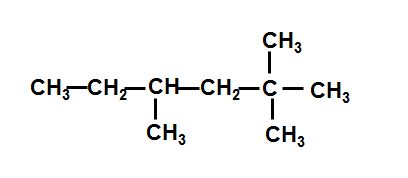
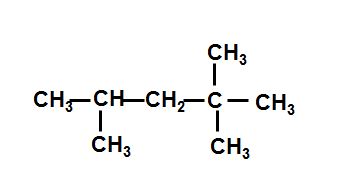
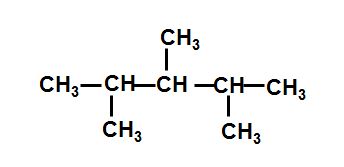
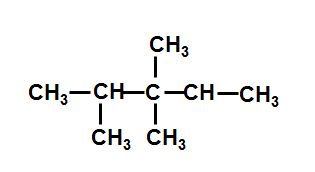

Name the compound.
3-methylpent-2-ene
2-ethylbut-2-ene
3-ethylbut-2-ene
1,1-dimethyl-propene
What happens if an alkane reacts with limited oxygen?
Produced carbon dioxide and water
Produced carbon monoxide and water
Produced oxygen and water
Produced soot and water
What is the condition needed for substitution reaction with chlorine?
presence of sunlight
presence of red light
presence of UV light
all of the above
Which of the following is NOT a product formed when methane reacts under the needed conditions with chlorine?
CH3Cl
CH2Cl2
CHCl4
CCl4
What type of chemical reaction is this:
C3H8 + 5O2 --> 3CO2 + 4H2O
Incomplete combustion
Substitution with oxygen
Complete combustion
Substitution with chlorine
What type of chemical reaction is this:
C3H8 + Br2 --> C3H7CBr + HBr
Incomplete combustion
Substitution with chlorine
Complete combustion
Substitution with bromine
Which of the following can be used to distinguish between alkanes and alkenes?
add a few drops of aqueous bromine
add a few drops of Universal indicator
add a piece of blue litmus paper
add a piece of red litmus paper
Which of the following is not a chemical properties of alkenes?
combustion
substitution
addition reaction
polymerisation
Ethene reacts with acidified potassium manganate (VII) solution to form a product.
What is the name of this reaction ?
halogenation
hydrogenation
hydration
oxidation
Which of the following can be used to distinguish between alkanes and alkenes?
add a few drops of aqueous bromine
add a few drops of Universal indicator
add a piece of blue litmus paper
add a piece of red litmus paper
Which of the following statement is correct?
Alkenes can turn aqueous bromine from reddish-brown to colourless.
Alkenes can turn aqueous bromine from colourless to reddish-brown.
Alkanes can turn aqueous bromine from reddish-brown to colourless.
Alkanes can turn aqueous bromine from colourless to reddish-brown.
Which of the following reactions apply to alkenes only
cracking
substitution
addition
combustion
Which substance is only produced in incomplete combustion?
CO
CO2
H2O
NO2
What other reactant and conditions are needed to turn an alkene into an alkane?
steam and high temperature
hydrogen, catalyst and high temperature
bromine, catalyst and heat
steam, high temperature and pressure
What happens during bromination when aqueous bromine is added to an alkene?
Effervescence produced.
Solution remained red-brown.
Colourless solution turned red-brown.
Red-brown solution turned colourless.
What happens during bromination when aqueous bromine is added to an alkene?
Effervescence produced.
Solution remained red-brown.
Colourless solution turned red-brown.
Red-brown solution turned colourless.
Name the reagent used for dehydrohalogenation reaction.
alc. KOH
aq. KOH
ni/pd/pt
conc. H2SO4
Ethyne can be prepared from hydrolysis of
calcium nitride
calcium sulphide
calcium bromide
calcium carbide

